
Your Read is on the Way
Every Story Matters
Every Story Matters
The Hydropower Boom in Africa: A Green Energy Revolution Africa is tapping into its immense hydropower potential, ushering in an era of renewable energy. With monumental projects like Ethiopia’s Grand Ethiopian Renaissance Dam (GERD) and the Inga Dams in the Democratic Republic of Congo, the continent is gearing up to address its energy demands sustainably while driving economic growth.
Northern Kenya is a region rich in resources, cultural diversity, and strategic trade potential, yet it remains underutilized in the national development agenda.

Can AI Help cure HIV AIDS in 2025

Why Ruiru is Almost Dominating Thika in 2025

Mathare Exposed! Discover Mathare-Nairobi through an immersive ground and aerial Tour- HD

Bullet Bras Evolution || Where did Bullet Bras go to?
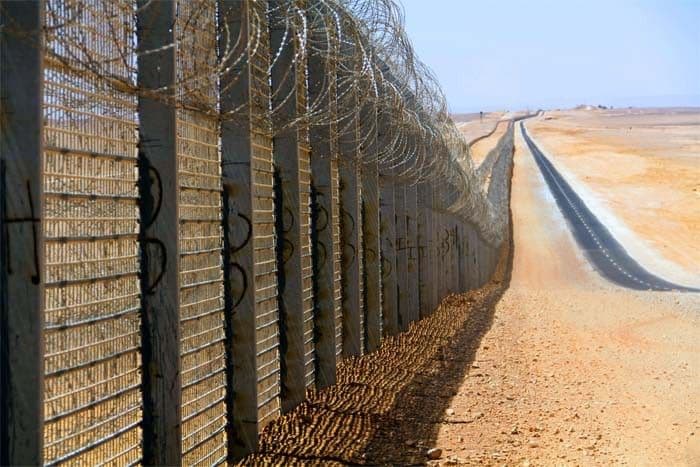
Kenya built a border fence along Somalia to prevent Al‑Shabaab incursions and illegal movement, promising a continuous, fortified barrier stretching hundreds of kilometres. In practice, construction stalled due to funding shortages, logistical challenges, and local resistance, leaving only fragmented sections. Parts of the fence deteriorated, while diplomatic tensions with Somalia further hindered progress. The frontier remains largely porous, showing that a physical wall alone cannot impose control over a complex, mobile threat.
Unlike Israel’s Gaza barrier, which combines walls, checkpoints, surveillance technology, and enforcement to significantly reduce infiltrations, Kenya’s fence lacked both continuity and operational backing. Where Israel integrates infrastructure with intelligence and rapid response, Kenya relied primarily on a partially built structure and political narrative.
The Limits of Physical Barriers
Al‑Shabaab’s mobility and intimate knowledge of the terrain render static obstacles largely ineffective. Meanwhile, communities along the border maintain deep familial, trade, and grazing connections, so hard barriers disrupt daily life without addressing the reasons people cross. The fence became more of a political statement than an operational tool, serving optics rather than security.
Reopening and the Shift in Strategy
In 2026, Kenya announced the controlled reopening of official border points after 15 years of closure. Trade, particularly in products like miraa, is now allowed under increased policing, intelligence oversight, and community cooperation. This shift marks a recognition that security cannot rely solely on walls.
The approach contrasts with the Gaza model: while Israel pairs a physical barrier with high-tech monitoring and enforcement, Kenya’s strategy emphasizes human management, selective policing, and cooperation with local communities rather than continuous physical fortification.
A Realistic Verdict
The Kenya–Somalia fence, unlike Israel’s Gaza barrier, was fragmented, under-resourced, and largely symbolic. It did not prevent militant activity or regulate cross-border flows effectively. The government’s current focus on controlled openings and active security reflects a more pragmatic and nuanced strategy: walls can be part of security, but enforcement, intelligence, and social engagement are what actually work.





0 comments