
Your Read is on the Way
Every Story Matters
Every Story Matters
The Hydropower Boom in Africa: A Green Energy Revolution Africa is tapping into its immense hydropower potential, ushering in an era of renewable energy. With monumental projects like Ethiopia’s Grand Ethiopian Renaissance Dam (GERD) and the Inga Dams in the Democratic Republic of Congo, the continent is gearing up to address its energy demands sustainably while driving economic growth.
Northern Kenya is a region rich in resources, cultural diversity, and strategic trade potential, yet it remains underutilized in the national development agenda.

Can AI Help cure HIV AIDS in 2025

Why Ruiru is Almost Dominating Thika in 2025

Mathare Exposed! Discover Mathare-Nairobi through an immersive ground and aerial Tour- HD

Bullet Bras Evolution || Where did Bullet Bras go to?
From a purely religious perspective, Islam does not prohibit women from attending the mosque. The Prophet Muhammad himself allowed women to pray in the mosque and stated that they should not be prevented from entering houses of worship. Many early Muslim women took part in congregational prayers and community events.
However, in practice, the picture is far more complex. Across various Muslim-majority societies, especially in parts of Asia and Africa, many women rarely or never attend the mosque, even for Friday prayers or religious holidays.
In numerous regions, cultural customs override religious doctrine. Some communities have long-standing traditions that discourage women from public religious spaces. These practices are not based on scripture but on social constructs around gender roles and perceived propriety.
In certain societies, piety is linked to seclusion, and female religiosity is seen as something to be expressed privately within the home. This has led many families to raise daughters with the belief that the mosque is not a space meant for them.
Another common reason involves rules of ritual cleanliness. In Islam, menstruating women are considered ritually impure and are discouraged from certain acts of worship, including prayer and entering sacred spaces like mosques. While the Qur’an does not explicitly forbid them from entering mosques during menstruation, some scholars and cultures have interpreted it as such.
This view has led to generalizations, where women—regardless of their cycle—are discouraged altogether from attending the mosque due to the presumption of possible impurity.
In many parts of the world, especially in rural or conservative regions, mosques lack infrastructure for women:
-There are no separate entrances or prayer halls.
-Restroom and ablution (wudu) areas may be absent or poorly maintained.
-Security and privacy concerns deter female worshippers.
In such settings, even if women are religiously allowed to attend, the physical and logistical challenges make it impractical or unwelcoming.
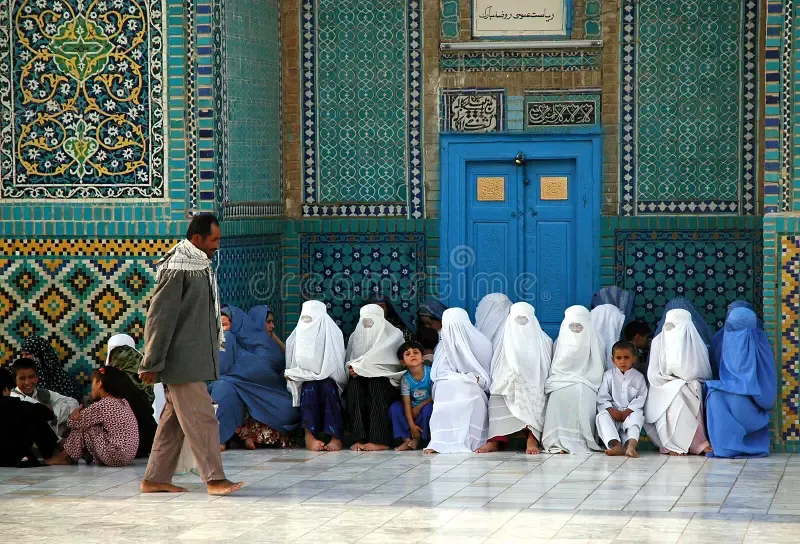
In conservative environments, women who do attend mosque may face unwanted attention, community gossip, or judgment. There's often a societal belief that a woman who regularly goes to the mosque is either overly assertive or seeking attention, which contradicts cultural ideals of modesty.
For many, avoiding the mosque becomes a way to protect personal dignity, not a sign of disinterest in religion. Instead, these women practice faith at home, often more devoutly than assumed.
Islam places great value on worship done in sincerity, regardless of location. Many women choose to engage in prayer, Quran recitation, and spiritual learning from their homes, which can offer a sense of comfort and control over their spiritual practice.
Some even argue that praying at home brings equal—if not more—reward for women, especially when family obligations make attending mosque difficult.
In recent decades, especially in urban centers and diasporic communities, there’s been a growing movement toward inclusion. Many mosques have established well-equipped women’s sections, inclusive religious programs, and interfaith dialogue events that encourage female participation.
The conversation is slowly evolving, and in many parts of the world, Muslim women are reclaiming their space in mosques, challenging outdated customs and demanding equal spiritual access.
The reasons many Muslim women don’t enter mosques stem more from cultural practice than religious prohibition. While the Quran and Hadith offer room for female worship in communal spaces, societal expectations, logistical barriers, and traditional mindsets often stand in the way.
As younger generations seek a more inclusive faith experience, the dynamics may continue to shift toward greater accessibility and representation for women in Islamic worship spaces.




0 comments