
Your Read is on the Way
Every Story Matters
Every Story Matters
The Hydropower Boom in Africa: A Green Energy Revolution Africa is tapping into its immense hydropower potential, ushering in an era of renewable energy. With monumental projects like Ethiopia’s Grand Ethiopian Renaissance Dam (GERD) and the Inga Dams in the Democratic Republic of Congo, the continent is gearing up to address its energy demands sustainably while driving economic growth.
Northern Kenya is a region rich in resources, cultural diversity, and strategic trade potential, yet it remains underutilized in the national development agenda.

Can AI Help cure HIV AIDS in 2025

Why Ruiru is Almost Dominating Thika in 2025

Mathare Exposed! Discover Mathare-Nairobi through an immersive ground and aerial Tour- HD

Bullet Bras Evolution || Where did Bullet Bras go to?
Marriage in Islam is more than a union between two individuals—it's a spiritual contract that extends into shared beliefs, values, and religious duties. As such, Islam has specific guidelines regarding whom a Muslim may marry.
For Muslim men, Islamic law allows them to marry non-Muslim women who are “People of the Book”—that is, practicing Christians or Jews. This allowance is rooted in the recognition of shared Abrahamic heritage and monotheistic beliefs.
For Muslim women, the expectations are stricter. Muslim women are not permitted to marry non-Muslim men, regardless of whether they are Christians or Jews. This rule is based on the presumption that the husband, as the head of the family, may influence religious practice within the home and potentially compromise the Islamic upbringing of future children.
When a Muslim seeks to marry someone outside the faith, conversion to Islam by the non-Muslim partner often becomes a requirement—especially if the couple wishes to have an Islamic wedding, be recognized under Islamic family law, or be accepted within a religiously observant community.
In some cases, conversion is heartfelt and sincere; in others, it may be viewed as a formal gesture to appease family expectations or legal requirements. In either case, the process involves a public declaration of the Islamic faith (the Shahada) and a commitment, even symbolic, to its tenets.
Notably, when the non-Muslim partner is from a polytheistic or secular background, conversion is almost always expected to validate the marriage religiously.
The implications of such a union stretch far beyond the wedding ceremony. In many Muslim-majority countries, marriage laws are tied closely to Sharia principles. Marriages that don't meet Islamic requirements may not be recognized by religious courts, affecting rights like inheritance, child custody, and divorce proceedings.
On a personal level, the couple may face community disapproval, especially if the non-Muslim partner does not actively practice or respect Islamic customs. Families may feel dishonored, religious leaders may refuse to officiate the marriage, and social circles may distance themselves.
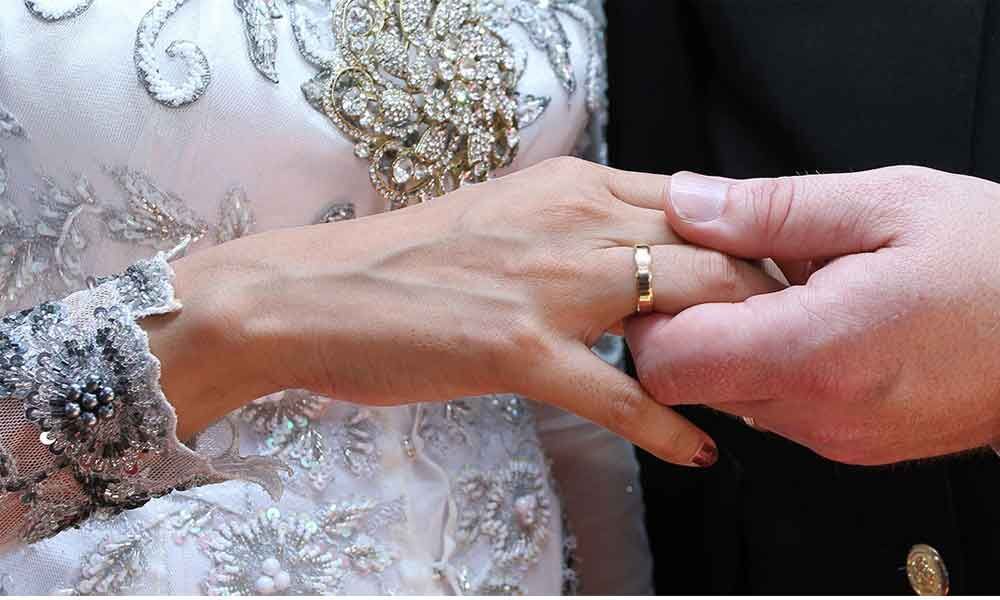
In more secular or pluralistic societies, legal recognition is more straightforward, but cultural tensions can still emerge—especially concerning child-rearing, dietary practices, prayer, dress codes, and religious holidays.
A major concern in interfaith marriages is the religious upbringing of children. In Islam, it is strongly emphasized that children should be raised as Muslims, learning the Qur'an, attending prayers, and following Islamic moral teachings.
This expectation can become a point of conflict if the non-Muslim parent wishes to raise children in their own faith or prefers a neutral, secular environment. In countries with dual legal systems—civil and Sharia-based—this conflict can lead to complex custody battles.
Moreover, inheritance laws under Islamic jurisprudence tend to favor Muslim heirs, which may complicate asset distribution in cases of mixed-faith marriages unless alternative civil arrangements are made.
While Islamic law provides the foundation, the realities of love, migration, and modern pluralism have introduced a range of outcomes. Some Muslim-non-Muslim couples manage to build fulfilling, respectful marriages despite religious differences, often finding common ground in shared values.
Others struggle with the identity split, especially when one partner feels pressured to conform or when extended families clash over religious traditions. In conservative settings, such marriages may be hidden or even annulled under pressure.
Still, it is worth noting that Islam emphasizes mutual respect, compassion, and family cohesion. For some communities, dialogue, understanding, and the couple’s sincerity can soften initial resistance over time.
When a Muslim marries a non-Muslim, it becomes a deeply layered union—spanning personal affection, religious obligations, cultural traditions, and often, legal interpretation. While Islamic law draws clear boundaries, the way couples navigate them varies widely based on geography, religious observance, and family dynamics.
Understanding, compromise, and shared vision are key to making such marriages work—but so is honesty about faith, identity, and the future.





0 comments