
Your Read is on the Way
Every Story Matters
Every Story Matters
The Hydropower Boom in Africa: A Green Energy Revolution Africa is tapping into its immense hydropower potential, ushering in an era of renewable energy. With monumental projects like Ethiopia’s Grand Ethiopian Renaissance Dam (GERD) and the Inga Dams in the Democratic Republic of Congo, the continent is gearing up to address its energy demands sustainably while driving economic growth.
Northern Kenya is a region rich in resources, cultural diversity, and strategic trade potential, yet it remains underutilized in the national development agenda.

Can AI Help cure HIV AIDS in 2025

Why Ruiru is Almost Dominating Thika in 2025

Mathare Exposed! Discover Mathare-Nairobi through an immersive ground and aerial Tour- HD

Bullet Bras Evolution || Where did Bullet Bras go to?
When Christmas Fashion Stopped Pretending
For a long time, Christmas in Kenya carried a visual expectation. New clothes were not optional — they were proof. Proof of survival, progress, and dignity after a long year. The holiday demanded evidence.
This year, that expectation quietly collapsed.
What replaced it was not indifference, but calculation. Across cities, villages, and family compounds, the same clothes appeared again and again: white cartoon T-shirts, oversized jerseys, and mommy jeans. The repetition was too consistent to be coincidence.
Christmas fashion did not disappear. It recalibrated.
Eastleigh as the Country’s Economic Wardrobe
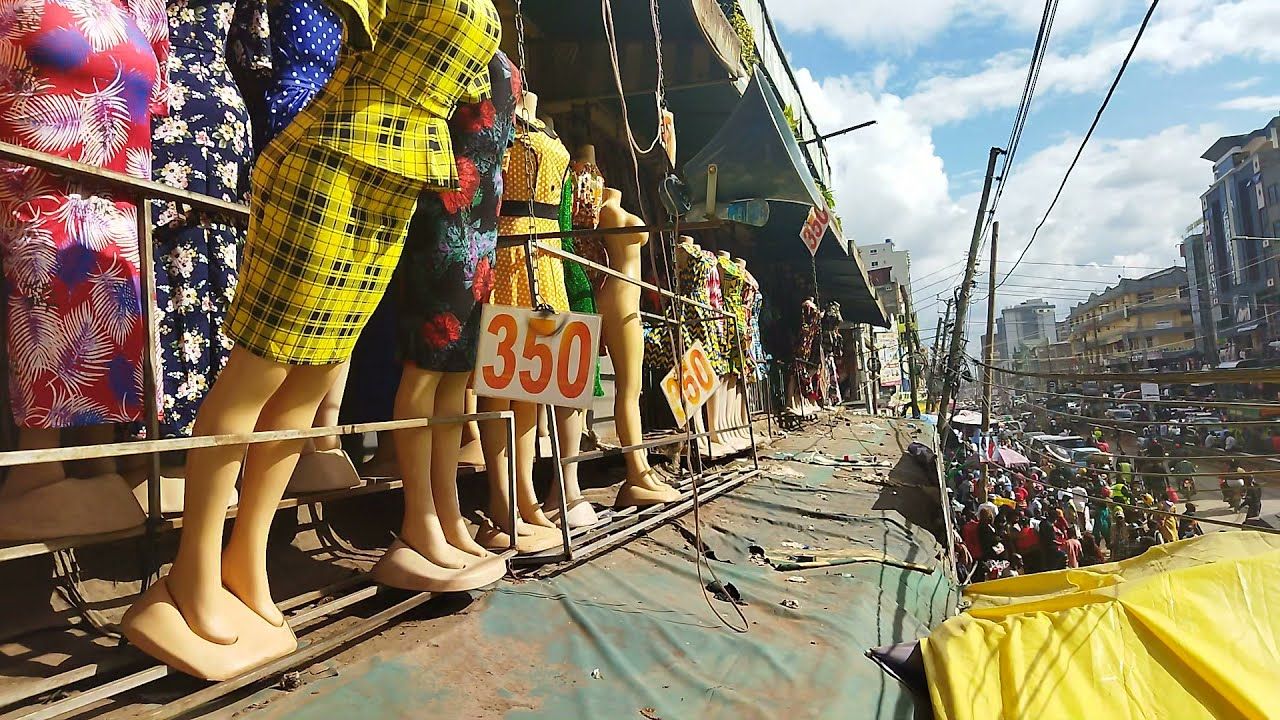
Eastleigh has always supplied Kenya’s closets, but this year its influence became impossible to ignore. Garissa Mall and Bangkok Mall, in particular, acted as the twin engines powering the season.
These malls do not sell aspiration. They sell movement.
Wholesalers inside them work with thin margins and sharp instincts. They stock what moves fast, fits many bodies, and survives long journeys through resale chains. By the time December arrives, the market has already decided what the country will wear.
This year, that decision was conservative, deliberate, and deeply informed by shrinking household spending power.
Garissa Mall and Bangkok Mall: Where Price Sets Culture
Garissa Mall and Bangkok Mall sit at the center of Eastleigh’s distribution web. Traders from estates, towns, and rural markets arrive here to stock up. What they buy determines what appears nationwide weeks later.
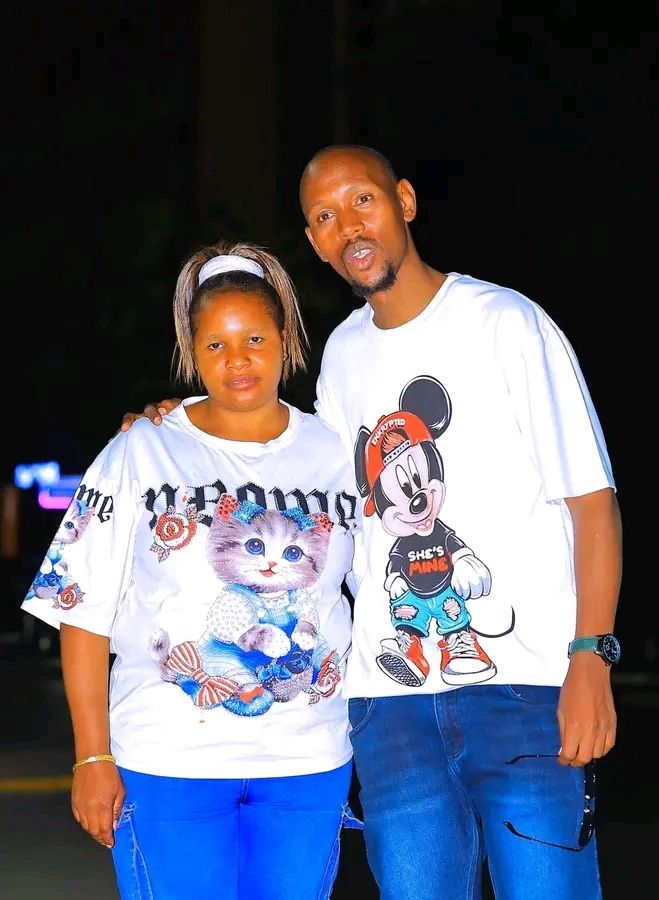
White cartoon T-shirts dominate because they solve multiple problems at once. They are cheap to import. Cheap to store. Cheap to sell. They cross age and gender boundaries without friction. One design can serve an entire household.
Oversized jerseys thrive because they reduce sizing risk. A trader can sell them confidently. A household can share them quietly. No garment invites fewer questions.
Mommy jeans move because they last. Loose denim absorbs weight changes, movement, and frequent washing. They reduce replacement costs and buyer regret.
These are not aesthetic choices. They are survival strategies.
The Cartoon T-Shirt as Household Mathematics
The cartoon T-shirt became the most honest garment of the season.
Its popularity was not driven by nostalgia or playfulness, but by arithmetic. Parents shopping for several people needed clothing that could stretch — socially and physically. White fabric hides age. Cartoon prints distract from repetition. The shirt can move from child to sibling to cousin without resistance.
In a year where every purchase had to justify itself, this mattered.
The cartoon tee did not scream celebration. It whispered responsibility.
Jerseys and the Economics of Neutrality
Jerseys played a different but equally important role.
They carry no class signal. They do not invite comparison. In gatherings where financial differences used to be silently measured through clothing, jerseys flattened the field.
Economically, they are forgiving. Socially, they are safe.
Households chose jerseys because they allow presence without performance. No one is overdressed. No one is underdressed. Everyone meets at the same level.
That neutrality was priceless this Christmas.
Mommy Jeans and Long-Term Thinking
Mommy jeans revealed how far ahead households were thinking.
These were not jeans bought for one day of photographs. They were bought for continuity. Cooking, travelling, sitting for long hours, returning to work, walking markets — all of it without discomfort or damage.
In economic terms, mommy jeans offered extended value. They delayed the next purchase. They absorbed change.
This was clothing bought with January already in mind.
What Kenyan Households Quietly Admitted
The Christmas uniform revealed something profound about Kenyan households.
They are no longer spending to prove success. They are spending to manage life. The pressure to display prosperity has softened, replaced by a shared understanding that restraint is not failure.
There was no collective shame in repeating clothes. No panic to outshine relatives. That silence was revealing.
Households are adapting — intelligently, calmly, together.
Eastleigh’s Real Power This Season
Garissa Mall and Bangkok Mall did not just supply clothes. They set emotional boundaries.
By flooding the market with affordable, reusable garments, they gave households permission to celebrate without overreaching financially. They absorbed the pressure that used to fall on families.
This is how markets shape culture — quietly, efficiently, without slogans.
What Kenya Actually Wore This Christmas
Kenya wore price awareness.
Kenya wore durability.
Kenya wore shared reality.
This Christmas was not about lowering standards. It was about redefining them.
Garissa Mall and Bangkok Mall did not create a trend. They reflected an economy under strain — and a population smart enough to adjust without losing the spirit of the season.
That adjustment, more than any outfit, was the real story.





0 comments