
Your Read is on the Way
Every Story Matters
Every Story Matters
The Hydropower Boom in Africa: A Green Energy Revolution Africa is tapping into its immense hydropower potential, ushering in an era of renewable energy. With monumental projects like Ethiopia’s Grand Ethiopian Renaissance Dam (GERD) and the Inga Dams in the Democratic Republic of Congo, the continent is gearing up to address its energy demands sustainably while driving economic growth.
Northern Kenya is a region rich in resources, cultural diversity, and strategic trade potential, yet it remains underutilized in the national development agenda.

Can AI Help cure HIV AIDS in 2025

Why Ruiru is Almost Dominating Thika in 2025

Mathare Exposed! Discover Mathare-Nairobi through an immersive ground and aerial Tour- HD

Bullet Bras Evolution || Where did Bullet Bras go to?
The red mark seen on the foreheads of many Indian women is one of the most recognizable symbols of Indian culture and tradition. Often referred to as a bindi, this small yet significant adornment carries deep cultural, religious, and social meanings that go far beyond mere decoration.
The practice of wearing a bindi dates back thousands of years to ancient India. In Sanskrit, the word bindi means “point” or “drop.” Traditionally, it is worn by Hindu women in the center of the forehead, a spot considered the sixth chakra (ajna) or the "third eye"—a symbolic location for wisdom, spiritual insight, and inner vision.
In ancient texts and Vedic rituals, the bindi was believed to protect against evil, enhance concentration, and signify auspiciousness. Over time, it evolved to become a cultural marker as well.
In many Indian communities, the red bindi has traditionally symbolized a woman’s marital status. Married Hindu women often apply a red vermillion powder (called sindoor or kumkum) in the parting of their hair and may wear a red bindi to signify their commitment to their husband. This serves as a visible emblem of marriage, similar in cultural significance to a wedding ring in the West.
Unmarried women or young girls might wear decorative bindis of different colors or shapes, but the red dot is most commonly associated with married women, especially in more traditional households.
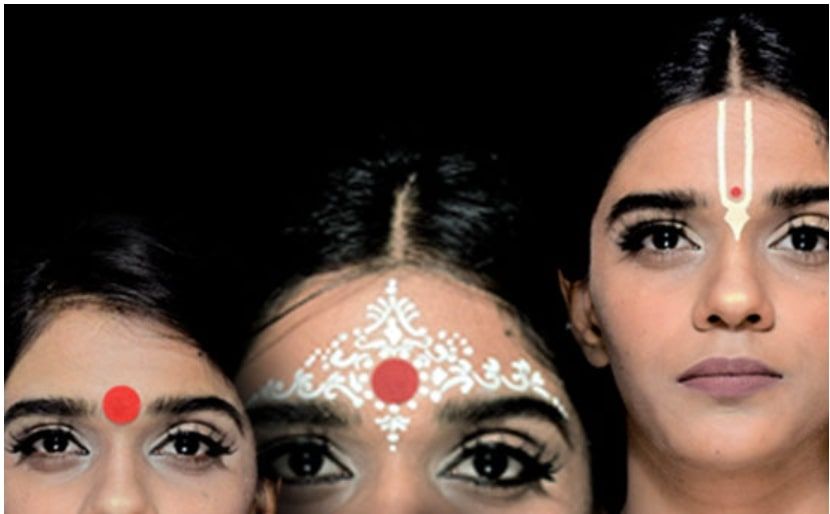
The spot between the eyebrows is considered a powerful energy center in Hindu and yogic traditions. Applying a bindi at this location is thought to help retain energy and strengthen concentration during prayer or meditation. For this reason, some people—men and women alike—may wear a bindi or tilak (a similar mark, often drawn with sandalwood or ash) during religious ceremonies.
In modern India, the bindi has become a style accessory as well. It is worn by women of all ages, regardless of their marital status or religious beliefs. Bindis today come in a variety of colors, designs, and materials—ranging from simple felt dots to ornate, jewel-studded stickers. For many, it serves both as a fashion statement and a connection to cultural roots.
Though red is the most traditional color, bindi styles can vary across regions and communities. In South India, large red bindis are common, while in the North, smaller decorative versions might be preferred. In some tribal or regional traditions, women apply different forehead marks that signify social or familial identity rather than religion alone.
The red mark on the forehead, often referred to as a bindi, is a deeply symbolic and multifaceted tradition in Indian culture. While its meanings have evolved—from a spiritual practice to a marital symbol and now a fashion accessory—it continues to represent a blend of tradition, identity, and self-expression for millions of Indian women.






0 comments