
Your Read is on the Way
Every Story Matters
Every Story Matters
The Hydropower Boom in Africa: A Green Energy Revolution Africa is tapping into its immense hydropower potential, ushering in an era of renewable energy. With monumental projects like Ethiopia’s Grand Ethiopian Renaissance Dam (GERD) and the Inga Dams in the Democratic Republic of Congo, the continent is gearing up to address its energy demands sustainably while driving economic growth.
Northern Kenya is a region rich in resources, cultural diversity, and strategic trade potential, yet it remains underutilized in the national development agenda.

Can AI Help cure HIV AIDS in 2025

Why Ruiru is Almost Dominating Thika in 2025
Mathare Exposed! Discover Mathare-Nairobi through an immersive ground and aerial Tour- HD

Bullet Bras Evolution || Where did Bullet Bras go to?
In the dim, pulsing spotlight of Nairobi's theatres, a reckoning is underway—one that’s as harrowing as it is necessary. Two daring plays, In the Name of the Father and Against the Tide, have turned real-life horror into reflective art, digging deep into the psychological grip of cultism and the price of blind obedience. Sparked by the national trauma of the 2023 Shakahola massacre, these productions aren’t just performances—they’re societal interventions.
The Shakahola massacre, in which a self-proclaimed pastor led hundreds to their deaths under the guise of divine salvation, stunned Kenya. But instead of fading into collective denial, this tragedy has been dissected on stage, transformed into a mirror for society to confront its spiritual vulnerabilities. The massacre wasn’t just an isolated act of evil—it was a symptom of deep-rooted manipulation, unchecked spiritual authority, and desperation hiding behind the veil of faith.
Crafted by Kenda Creatives under the sharp direction of Marichu Muturi, In the Name of the Father is a chilling descent into the mind of a charismatic cult leader and the people he ensnares. It centers on Neema, a mother seeking a miracle cure for her child, who becomes spiritually enslaved by the charming yet sinister Pastor Amos. What unfolds is not just a story of loss, but of awakening—a brutally honest depiction of spiritual manipulation cloaked in scripture, song, and emotional coercion.
Neema's journey is both deeply personal and broadly symbolic. Her heartbreaking decisions remind audiences of the psychological warfare embedded in cult recruitment tactics. Pastor Amos doesn’t just ask for faith—he demands sacrifice. And when belief becomes blind, it’s not salvation that follows, but devastation.
Marichu Muturi and composer Ben Spencer use music not to soothe, but to unsettle. Hymns are reimagined as tools of control, each melody laced with dread. The music seeps into the audience's emotions, pulling them into Neema’s turmoil. It’s a spiritual haunting, deliberately crafted to create what Muturi calls an “emotional exorcism.” By the time the curtain falls, viewers aren’t clapping—they’re confronting.
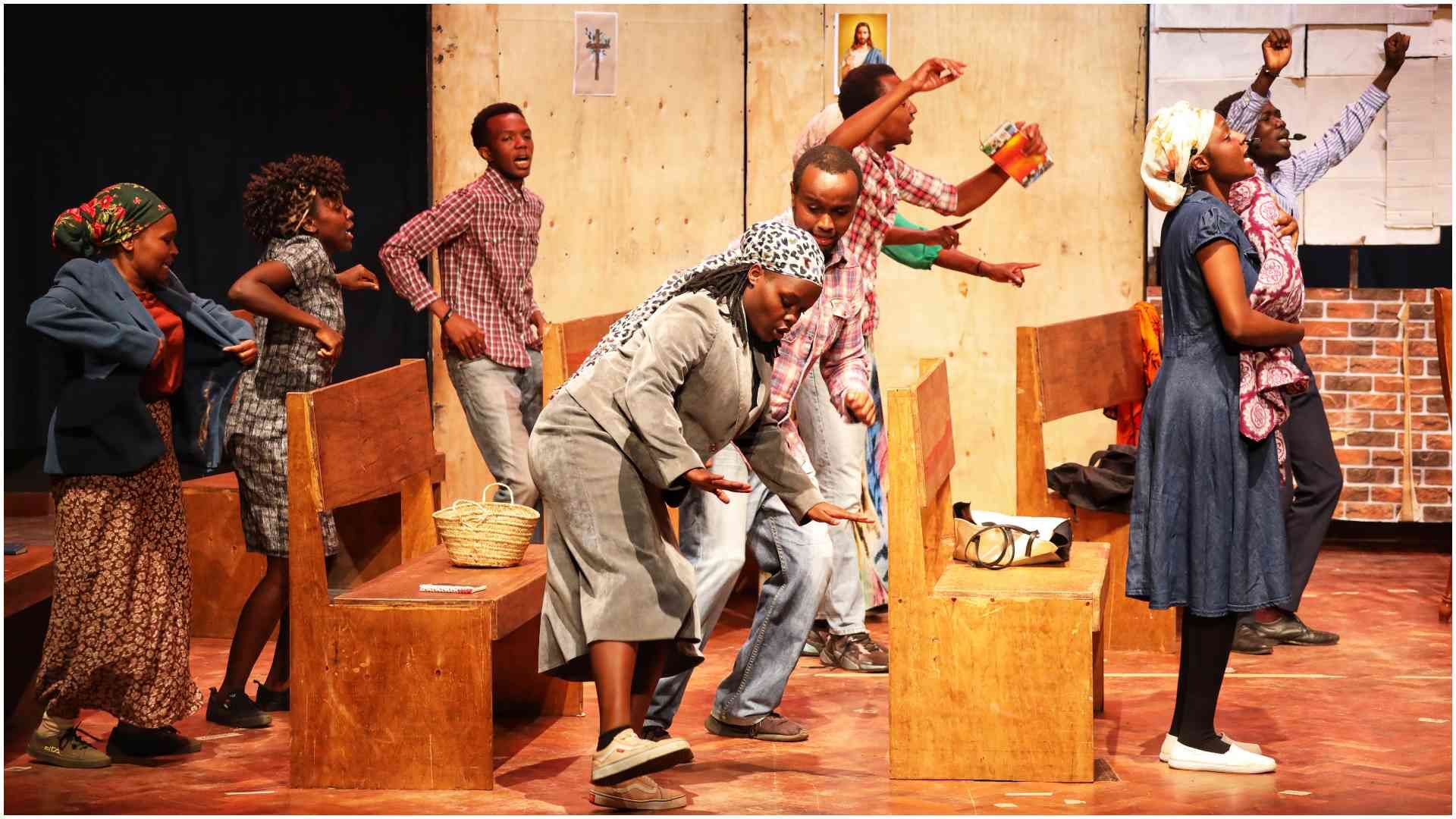
While In the Name of the Father confronts cults wrapped in piety, Against the Tide rips the mask off another monster in religious garb. Written by Mavin Kibicho and performed by Son of Man Theatre Productions, this play introduces Priest Saul—charismatic, influential, and secretly running a human organ trafficking ring under the guise of ministry.
The protagonist, Rehab, is no saint either—a sex worker navigating Nairobi’s harsh streets. But her brush with Saul’s operation brings forward a brutal juxtaposition: sin isn’t always in the streets—it’s often hiding in sacred robes. Her fight to survive and expose the truth becomes an allegory for resistance in the face of systemic, sanctified evil.
Kibicho’s message is sharp: religion, unchecked, is not inherently pure. It’s a tool—one that can heal or destroy, depending on whose hands it’s in.
These productions are not isolated cases of artistic expression; they represent a larger movement in Kenyan theatre—a shift toward using performance as political, social, and spiritual commentary. From upcoming productions like Crucifixion by Eugenia Arts Centre to Mastercut Entertainment’s satirical Atúmwo Aa Jesu, the message is clear: faith must be examined, not just followed.
The plays are not anti-religion; they are anti-deception. They demand accountability from institutions and vigilance from believers. In a nation where religion is often a cultural cornerstone, that’s a bold and potentially dangerous stance—but also a deeply necessary one.
Cultism in Kenya is not a fringe phenomenon—it’s increasingly mainstream. Fueled by poverty, despair, and the quest for meaning, many citizens fall prey to leaders who promise salvation but deliver suffering. The Shakahola massacre was only the most visible tip of a chilling iceberg. Plays like these serve as warnings: that charisma is not character, that sermons can mask sin, and that faith without questioning can lead to fatal ends.
As audiences pour out of Nairobi’s theatres—some weeping, others visibly shaken—one thing is clear: theatre in Kenya is no longer just entertainment. It's a tool for awakening, a stage for resistance, and a space for national healing. These plays have dared to hold a mirror to the ugliest parts of society, asking uncomfortable questions that must be answered.
The call is not just to watch—but to act. To question. To protect the vulnerable. And above all, to never again let blind faith lead a nation into darkness.





0 comments