
Your Read is on the Way
Every Story Matters
Every Story Matters
The Hydropower Boom in Africa: A Green Energy Revolution Africa is tapping into its immense hydropower potential, ushering in an era of renewable energy. With monumental projects like Ethiopia’s Grand Ethiopian Renaissance Dam (GERD) and the Inga Dams in the Democratic Republic of Congo, the continent is gearing up to address its energy demands sustainably while driving economic growth.
Northern Kenya is a region rich in resources, cultural diversity, and strategic trade potential, yet it remains underutilized in the national development agenda.

Can AI Help cure HIV AIDS in 2025

Why Ruiru is Almost Dominating Thika in 2025

Mathare Exposed! Discover Mathare-Nairobi through an immersive ground and aerial Tour- HD

Bullet Bras Evolution || Where did Bullet Bras go to?
In Kenya, bringing a child into the world should be a moment of joy — but for many women, it’s a high-stakes gamble between life and death. Despite advancements in health policy, infrastructure, and maternal care services, thousands of expectant mothers still face serious, often fatal, complications during childbirth.
And the problem isn’t just about numbers — it’s about broken systems, delayed help, and lives lost that could have been saved.
Kenya’s maternal mortality ratio remains alarmingly high. According to the Ministry of Health, an estimated 342 mothers die for every 100,000 live births. That means every day, multiple women are dying from causes that are preventable with timely and appropriate medical care.
The culprits? Obstetric hemorrhage, obstructed labor, eclampsia, sepsis, and unsafe abortions top the list. But behind each medical term is a story of a mother who bled out waiting for transport, or one who died due to lack of a skilled birth attendant.
In rural and semi-urban areas, many women must walk for hours or travel long distances on dangerous roads just to reach a health facility. And even when they arrive, they’re often met with under-equipped centers, few or no doctors, and a shortage of essential supplies like blood and oxygen.
A major contributor to maternal deaths is the shortage of trained midwives and obstetricians. In some counties, a single nurse could be handling multiple deliveries at once, without proper support or equipment.
Known in health circles as the “Three Delays”:
-Delay in deciding to seek care due to ignorance or cultural beliefs
-Delay in reaching the facility because of poor infrastructure or transport
-Delay in receiving care at the facility due to system inefficiencies
Each of these delays can cost a mother her life.
For every mother who dies, many more survive with long-term complications. Fistula, pelvic injuries, chronic pain, and psychological trauma are common outcomes. The burden is not just physical — it affects households economically, emotionally, and socially.
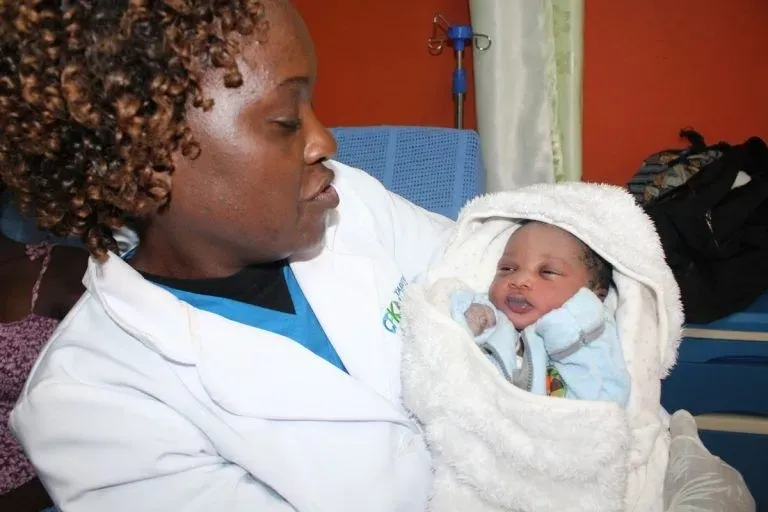
Worse, maternal death often leaves newborns without care, increasing infant mortality and perpetuating a cycle of loss and poverty.
-Teenage mothers: High rates of teenage pregnancies, especially in counties like Migori, Narok, and Kilifi, contribute significantly to complications due to underdeveloped bodies and lack of antenatal care.
-Mothers in marginalized communities: Women in arid and semi-arid regions, informal settlements, and conflict-prone areas face the most significant barriers to safe childbirth.
-Women without education or access to information: Many women are unaware of the importance of antenatal visits or danger signs during pregnancy.
The path to reducing maternal deaths and complications isn’t complex, but it requires political will and real investment:
-Scale up emergency obstetric care in rural and underserved areas
-Recruit and retain more skilled midwives and equip them properly
-Subsidize maternal health services so that cost isn't a death sentence
-Establish effective referral systems and maternal shelters for high-risk pregnancies
-Educate communities on the importance of timely antenatal and postnatal care
Kenya’s Linda Mama programme, which promises free maternal health care under SHIF, is a step in the right direction. But in reality, many hospitals still charge mothers unofficial fees, turn them away for lacking documents, or offer substandard services due to delayed reimbursements from SHIF.
Until these gaps are closed, the promise remains more of a slogan than a solution.





0 comments