
Your Read is on the Way
Every Story Matters
Every Story Matters
The Hydropower Boom in Africa: A Green Energy Revolution Africa is tapping into its immense hydropower potential, ushering in an era of renewable energy. With monumental projects like Ethiopia’s Grand Ethiopian Renaissance Dam (GERD) and the Inga Dams in the Democratic Republic of Congo, the continent is gearing up to address its energy demands sustainably while driving economic growth.
Northern Kenya is a region rich in resources, cultural diversity, and strategic trade potential, yet it remains underutilized in the national development agenda.

Can AI Help cure HIV AIDS in 2025

Why Ruiru is Almost Dominating Thika in 2025

Mathare Exposed! Discover Mathare-Nairobi through an immersive ground and aerial Tour- HD

Bullet Bras Evolution || Where did Bullet Bras go to?
Kenya's healthcare system is once again in turmoil following the botched rollout of the Social Health Authority (SHA), a scheme that was meant to revolutionize healthcare financing in the country. The ambitious initiative aimed to replace the National Health Insurance Fund (NHIF) with a more inclusive and equitable system. However, poor planning, a lack of financial structures, and exclusion of critical stakeholders have turned it into a national disaster.
With over 19 million Kenyans registered under SHA, only about 3 million—mostly those in formal employment—are contributing to the fund. This exposes a major flaw in the system: the government's failure to establish a proper means-testing instrument to assess citizens' ability to pay. Consequently, the very people who need affordable healthcare the most are being forced to pay out-of-pocket, a situation that defeats the purpose of universal health coverage (UHC).
Kenya’s healthcare sector has long been plagued by systemic failures, underfunding, and inefficiencies. The SHA crisis is only a reflection of deeper problems that have been festering for years.
The Kenyan healthcare system is deeply fragmented. While public hospitals struggle with inadequate funding, private healthcare remains out of reach for most citizens. Patients in public hospitals often face long wait times, drug shortages, and lack of basic medical supplies. This has forced many to turn to private hospitals, where costs are significantly higher, pushing families into financial distress.
Furthermore, corruption continues to cripple the sector. Reports of misallocated funds, procurement scandals, and ghost workers have made it difficult to sustain critical healthcare programs. The failure of SHA is just another example of a government initiative being rolled out without transparency and accountability.
Kenya’s 2010 constitution devolved healthcare to county governments in an attempt to bring services closer to the people. However, this has created new challenges:
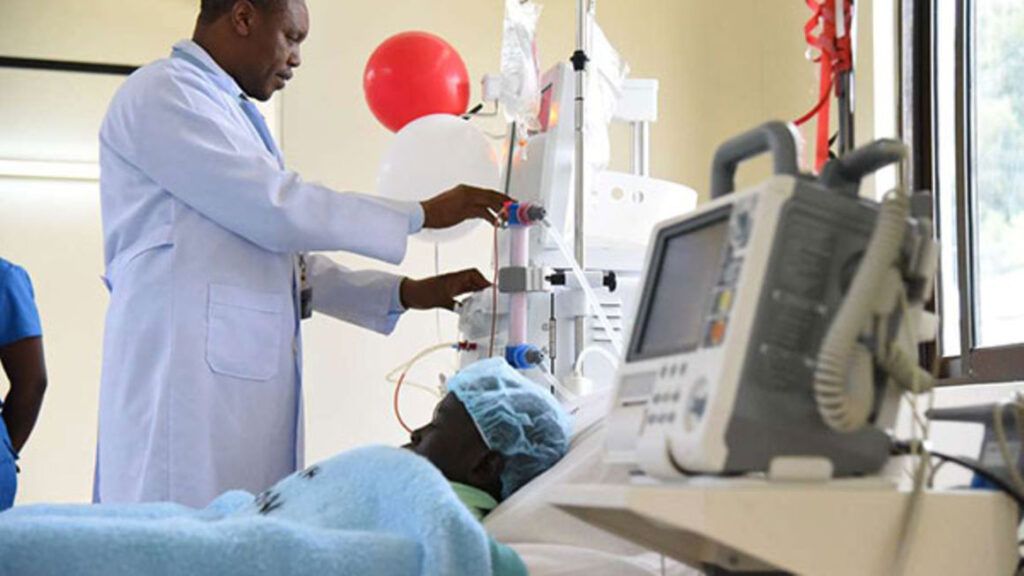
The SHA rollout was supposed to provide a solution to these issues, but instead, it has worsened the situation. Counties are struggling to finance health services, and with service providers withdrawing from SHA, many public hospitals are now paralyzed.
Kenya’s UHC agenda has been met with persistent obstacles that prevent millions from accessing affordable healthcare. These include:
If these issues are not addressed, SHA will collapse just like NHIF, leaving millions stranded without access to affordable healthcare.
Kenya’s healthcare system is funded through multiple sources:

With SHA failing to secure enough contributions, the government is now struggling to keep healthcare facilities running. Unless urgent interventions are made, Kenya’s journey toward universal healthcare will remain a pipe dream.
The Kenyan government must act quickly to correct its mistakes before the healthcare sector collapses completely. A well-structured financing model, proper planning, and the inclusion of all healthcare workers are critical to making SHA work.
The current crisis should serve as a wake-up call—healthcare is not just about policies on paper, but about real lives at stake. If Kenya fails to fix its healthcare system now, the cost will be measured not just in money, but in human lives.





0 comments