
Your Read is on the Way
Every Story Matters
Every Story Matters
The Hydropower Boom in Africa: A Green Energy Revolution Africa is tapping into its immense hydropower potential, ushering in an era of renewable energy. With monumental projects like Ethiopia’s Grand Ethiopian Renaissance Dam (GERD) and the Inga Dams in the Democratic Republic of Congo, the continent is gearing up to address its energy demands sustainably while driving economic growth.
Northern Kenya is a region rich in resources, cultural diversity, and strategic trade potential, yet it remains underutilized in the national development agenda.

Can AI Help cure HIV AIDS in 2025
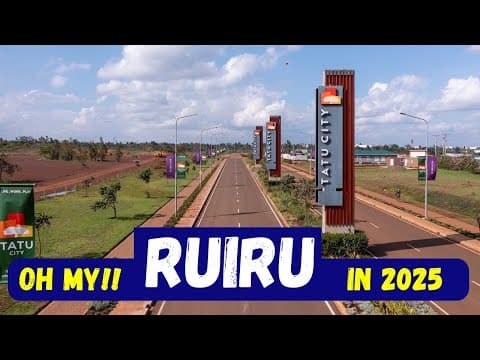
Why Ruiru is Almost Dominating Thika in 2025
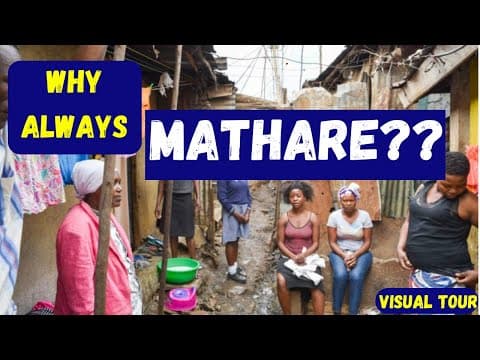
Mathare Exposed! Discover Mathare-Nairobi through an immersive ground and aerial Tour- HD

Bullet Bras Evolution || Where did Bullet Bras go to?
At Kenya's power centre, within the fortified grounds of State House Nairobi, a colossal structure is being built—one not of governance, but of God. This is no modest chapel. This is a full-fledged, architecturally elaborate Christian church. The project is estimated to cost over KSh 1.2 billion, and it's already deep into construction.
Renderings show an expansive sanctuary with arched windows, tall steeples, two giant rooftop crosses, LED-lit galleries, prayer rooms, VIP balconies, office blocks, and a seating capacity approaching 8,000 people.
This is not symbolic. This is physical, concrete, and heavily funded. And it's happening right at the epicentre of national authority.
President William Ruto has taken a personal stake in the project. He’s not just a supporter—he’s a funder. Earlier this year, he pledged KSh 20 million of his own money toward the construction and vowed to rally KSh 100 million more from friends and allies. He’s made it clear this church is part of his legacy, blending personal faith with presidential office.
But therein lies the storm. Is this Ruto the Christian leader, or Ruto the President? Can a sitting Head of State transform State House—a constitutional, secular institution—into a part-time religious complex?
Kenya’s constitution is explicit: the state and religion are to remain separate. Yet the president is erecting a church within government property, managed by state security, paid in part by funds that have not been fully accounted for. Legal minds and civil society actors are sounding alarms. There is no transparency on how this project is funded. No public tenders.
No parliamentary scrutiny. Just concrete, cranes, and presidential power.
Critics argue this move sets a dangerous precedent—politicizing faith, alienating non-Christian citizens, and diverting national resources toward religious infrastructure in the name of personal devotion.
While the President builds a grand church, public hospitals are collapsing, schools are underfunded, and taxes are squeezing the average Kenyan to the limit. This raises an uncomfortable national question: why is there money for a mega-church, but not for medicine? Why are children learning under trees while an LED-lit church is going up in the backyard of the presidency?
To many, this isn’t just bad optics—it’s provocation. The messaging feels skewed: spiritual monuments are rising, while basic services shrink. The anger is growing, especially among younger, urban Kenyans already disillusioned by rising living costs and state opacity.
-Where is the full KSh 1.2 billion coming from?
-Was the land formally allocated or seized by executive decree?
-Is there parliamentary oversight or is this another closed-door project?
-Who will control the church—State House or a religious body?
-Will Muslim, Hindu, or atheist taxpayers be allowed access or representation?
Silence from the presidency only intensifies the speculation. What was meant to be a tribute to God is now seen by many as a monument to ego and excess





0 comments