
Your Read is on the Way
Every Story Matters
Every Story Matters
The Hydropower Boom in Africa: A Green Energy Revolution Africa is tapping into its immense hydropower potential, ushering in an era of renewable energy. With monumental projects like Ethiopia’s Grand Ethiopian Renaissance Dam (GERD) and the Inga Dams in the Democratic Republic of Congo, the continent is gearing up to address its energy demands sustainably while driving economic growth.
Northern Kenya is a region rich in resources, cultural diversity, and strategic trade potential, yet it remains underutilized in the national development agenda.

Can AI Help cure HIV AIDS in 2025

Why Ruiru is Almost Dominating Thika in 2025

Mathare Exposed! Discover Mathare-Nairobi through an immersive ground and aerial Tour- HD

Bullet Bras Evolution || Where did Bullet Bras go to?
The first thing that strikes you about Kenya’s northeast isn’t just the relentless heat or the barren land stretching endlessly — it’s the silence. A heavy, resigned silence that hangs over villages like a curse. Here, survival isn’t just about finding water; it’s about enduring the invisible battles fought daily by women and girls.
In places like Marsabit and Isiolo, an unforgiving drought has turned already fragile communities into epicenters of gender-based violence. Food is scarce, money even scarcer, and with every lost harvest, the risks for girls multiply. Early marriages, once a tradition masked as culture, are now economic strategies. Young girls are being exchanged for livestock, for grain, for debts cleared in a barter system that has nothing to do with love and everything to do with survival.
The price of a daughter has never been lower.
Inside small community halls with cracked walls and faded posters about girl empowerment, I met the "left-behind" girls — some as young as 11 — with infants slung across their tiny hips. Their stories blurred into a single devastating narrative: pregnancy before 14, marriage before 15, and by 16, a life so heavy it threatens to break them.
One health official recounted how a single visit to a local school revealed that half the girls were missing — married off, pregnant, or withdrawn due to "shame." Between January and October 2024, hundreds of girls under 15 had sought antenatal care, with many births never even recorded officially. These weren't isolated incidents; they were the new normal.
Here, a soda or a plate of rice can buy silence — or worse, consent. Long school holidays stretch out like traps; with parents chasing scarce incomes, teenagers are left to navigate a brutal world alone. Predators thrive in these forgotten corners, exploiting the gap between hunger and innocence. And when abuse occurs? Justice rarely follows. Too often, families settle cases quietly, preferring a quick payoff over a long, humiliating court battle.
Community organizations are fighting hard, but they’re fighting blindfolded — battling decades of cultural inertia, economic despair, and a justice system that's either too slow or too corrupt to care.
It's tempting to blame culture alone, but that would miss the bigger, uglier picture. Climate change is the silent accelerant making everything worse. Prolonged droughts have decimated crops, pushed pastoralists off their lands, and ripped apart the social fabric.
When families can't eat, when livestock die, when fields turn to dust — desperation follows. And in desperate communities, the bodies of women and girls become bargaining chips.
According to long-term projections, every rise in global temperature could push rates of intimate partner violence higher and higher. If today's droughts are bad, tomorrow’s will be catastrophic.
Imagine the aftermath of a cyclone: homes flattened, documents lost, children wandering through refugee camps nameless, stateless, and defenseless. In these chaotic gaps, traffickers feast. Child marriages skyrocket, girls disappear into slavery rings, and bodies are sold — sometimes, even for organ harvesting.
No, this isn’t some dystopian fiction. It's a trajectory we are sprinting toward unless drastic action is taken.
Oddly enough, hope doesn't come from policymakers seated in air-conditioned offices. It comes from dusty mosques, crumbling churches, and gatherings under thorn trees. Faith leaders, when empowered, can shift mindsets faster than laws ever will. They have the credibility, the access, and the moral authority to challenge outdated norms and protect the vulnerable.
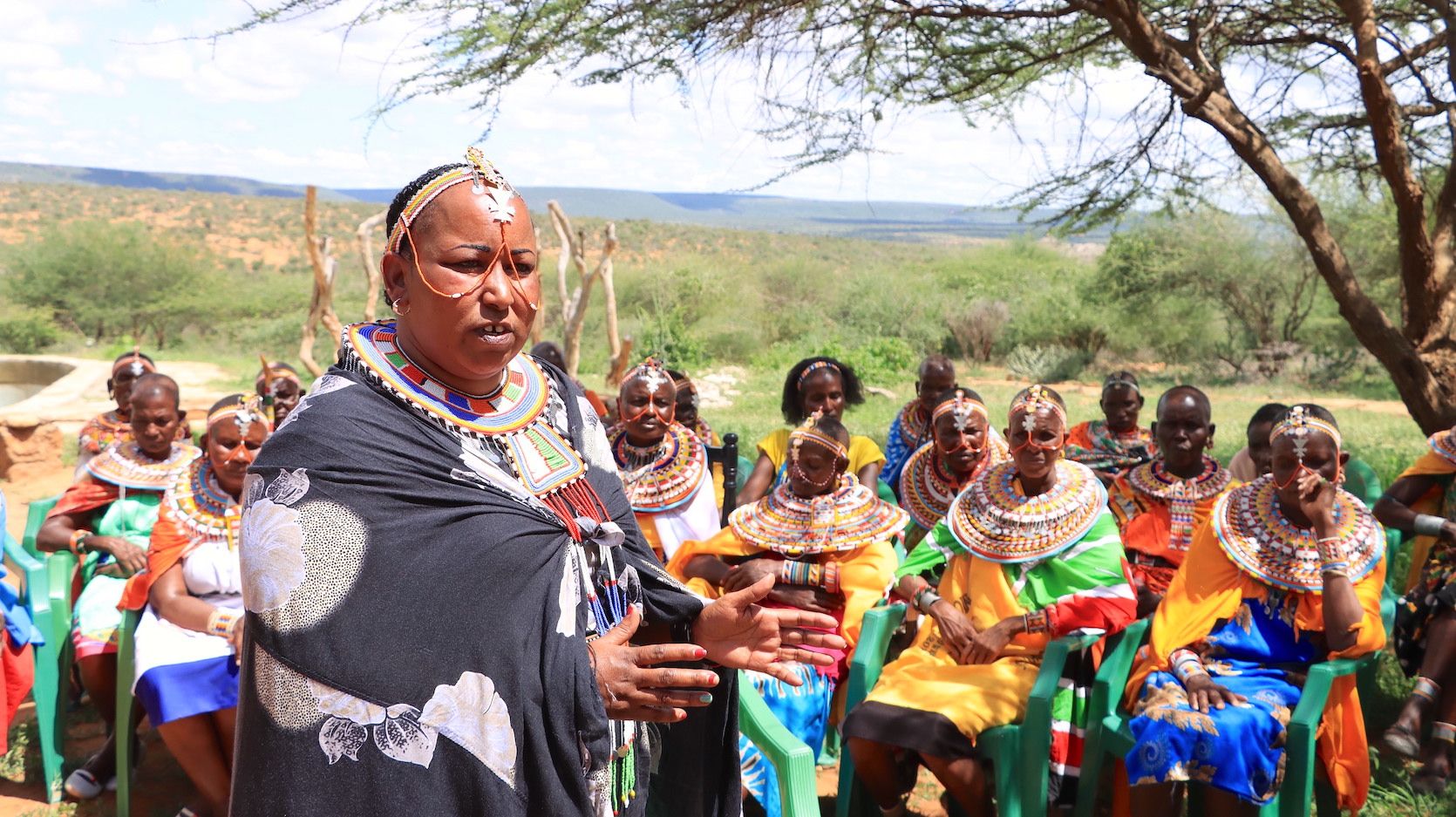
A faith leader speaking passionately to a small crowd under a tree or in a simple open-air setting.. Their work isn’t flashy — but it’s real.
If there's any hope of stopping this slow-motion disaster, it lies in weaving climate justice and gender justice into every policy, every funding initiative. It’s not enough to talk about food security or girls' education in silos — they’re all tangled together now.
Financial mechanisms must prioritize rebuilding climate resilience and protecting the rights of women and girls. We need a revolution of priorities — one where survival doesn't have to come at the expense of dignity.
What’s happening in Kenya’s northeast isn’t just a local tragedy. It’s a global warning. The climate crisis isn’t a slow, distant apocalypse; it’s already here, reshaping lives and stealing futures. And if we fail to act — decisively, compassionately, and urgently — we’ll all bear the cost.
The cracks in the earth mirror the cracks in our societies. Only collective action can seal them before they become unbridgeable.





0 comments