
Your Read is on the Way
Every Story Matters
Every Story Matters
The Hydropower Boom in Africa: A Green Energy Revolution Africa is tapping into its immense hydropower potential, ushering in an era of renewable energy. With monumental projects like Ethiopia’s Grand Ethiopian Renaissance Dam (GERD) and the Inga Dams in the Democratic Republic of Congo, the continent is gearing up to address its energy demands sustainably while driving economic growth.
Northern Kenya is a region rich in resources, cultural diversity, and strategic trade potential, yet it remains underutilized in the national development agenda.

Can AI Help cure HIV AIDS in 2025

Why Ruiru is Almost Dominating Thika in 2025

Mathare Exposed! Discover Mathare-Nairobi through an immersive ground and aerial Tour- HD

Bullet Bras Evolution || Where did Bullet Bras go to?
The People Powered 2025 Convening was poised to be a defining moment for the global democracy movement. Organized by one of the world’s leading participatory governance networks, the event was intended as a bold declaration that democracy is not just an election day affair—it’s a daily practice built from the ground up. Set in the heart of Nairobi, Kenya, the convening was more than a professional gathering; it was envisioned as a laboratory for the future of democratic participation, a place where community organizers, policymakers, researchers, and funders could come together to learn from each other and push forward new models of engagement. With representatives from dozens of countries preparing to converge, the anticipation was palpable. It was to be a moment of collective acceleration toward deeper citizen power in government processes—a celebration of hard-earned civic victories and a workshop for overcoming persistent democratic setbacks.
But just as quickly as it was announced, the vision began to unravel. Weeks before the first keynote could be delivered or the first workshop convened, the organizers dropped a bombshell: the entire event was canceled. The announcement came with little warning, sending ripples of disappointment through the global democracy community. For many, this wasn’t just the loss of a conference. It was the loss of momentum, of potential partnerships, and of critical space for reflection and growth. And beneath it all loomed a sobering realization—something fundamental is broken in how we support and sustain democratic innovation globally.
What made the People Powered 2025 Convening unique was its insistence on centering local, lived experience within global conversations. Too often, governance reforms are drafted in distant capitals or boardrooms and implemented with little regard for the realities on the ground. This convening aimed to disrupt that pattern by amplifying the voices of those who work directly with communities—facilitators of participatory budgeting in Latin America, civic educators in Southeast Asia, open government activists in Eastern Europe, and data transparency champions from the African continent.
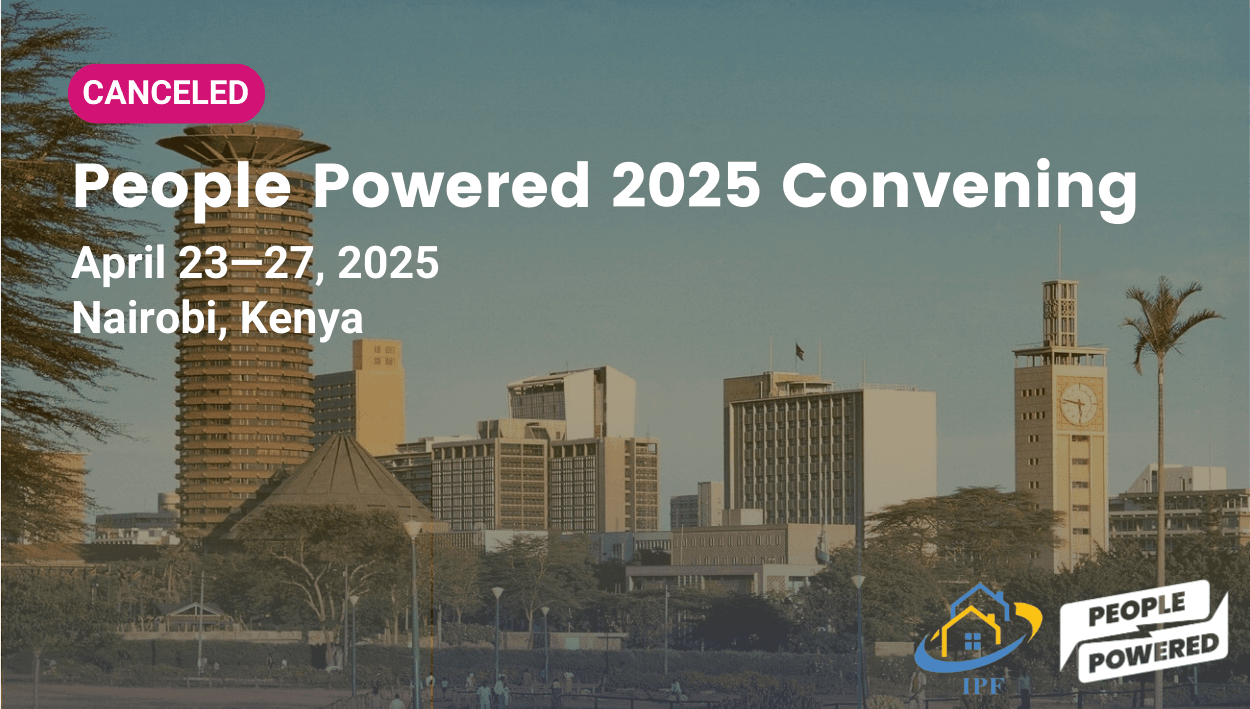
Nairobi, with its dual identity as both a center of innovation and a site of persistent social challenges, was carefully chosen as the host city. Its urban sprawl, vibrant civil society, and ongoing experiments in local governance created an immersive backdrop for the event’s intended goals. Participants would have visited communities engaged in citizen-led oversight of public services, spoken with activists fighting for budget transparency, and engaged in direct dialogue with local officials. These real-world site visits were designed to complement technical workshops and global policy panels, ensuring that theory and practice met in meaningful ways. The convening was set to be a catalyst, transforming shared ideas into coordinated action, driven by the belief that sustainable governance must be participatory by design, not default.
Then, in a stunning reversal, came the cancellation. The stated reason was stark: a critical funding stream had dried up. Specifically, a substantial portion of financial support, previously pledged by a major international donor, was suddenly withdrawn. With the budget now gutted and insufficient time to secure alternative sources, organizers had no choice but to halt preparations. The decision, though pragmatic, was devastating in its implications. It not only derailed a meticulously planned gathering but also revealed just how fragile the ecosystem of global civic engagement really is. Despite the growing chorus of voices demanding more participatory governance, the infrastructure that supports such work remains deeply underfunded and highly dependent on the unpredictable whims of political funding priorities.
This moment serves as a brutal reminder that even the noblest goals are vulnerable to bureaucratic shifts and donor fatigue. The cancellation was not the result of security threats or logistical failures; it was a casualty of budgeting decisions made far from Nairobi, by people and institutions perhaps unaware of—or uninterested in—the real cost of their actions. And in this way, the event became a case study in what happens when democratic ambition collides with financial instability. If democracy is to be sustained globally, it cannot rest on the uncertain foundation of externally controlled funding. It must find more resilient, locally grounded support systems.
While the abrupt cancellation was undeniably a setback, it has not extinguished the spirit of the convening. On the contrary, it has sparked new discussions among civic actors about how to build a more sustainable future for participatory democracy. People Powered, the network behind the convening, has since announced that parts of the event will be transitioned to virtual formats throughout the year. These online gatherings will aim to replicate the core learning and sharing objectives of the in-person event, offering webinars, interactive sessions, and digital networking spaces to ensure that the global community stays connected.
Looking ahead, the organizers are now reimagining their model for 2026, focusing on creating a more decentralized and regionally anchored structure that can function even amidst global funding uncertainties. Rather than a single, centralized event, future convenings may evolve into a constellation of regional forums, interconnected through shared principles and digital infrastructure. This shift may well be the silver lining: a forced adaptation that leads to a more distributed, resilient approach to democratic strengthening. While much was lost in the cancellation, the dream of a people-powered governance movement lives on—and perhaps it will emerge even stronger for having been tested.
The story of the People Powered 2025 Convening is, at its core, a story about both the fragility and the fortitude of democratic efforts in the 21st century. It reminds us that even the most ambitious projects, backed by visionary ideas and global support, can falter when their foundations are too reliant on distant power centers. But it also demonstrates the resilience of the people and organizations working tirelessly to democratize governance, often with limited resources and against considerable odds.
As the dust settles, the global civic community is left with urgent questions: How can we secure more stable, diverse funding sources for democratic initiatives? How do we build cross-border solidarity that’s not only symbolic but strategic? And how can we ensure that future efforts don’t hinge on a single financial thread? In many ways, the convening’s failure to launch has become a rallying cry for greater independence, innovation, and commitment. Democracy, after all, isn’t just about having a seat at the table—it’s about making sure the table stands firm, no matter who’s funding the room.





0 comments