
Your Read is on the Way
Every Story Matters
Every Story Matters
The Hydropower Boom in Africa: A Green Energy Revolution Africa is tapping into its immense hydropower potential, ushering in an era of renewable energy. With monumental projects like Ethiopia’s Grand Ethiopian Renaissance Dam (GERD) and the Inga Dams in the Democratic Republic of Congo, the continent is gearing up to address its energy demands sustainably while driving economic growth.
Northern Kenya is a region rich in resources, cultural diversity, and strategic trade potential, yet it remains underutilized in the national development agenda.

Can AI Help cure HIV AIDS in 2025

Why Ruiru is Almost Dominating Thika in 2025

Mathare Exposed! Discover Mathare-Nairobi through an immersive ground and aerial Tour- HD

Bullet Bras Evolution || Where did Bullet Bras go to?
In Kenya, the justice system is often portrayed as the great equalizer, ensuring fairness for all. But for many, court victories have turned out to be hollow triumphs. Powerful corporations and government agencies continue to defy rulings, leaving victims without compensation or resolution.
Two ongoing legal battles highlight this disturbing trend—the plight of Kajiado families left homeless by Standard Gauge Railway (SGR) construction and the long-running pension disputes involving former Telkom Kenya employees. In both cases, affected individuals have secured court rulings in their favor, yet enforcement remains elusive.
The question is: What happens when the law is on your side, but no one ensures justice is served?
For decades, land disputes have been common in Kenya, often pitting local communities against powerful developers. However, the situation in Kajiado County is particularly alarming.
In 2017, a Chinese construction firm, contracted to build the SGR, used powerful explosives to break through rock formations in the Twala area of Milimani, Kajiado. The result was catastrophic for the local community. The explosions caused severe structural damage to homes—cracked walls, weakened foundations, leaking roofs, and in some cases, complete collapse. Families that had lived in these homes for generations suddenly found themselves in unsafe, uninhabitable conditions.
For years, the affected families fought for justice, demanding compensation from the construction company. After a long legal battle, the Environment and Land Court ruled in their favor on February 10, 2024. The ruling ordered the company to compensate 22 families with a total of Ksh32 million for the damage caused.
But their fight was far from over.
Despite the court order, the company refused to pay, instead filing an appeal to delay compensation. The families have been left in legal limbo, their homes still unlivable, and their financial situation worsening by the day. Many are struggling to afford rent elsewhere while they wait for justice that may never come.
With the company showing no intention of complying, the families are now turning to the government, pleading for intervention. They argue that if the government could facilitate foreign investments like the SGR, it should also ensure that the rights of its own citizens are protected.
The failure to enforce the ruling raises serious concerns about corporate impunity in Kenya. If a company can ignore a court decision and suffer no consequences, what does that mean for the average Kenyan seeking justice?
While the Kajiado families battle against a foreign corporation, another group of Kenyans is locked in a long and exhausting fight against their own government—former Telkom Kenya employees who have been denied their pension benefits.
Telkom Kenya, formerly known as Kenya Posts and Telecommunications Corporation (KPTC), was privatized in the early 2000s, resulting in mass layoffs. Thousands of employees were promised pension payments under the Teleposta Pension Scheme, yet decades later, many have yet to receive what is rightfully theirs.
Retrenched workers have been forced to take the matter to court, where they have repeatedly won cases against Telkom Kenya. In multiple rulings, the courts have confirmed that the former employees deserve their full pension benefits. However, just like in the Kajiado case, enforcement has been the biggest challenge.
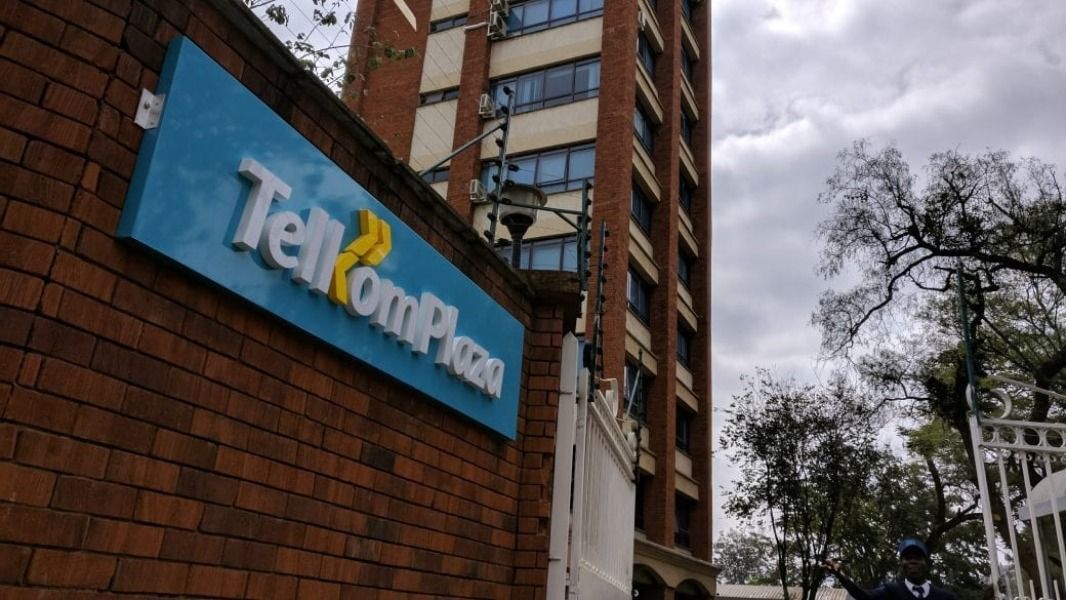
Several lawsuits related to Telkom Kenya retrenchments and pension payments are still pending, with new cases emerging every year. Retired workers, many of whom are elderly and struggling financially, have had to endure endless court hearings, appeals, and bureaucratic delays.
The Teleposta Pension Scheme case is one of the most significant disputes, as it affects thousands of families who depended on these retirement benefits. Some former employees have already passed away before receiving a single shilling of their pension, leaving their dependents in financial distress.
The Kenyan government, which still holds a stake in Telkom Kenya, has done little to resolve the matter. Former employees argue that the delays are intentional, designed to wear them down until they give up or pass away.
For many, the fight is about more than just money—it’s about dignity, justice, and accountability.
These two cases—Kajiado families vs. the SGR contractor and ex-Telkom staff vs. their former employer—are just examples of a growing problem in Kenya’s legal system. Court rulings are supposed to deliver justice, but what happens when those in power simply ignore them?
The lack of enforcement reveals a deep flaw in Kenya’s governance. If companies and government institutions can repeatedly defy court orders without consequences, it raises serious doubts about the effectiveness of the judiciary.
Several factors contribute to this crisis:
Without urgent reform, Kenya risks becoming a country where justice is only theoretical—accessible on paper but meaningless in practice.
For the 22 Kajiado families and the thousands of ex-Telkom staff still waiting for their pensions, hope is fading. They are left with unanswered questions:
These cases are a test for Kenya’s legal system, political leadership, and public accountability. Until court rulings carry real consequences for those who defy them, the country’s justice system will continue to fail its people.
For now, both the Kajiado families and ex-Telkom employees remain trapped in a legal nightmare, fighting for rights they should have received long ago.
The real question is: Who will stand up for them?






0 comments