
Your Read is on the Way
Every Story Matters
Every Story Matters
The Hydropower Boom in Africa: A Green Energy Revolution Africa is tapping into its immense hydropower potential, ushering in an era of renewable energy. With monumental projects like Ethiopia’s Grand Ethiopian Renaissance Dam (GERD) and the Inga Dams in the Democratic Republic of Congo, the continent is gearing up to address its energy demands sustainably while driving economic growth.
Northern Kenya is a region rich in resources, cultural diversity, and strategic trade potential, yet it remains underutilized in the national development agenda.

Can AI Help cure HIV AIDS in 2025

Why Ruiru is Almost Dominating Thika in 2025

Mathare Exposed! Discover Mathare-Nairobi through an immersive ground and aerial Tour- HD

Bullet Bras Evolution || Where did Bullet Bras go to?
With nationwide demonstrations looming, Kenya’s security forces have drawn a hard line: key government zones are strictly off-limits. The National Police Service (NPS) has warned protest organisers and participants not to attempt accessing protected areas during the planned June 25 protests, threatening swift legal repercussions for violations.
Inspector General Douglas Kanja issued the declaration on Tuesday night, just hours before Kenyans are expected to flood the streets to commemorate the first anniversary of last year’s fatal anti-government protests.
According to IG Kanja, the protest wave will not be allowed to spill over into highly sensitive zones like State House, critical infrastructure points, or restricted government facilities. These areas have been flagged under the Protected Areas Act, and any attempt to penetrate them will be treated as a deliberate violation of national security.
He emphasized that while the Constitution grants the right to assemble, picket, and present petitions, that freedom comes with legal boundaries. “Let there be no confusion — peaceful protests are allowed, but storming into restricted zones is not. We will enforce the law fully,” Kanja stated.
The Inspector General outlined the legal context surrounding assemblies, noting that both Article 37 of the Constitution and sections of the Penal Code provide clear frameworks for lawful demonstrations. Any conduct that deviates from those parameters — such as forced access into restricted zones — transforms a protest into an unlawful and riotous assembly.
Kanja made it clear that the police would not allow the thin line between freedom and lawlessness to be crossed. “We are ready to protect peaceful protesters,” he said, “but equally prepared to act decisively against those seeking to exploit the moment.”
In anticipation of unrest, Nairobi has been turned into a fortress. Roads leading to and from the city’s Central Business District — including Jogoo Road, Waiyaki Way, Thika Road, and Mombasa Road — have witnessed a surge in police deployment.
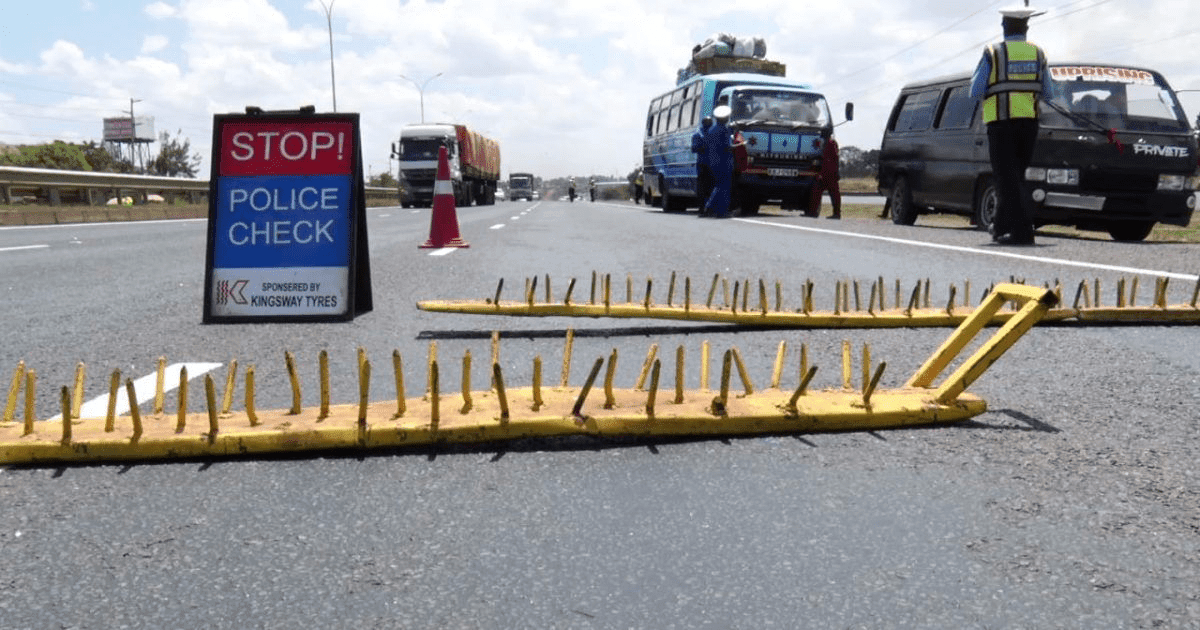
Roadblocks, metal spikes, and checkpoints have become the norm. Officers in full riot gear are stopping vehicles, inspecting passengers, and screening all movement into the CBD. A coordinated security sweep is visibly underway, and with shops shuttered and foot traffic minimal, the capital remains tense.
Interior Cabinet Secretary Kipchumba Murkomen was also spotted inspecting Nairobi’s streets early Wednesday, underscoring the government’s seriousness in securing the city.
The protests scheduled for June 25 mark a grim memory for many Kenyans — one year since a wave of unrest shook the nation and led to a deadly confrontation between protesters and police. This year’s protests are designed to honor those who lost their lives in that turmoil, but they arrive amid heightened suspicion and fear.
Authorities remain wary of infiltration by violent actors, including so-called state-sponsored “goons” who have in the past been blamed for chaos and destruction. The public sentiment remains divided — some demand accountability and reform, others caution against chaos.
Kanja’s remarks reflect that tension. He urged protest leaders to communicate intentions clearly, maintain order, and cooperate with law enforcement. “Let us protest with purpose, not provocation. We are all stakeholders in Kenya’s peace,” he said.
As the sun rises over Nairobi, the path for protesters is clear: exercise your rights peacefully or face the consequences of breaching the law. The police have set the boundaries, both physical and legal. Whether protesters heed the warning or challenge it head-on may determine if the day ends in solidarity or confrontation.
In a country grappling with economic strain, generational anger, and rising political friction, the June 25 protests are more than symbolic — they are a test of how Kenya balances democracy with order.






0 comments