
Your Read is on the Way
Every Story Matters
Every Story Matters
The Hydropower Boom in Africa: A Green Energy Revolution Africa is tapping into its immense hydropower potential, ushering in an era of renewable energy. With monumental projects like Ethiopia’s Grand Ethiopian Renaissance Dam (GERD) and the Inga Dams in the Democratic Republic of Congo, the continent is gearing up to address its energy demands sustainably while driving economic growth.
Northern Kenya is a region rich in resources, cultural diversity, and strategic trade potential, yet it remains underutilized in the national development agenda.

Can AI Help cure HIV AIDS in 2025

Why Ruiru is Almost Dominating Thika in 2025

Mathare Exposed! Discover Mathare-Nairobi through an immersive ground and aerial Tour- HD

Bullet Bras Evolution || Where did Bullet Bras go to?
Governor Johnson Sakaja has made one thing abundantly clear since taking office—Nairobi must work for all its citizens, not just the privileged few. In a bold show of political will, his administration ordered the closure of the iconic Freemasons’ Hall, a landmark steeped in history and symbolism, after it emerged that the property owed more than KSh. 19 million in unpaid land rates.
While previous governments might have tiptoed around powerful institutions, Sakaja’s team made no exceptions. The shutdown wasn’t just a financial crackdown—it was a statement. A message to all property owners, large or small, new or old, that civic responsibility cannot be evaded under the cloak of prestige or tradition.
This wasn’t a knee-jerk move. Nairobi County, under Sakaja’s leadership, followed legal due process before sealing off the Freemasons’ Hall. County enforcement teams issued multiple demand notices and published public warnings in daily newspapers. When those were ignored, action followed. Key officials in Sakaja’s inner circle—including CEC for Health Suzanne Silantoi and Chief Officers Priscilla Mahinda and Lydia Mathia—oversaw the operation.
This high-level involvement signaled that the issue was a top priority for the Governor. For Sakaja, this wasn’t just about collecting dues; it was about enforcing civic equality. No property, no matter how historic or politically connected, is beyond the reach of city law.
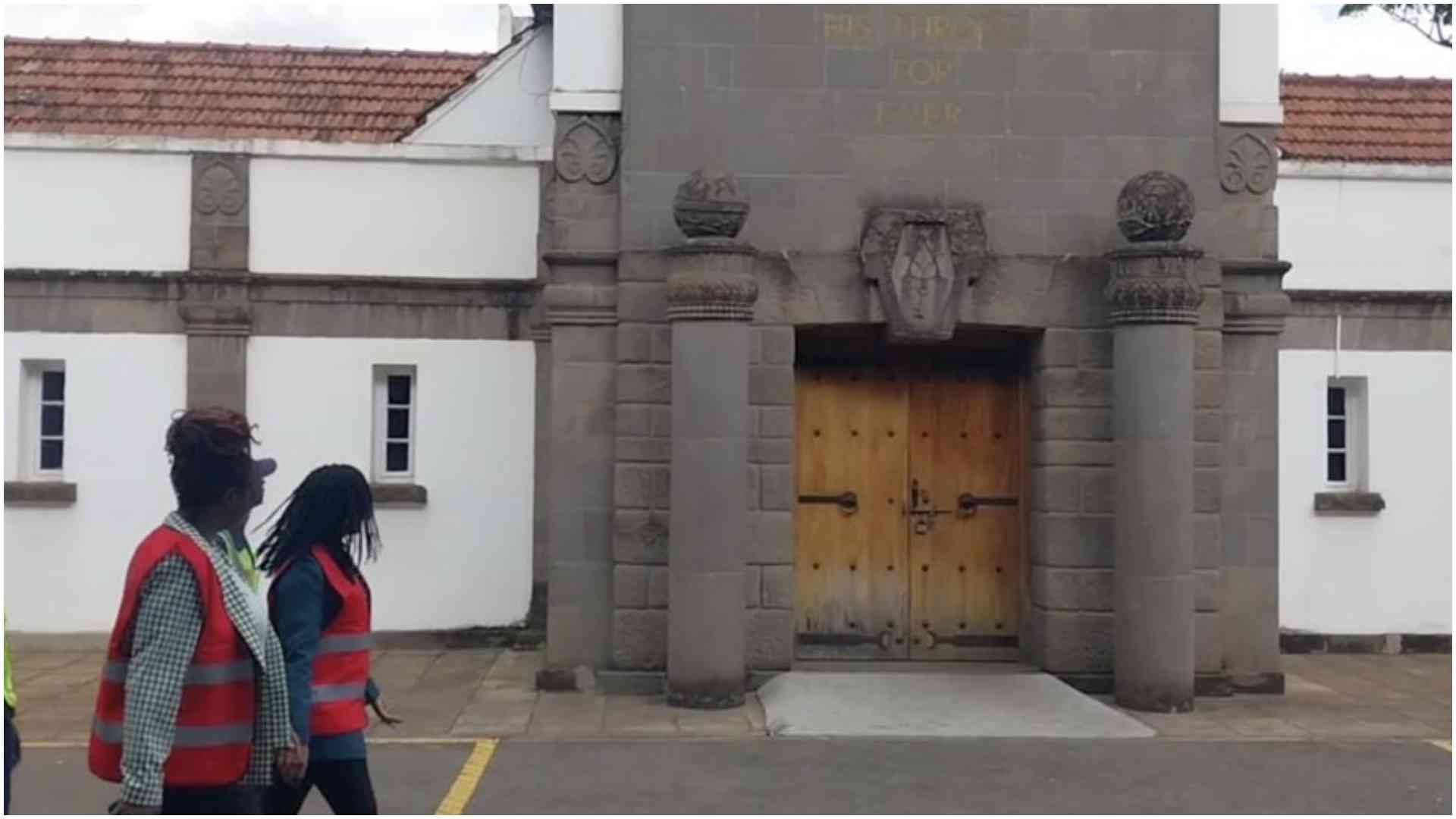
The shutdown is just one symptom of a bigger illness that Sakaja is now working to treat—massive, citywide land rate evasion. Nairobi has over 256,000 registered land parcels, yet only about 50,000 are up to date with their annual payments. That’s an 80% default rate. For a city with growing demands on infrastructure, housing, health, and waste management, the financial strain is unsustainable. Under Sakaja, City Hall has identified unpaid land rates as one of the biggest revenue leaks in the system—costing the city upwards of KSh. 10 billion annually.
These are funds that could be used to repair roads, fund clinics, manage garbage, or build new schools. But instead, they’re locked up in decades of unpaid debts, largely by wealthy or well-connected landowners.
Governor Sakaja’s crackdown isn’t a temporary PR stunt—it’s a shift in urban governance. The Freemasons’ Hall was a test case, and it set a strong precedent. The building is a historically protected structure, revered by some, whispered about by others, but legally still a privately managed asset. When the city made the decision to clamp down on it, it proved that no one is above the law—not religious institutions, not global fraternities, not legacy estates.
This approach is already expanding to other high-value properties across Nairobi. Sakaja’s administration is building a database of major defaulters and preparing a pipeline of similar enforcement actions. And the city is watching.
Nairobi is not just a city of history—it’s a city of now. For the city to work, especially amid a growing population and rising costs, all landowners must contribute to the system. Land rates are not a penalty; they’re a responsibility. They fund trash collection, pay nurses, support drainage projects, and keep streetlights on. When large estates and high-profile properties skip out on payments, the rest of Nairobi suffers.
Governor Sakaja’s crackdown on non-compliance doesn’t just make economic sense—it is an ethical correction of years of tolerated impunity. His administration has put every estate owner, every building manager, every real estate firm on notice: compliance is not optional anymore.






1 comment
guest
11mo ago
That was quite a bold move