The Hydropower Boom in Africa: A Green Energy Revolution
Africa is tapping into its immense hydropower potential, ushering in an era of renewable energy. With monumental projects like Ethiopia’s Grand Ethiopian Renaissance Dam (GERD) and the Inga Dams in the Democratic Republic of Congo, the continent is gearing up to address its energy demands sustainably while driving economic growth.
Incredible Views of Major Northern Kenya Towns 2025
Northern Kenya is a region rich in resources, cultural diversity, and strategic trade potential, yet it remains underutilized in the national development agenda.
Mathare Exposed! Discover Mathare-Nairobi through an immersive ground and aerial Tour- HD
Bullet Bras Evolution || Where did Bullet Bras go to?
Hawker in Critical Condition After Nairobi Protest Shooting Sparks National Outcry
19/06/2025
7mo
0
0
0
0
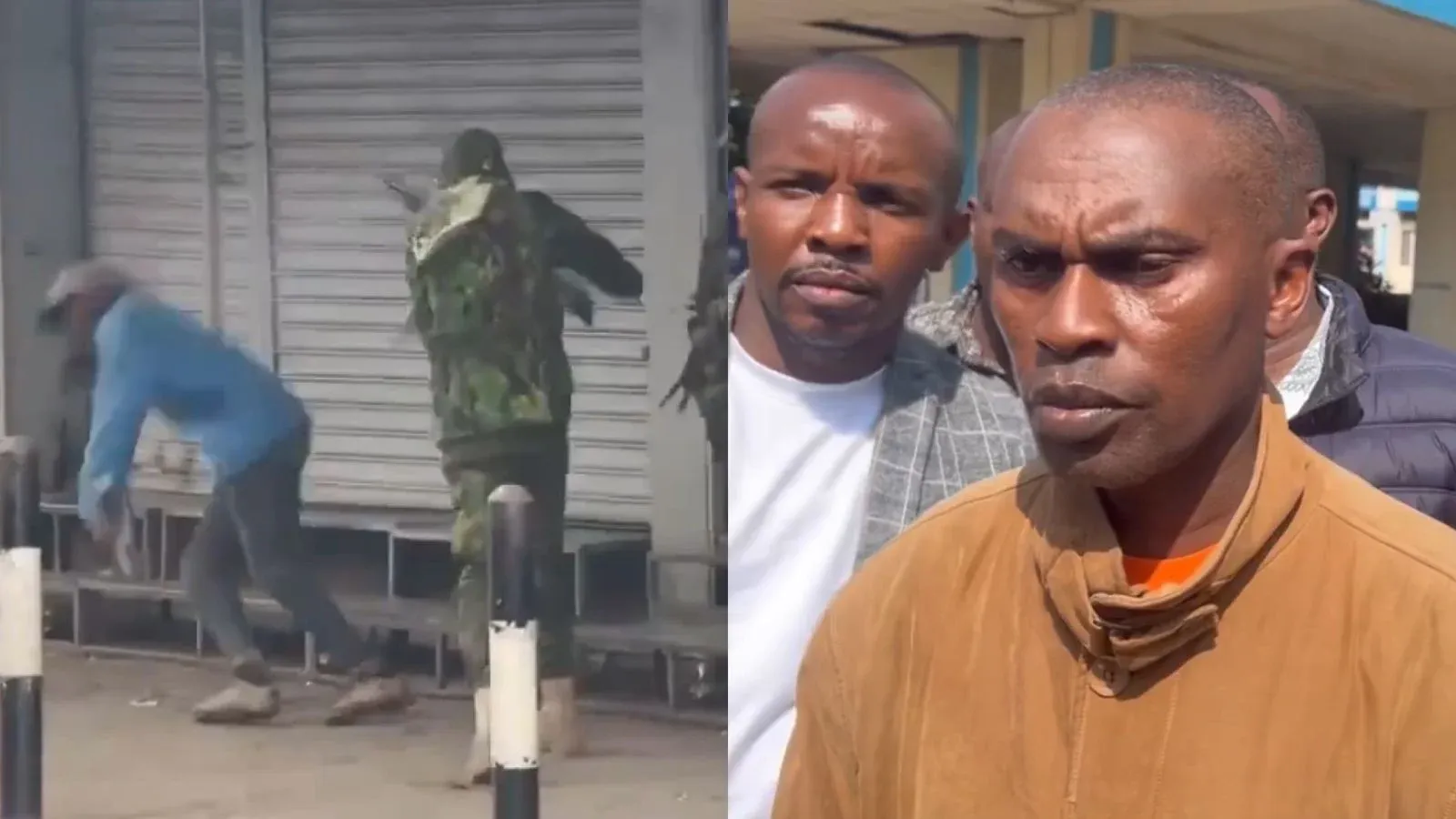
Hawker in Critical Condition After Nairobi Protest Shooting Sparks National Outcry FILE | Courtesy
0
0
0
0
ByEsther Mbugua
Key Take-aways from this Story
Boniface Kariuki, a 22-year-old hawker, was shot in the head by police while selling face masks during protests in Nairobi.
He underwent a two-hour emergency surgery and remains in critical condition in the ICU with serious neurological concerns.
His father's emotional plea for justice sparked nationwide outrage and renewed calls for police accountability.
Two police officers were arrested, though many view the action as insufficient without deeper institutional reform.
The incident has become a national symbol of state brutality, highlighting the urgent need for civil rights protections and security sector overhaul.
The Tragedy in the Midst of Protest
What began as a demonstration calling for justice turned into a harrowing day of violence when Boniface Kariuki, a 22-year-old hawker, was shot in the head in broad daylight in Nairobi’s central business district. He was not holding a placard, nor was he part of the protest chants—he was simply going about his daily hustle, selling face masks to make a living. His life took a cruel turn when he became the unintended yet unforgettable face of police brutality.
Boniface had set up his usual vending spot along Moi Avenue, unaware of the looming chaos. As demonstrators clashed with police officers nearby, he found himself caught in the ripple of state aggression. Witnesses described how officers, without warning, harassed him, accused him of loitering, and violently pushed him to the ground. When he attempted to walk away, an officer reportedly drew his weapon and shot him point-blank in the head. He collapsed instantly, bleeding profusely.
Emergency Surgery and Critical Condition
Boniface was rushed by well-wishers to Kenyatta National Hospital where a team of emergency specialists received him in critical condition. He had suffered a gunshot wound to the left side of his skull, with deep tissue damage and internal bleeding. Surgeons commenced an immediate operation that lasted over two hours. The procedure involved the extraction of the bullet and the delicate repair of damaged cranial tissue. Doctors managed to stabilize him, but he was transferred to the Intensive Care Unit where he remains under heavy sedation and mechanical ventilation.
Medical professionals at the facility confirmed that his condition remains life-threatening. There are concerns about neurological damage, and his long-term recovery remains uncertain. Boniface is now battling for his life, his fate symbolizing the broader struggle against impunity in Kenya’s security forces.
A Father’s Cry and Public Rage
Outside the hospital, Boniface's father addressed the press with trembling hands and tearful eyes, pleading for justice. He recounted how his son was a hard-working vendor, providing for his younger siblings. The trauma and pain of seeing his son reduced to a coma due to an act of unchecked police aggression has resonated with many across the country. His story has sparked outrage, drawing sympathy and anger in equal measure.
Citizens have taken to social platforms and community meetings, demanding accountability and systemic change. What makes this incident more unbearable for the public is that Boniface was not an agitator. His only offense was being present during a time of civil unrest—yet he bore the full weight of a bullet meant to suppress dissent.
Crackdown on Rogue Officers
Citizens have taken to social platforms and community meetings, demanding accountability and systemic change. Source: X
Following widespread condemnation, authorities have moved swiftly to apprehend the officers suspected to be involved in the shooting. The arrest of two police constables has been confirmed, with internal disciplinary proceedings initiated. While this has somewhat quelled public fury, many view it as a reactionary gesture rather than a structural solution. There are calls for the establishment of an independent inquiry to ensure transparency and justice.
Security officials have also been summoned for high-level briefings on crowd control measures, with attention drawn to the reckless use of live ammunition during civilian demonstrations. Analysts warn that failure to address these underlying issues could erode public trust and provoke larger resistance movements.
Demand for Justice and Structural Reform
The shooting of Boniface Kariuki has reignited a larger national conversation about the state’s handling of dissent, civil liberties, and the accountability of law enforcement. Activists and legal experts argue that justice must go beyond arrests. It should lead to legal reform, better training protocols for riot police, and the strengthening of oversight bodies.
Boniface’s case is not an isolated incident. It is a painful chapter in a long history of abuses that many feel has been met with silence or superficial responses. Now, with his life hanging in the balance, the nation watches and waits—demanding not just justice for Boniface, but a redefinition of how the state relates to its people.
Conclusion
The harrowing ordeal of Boniface Kariuki underscores the fragility of civilian safety in moments of unrest. He is now more than a victim; he is a symbol. A symbol of state excess, of the cost of indifference, and of the urgent need for meaningful change. As his family prays for a miracle, Kenya faces its moment of truth—will it be a nation that protects its citizens, or one that punishes them for simply existing in the wrong place at the wrong time?










0 comments