
Your Read is on the Way
Every Story Matters
Every Story Matters
The Hydropower Boom in Africa: A Green Energy Revolution Africa is tapping into its immense hydropower potential, ushering in an era of renewable energy. With monumental projects like Ethiopia’s Grand Ethiopian Renaissance Dam (GERD) and the Inga Dams in the Democratic Republic of Congo, the continent is gearing up to address its energy demands sustainably while driving economic growth.
Northern Kenya is a region rich in resources, cultural diversity, and strategic trade potential, yet it remains underutilized in the national development agenda.

Can AI Help cure HIV AIDS in 2025
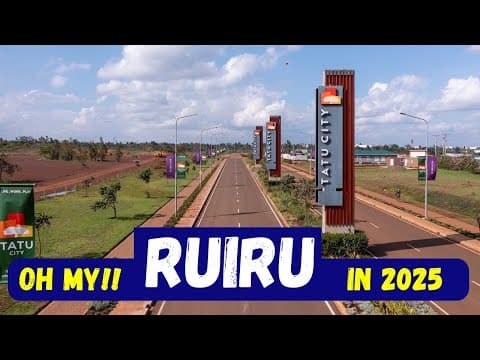
Why Ruiru is Almost Dominating Thika in 2025

Mathare Exposed! Discover Mathare-Nairobi through an immersive ground and aerial Tour- HD

Bullet Bras Evolution || Where did Bullet Bras go to?
In an unexpected but highly publicized move, Nakuru Town West Member of Parliament Samuel Arama distributed KSh 10,000 in cash to each person who attended a closed-door State House meeting with President William Ruto.
The money, handed out in brown envelopes, was explained as a presidential gesture — specifically for attendees to “buy lunch.” The moment was caught on camera and quickly spread across social media platforms, with Arama seen smiling and saying, “Mdosi amenunua lunch” — loosely translated as “The boss has bought lunch.” While many were surprised by the frankness and scale of the gesture, Arama insisted it was done transparently, ensuring each guest left with the full amount promised.
The generosity, however, came within the context of a very serious agenda. The meeting was called following rising insecurity in Nakuru County, including increased reports of criminal activity and police misconduct. Residents had grown increasingly frustrated with the inability of local security agencies to address killings, robberies, and what many viewed as an overly aggressive or corrupt law enforcement approach.
President Ruto used the forum to issue a stern warning to security forces, urging strict adherence to constitutional practices. He emphasized that the state would not tolerate rogue officers who violate rights under the guise of law enforcement. His remarks came with a promise that the Independent Policing Oversight Authority (IPOA) would be empowered to fast-track investigations into officers accused of brutality.
Beyond security, the president’s address was forward-looking, focusing on tangible developments intended to ease economic pressure and boost regional growth. Ruto announced the commencement of the long-delayed dualling of the Rironi–Mau Summit Road in August — a project that, once complete, is expected to ease traffic congestion and improve transport logistics along the busy corridor. He also confirmed that rehabilitation works would begin at Afraha Stadium and Olenguruone Stadium, while Nakuru PGH would see the addition of a new trauma center.
Other significant pledges included the revival of the stalled Itare Dam and the resumption of operations at Lanet Airport, which is poised to improve regional air travel. The president also mentioned the expansion of the Special Economic Zone at Pipeline and enhancement of industrial capacity in Naivasha — moves designed to create jobs and attract investment.
While some viewed Arama’s KSh 10,000 giveaway as a heartfelt thank-you to attendees — many of whom had traveled from Nakuru to Nairobi — others saw it as a political tactic aimed at creating loyalty and goodwill in advance of potential political shifts. The optics of a politician handing out money, especially within State House, naturally fueled debate.
Arama, however, dismissed any insinuations of vote-buying or populism. He maintained that the funds came directly from the president, who wanted to ensure that each invited guest was appreciated and compensated for their time. According to Arama, there was no room for favoritism, as all guests received the same amount without any deduction or conditions.
The Nakuru meeting captured the complexity of Kenyan politics — a mix of real policy action, symbolic gestures, and grassroots-level rapport. On one hand, President Ruto demonstrated responsiveness to community concerns by addressing insecurity and announcing infrastructure investments.
On the other hand, MP Arama’s cash handout introduced a different layer — one that resonates with political culture in the country, where generosity and accessibility often form part of a leader’s social contract with their constituents.
Whether the lunch money will be remembered more than the development pledges remains to be seen, but the event has undoubtedly amplified public interest in how leaders use both policy and personal touch to build influence.




0 comments