
Your Read is on the Way
Every Story Matters
Every Story Matters
The Hydropower Boom in Africa: A Green Energy Revolution Africa is tapping into its immense hydropower potential, ushering in an era of renewable energy. With monumental projects like Ethiopia’s Grand Ethiopian Renaissance Dam (GERD) and the Inga Dams in the Democratic Republic of Congo, the continent is gearing up to address its energy demands sustainably while driving economic growth.
Northern Kenya is a region rich in resources, cultural diversity, and strategic trade potential, yet it remains underutilized in the national development agenda.

Can AI Help cure HIV AIDS in 2025

Why Ruiru is Almost Dominating Thika in 2025

Mathare Exposed! Discover Mathare-Nairobi through an immersive ground and aerial Tour- HD

Bullet Bras Evolution || Where did Bullet Bras go to?
In a bold departure from status quo economics, President William Ruto unveiled sweeping financial reforms during the 2025 Labour Day celebrations, aimed squarely at empowering the country's workforce beyond their active years. Beginning with the next financial cycle, all pensions and gratuity payments—across both public and private sectors—will be exempt from taxation. The move, couched in the Finance Bill 2025, signals not just a shift in monetary policy, but a moral pivot: a recognition that workers who built the nation deserve dignity, not deductions, in retirement.
This policy, if enacted, would mark a rare alignment of fiscal relief and social justice in Kenya’s labour history. For decades, retirees have seen their earnings chipped away by taxes, their twilight years overshadowed by economic strain. Now, Ruto's proposal could offer a more comfortable landing for aging workers—assuming, of course, Parliament doesn’t water it down.
In the same breath, Ruto announced a structural shift in how Pay As You Earn (PAYE) is calculated. Employers will now be mandated to automatically apply all tax reliefs and exemptions during payroll processing. This eliminates the tedious back-and-forth with the Kenya Revenue Authority, where workers had to file separate claims to receive what was already legally theirs. The reform, subtle yet seismic, could immediately boost net pay for thousands of employees and simplify Kenya’s often clunky tax bureaucracy.
This marks a new era of accountability—placing the onus on employers to respect the law, and not the worker to beg for fairness.
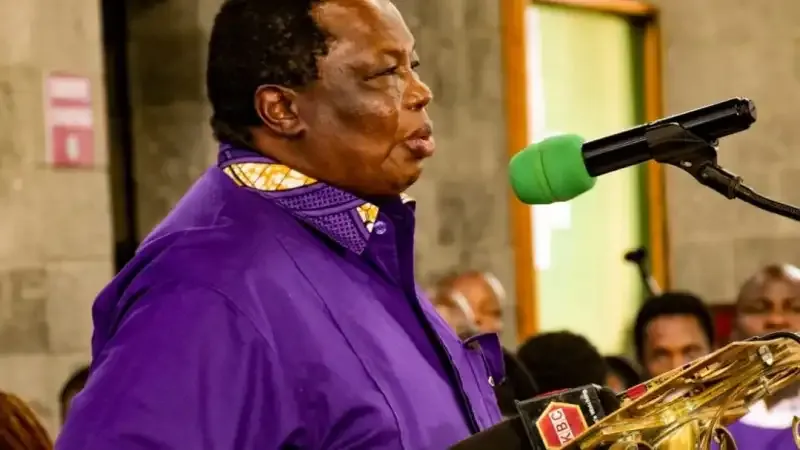
But not all is celebratory. Responding to long-standing grievances aired by the Central Organisation of Trade Unions (COTU), Ruto zeroed in on employers who failed to implement a mandatory 6% minimum wage increment announced last year. He issued a public directive to the Ministry of Labour to enforce the wage increase without exception or delay.
“This is non-negotiable,” the President declared. “No employer should get away with denying their workers what they’ve earned.”
It was a stern warning cloaked in the familiar Labour Day pageantry—a moment that revealed growing impatience within government ranks for corporate indifference to labour laws.
Read this related article too. Why Labor Day Still Matters in Kenya
Perhaps the most ambitious announcement came in education. Ruto revealed that his administration had already hired 76,000 teachers over two years—a feat that chipped away at a colossal teacher shortage that once stood at 116,000. But he's not done yet. Come January 2026, the government plans to recruit an additional 20,000 intern teachers, backed by a Ksh.2.4 billion allocation. Beyond hiring, the state has set aside Ksh.1.6 billion for upskilling educators and another Ksh.1 billion for promotions.
This teacher expansion isn’t just a jobs program—it’s a foundational reinvestment in Kenya’s intellectual future. It also signals a strategic pivot: Ruto's government appears to be leaning into education as a growth engine, not just a budget line.
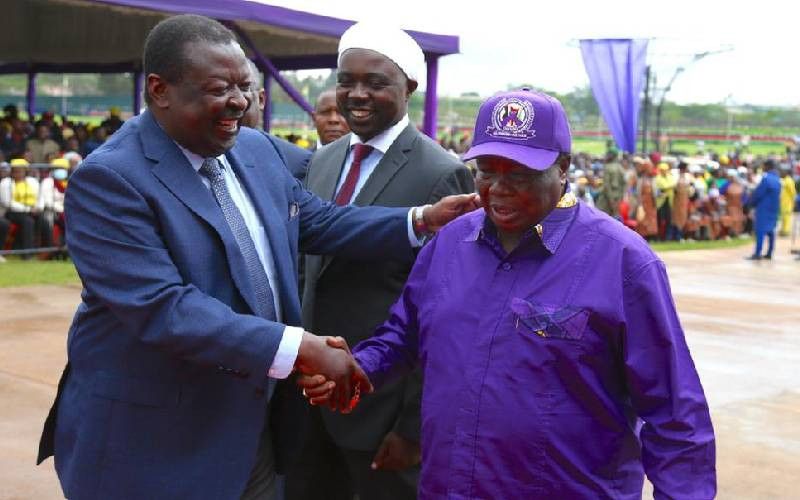
In a rare moment of introspection, Ruto signaled his intent to dial down political theatrics ahead of the 2027 elections. “We can’t move forward unless we prioritize service over slogans,” he said, reaffirming a two-year political truce of sorts. Meanwhile, Prime Cabinet Secretary Musalia Mudavadi took the opportunity to warn that collapsing institutions pose a far greater threat than terrorism—a striking admission that governance, not security, may be Kenya’s Achilles’ heel.
This recalibration reflects a growing consensus within the executive: Kenya’s political circus must take a backseat if structural reforms—like the ones announced—are to stand a chance.
Beneath the noise of big-ticket reforms, Labour Cabinet Secretary Alfred Mutua brought a darker issue to light: workplace sexual harassment. Speaking with palpable frustration, Mutua said his ministry continues to receive reports of managers abusing power and engaging in inappropriate relations with junior staff.
He urged companies to create respectful, harassment-free work environments and to sever the toxic cultures that enable exploitation.
This wasn’t just an HR issue—it was a national shame called out in broad daylight. And for once, it didn’t get buried under applause.
COTU Secretary-General Francis Atwoli concluded the day with a sobering reminder: stability is not guaranteed. Citing violent unrest in parts of Africa like Goma in the DRC, he pleaded with Kenyans to safeguard the country’s fragile peace. His message was more than a ceremonial coda—it was a quiet warning that progress can evaporate when unity is lost.
President Ruto’s Labour Day announcements mark a high-stakes wager on social equity, institutional reform, and political restraint. But for all the lofty pledges, the real test lies in implementation. Will employers comply with wage laws? Will teachers actually be hired and paid on time? Will tax reliefs trickle down or get lost in red tape?
In the months ahead, these questions will define whether Ruto’s vision is a true turning point—or just another well-scripted detour.





0 comments