
Your Read is on the Way
Every Story Matters
Every Story Matters
The Hydropower Boom in Africa: A Green Energy Revolution Africa is tapping into its immense hydropower potential, ushering in an era of renewable energy. With monumental projects like Ethiopia’s Grand Ethiopian Renaissance Dam (GERD) and the Inga Dams in the Democratic Republic of Congo, the continent is gearing up to address its energy demands sustainably while driving economic growth.
Northern Kenya is a region rich in resources, cultural diversity, and strategic trade potential, yet it remains underutilized in the national development agenda.

Can AI Help cure HIV AIDS in 2025

Why Ruiru is Almost Dominating Thika in 2025

Mathare Exposed! Discover Mathare-Nairobi through an immersive ground and aerial Tour- HD

Bullet Bras Evolution || Where did Bullet Bras go to?
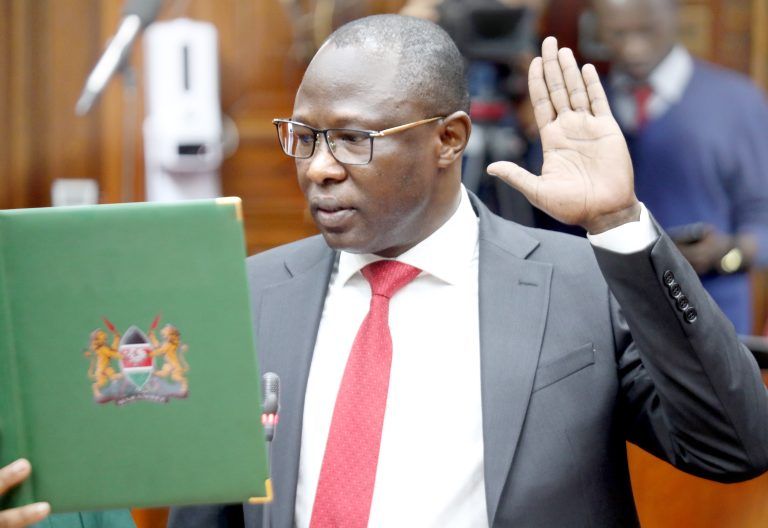
Behind closed parliamentary doors, the Justice and Legal Affairs Committee (JLAC) has swiftly endorsed Erastus Ethekon Edung to chair the Independent Electoral and Boundaries Commission (IEBC), alongside six new commissioners. While the move appears procedural on the surface, deeper tensions simmer beneath. This wave of appointments signals more than a fresh start — it’s a reshaping of the country’s electoral backbone under the full gaze of political watchers and wary citizens alike.
The vetting process, which took place in a single weekend session, has left many asking whether due diligence was sacrificed in the name of expediency. As the committee rushed its final report to the National Assembly, concerns have emerged that the appointments were anything but impartial — instead, they appear tightly choreographed to secure a strategic political win for the ruling administration.
With the JLAC's report now before the National Assembly, the next step in the appointment process teeters on the edge of controversy. Lawmakers are set to either ratify or reject the recommendation, though insiders suggest approval is a foregone conclusion. The speed and coordination behind the nominations, coupled with political pressure from top echelons of power, have cast doubt on whether Parliament will critically assess the implications of these appointments — or merely rubber-stamp them.
Critics argue that the current Assembly has become more of a conveyor belt for executive interests than a defender of institutional independence. And with the IEBC being the ultimate referee in any electoral contest, its independence is crucial. That is what makes the current developments deeply consequential.
Among the most pointed controversies is the appointment of Erastus Edung, a former Turkana County Attorney whose proximity to the inner circles of power — particularly his prior links to Josephat Nanok, now Deputy Chief of Staff at State House — has drawn sharp criticism.
Though Edung has distanced himself from Nanok, stating they share no familial or political ties beyond a former working relationship, questions linger about his perceived political alignment. In Kenya’s political ecosystem, even the faintest hint of loyalty can be enough to erode public trust in what’s supposed to be a nonpartisan institution.
Observers have pointed out that the fast-tracking of such appointments at a time when the IEBC is expected to undergo reforms raises legitimate fears of backdoor maneuvering. The electoral body's impartiality is not just a legal requirement — it is the foundation on which Kenya’s fragile democratic trust is built.
The concerns aren’t limited to Edung. Among the newly vetted commissioners is Ann Nderitu, the current Registrar of Political Parties — a figure who, while experienced, has faced criticism in her regulatory role for perceived bias and passivity during high-stakes political disputes.
Others, like Moses Mukhwana, Mary Karen Sorobit, and Fahima Araphat Abdallah, bring regional diversity and legal expertise, but critics argue that the selection process was less about professional depth and more about appeasing various political blocs.
In a climate where trust in public institutions is steadily eroding, the symbolism behind who gets appointed — and how — matters more than ever.
At the heart of this reshuffle is a more pressing question: Is this the beginning of electoral reform or the quiet installation of loyalists ahead of the 2027 general elections?
While Edung pledged loyalty to the Constitution and vowed to conduct “free and verifiable elections,” the context of his rise — amid allegations, suspicions, and a fast-tracked vetting process — has already colored public perception.
The IEBC is not merely another commission. It holds the fate of national elections in its hands. And if its leadership is perceived as compromised, then every electoral process from by-elections to national polls risks being viewed through the lens of suspicion.





0 comments