
Your Read is on the Way
Every Story Matters
Every Story Matters
The Hydropower Boom in Africa: A Green Energy Revolution Africa is tapping into its immense hydropower potential, ushering in an era of renewable energy. With monumental projects like Ethiopia’s Grand Ethiopian Renaissance Dam (GERD) and the Inga Dams in the Democratic Republic of Congo, the continent is gearing up to address its energy demands sustainably while driving economic growth.
Northern Kenya is a region rich in resources, cultural diversity, and strategic trade potential, yet it remains underutilized in the national development agenda.

Can AI Help cure HIV AIDS in 2025

Why Ruiru is Almost Dominating Thika in 2025

Mathare Exposed! Discover Mathare-Nairobi through an immersive ground and aerial Tour- HD

Bullet Bras Evolution || Where did Bullet Bras go to?
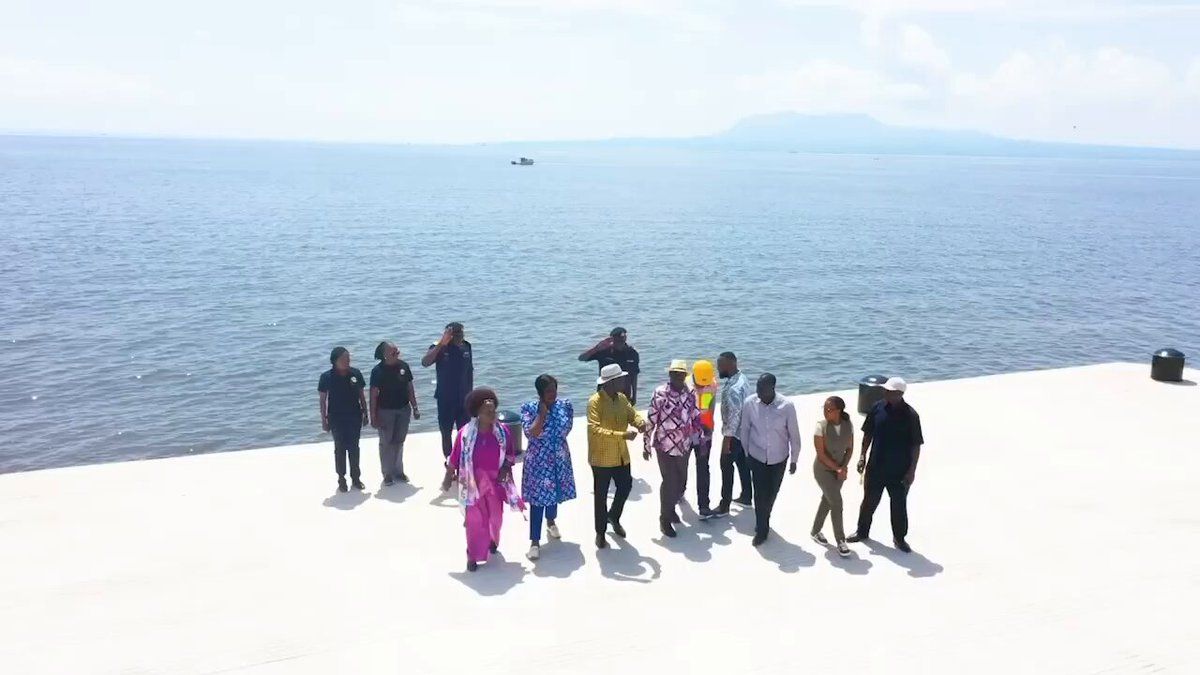
President William Ruto and former Prime Minister Raila Odinga stood side by side during a high-profile visit to the underutilized Kosiga Dam in Rangwe Constituency, Homa Bay County. Their appearance was more than ceremonial—it was symbolic of a changing political landscape where development takes precedence over division.
The presence of both leaders sent a strong message across Kenya: that when it comes to delivering critical services and addressing regional inequalities, collaboration between former political rivals is not just possible—it is necessary.
The leaders acknowledged that political turbulence should not hinder progress and that Kenya’s future rests on the shoulders of those willing to break partisan barriers. Their joint visit comes at a time when the people of Homa Bay are demanding more action and fewer promises. The move is not only a gesture of reconciliation but a calculated decision to tackle real issues facing communities at the grassroots level.
Originally constructed in 2015, Kosiga Dam—also known locally as Kasiga Dam—was envisioned as a game-changer for water access in Homa Bay County. The dam was designed to provide a reliable water supply for both domestic use and agricultural irrigation, critical in a region frequently hit by erratic rainfall and prolonged dry spells. Despite the initial optimism, the dam never reached its full potential. Infrastructure remained largely idle, and water rarely flowed to the households and farms it was meant to support.
The underutilization of the dam has been a source of frustration for local residents who continue to rely on unsafe water sources and rain-fed agriculture. Without operational water treatment systems and sufficient investment in distribution channels, the dam’s benefits have remained out of reach for thousands. Its stagnant condition became a symbol of unfulfilled promises and stalled development—until now. The renewed political attention marks a crucial turning point in the facility’s future.
During their visit, President Ruto and Raila Odinga openly acknowledged the glaring failure to maximize the potential of Kosiga Dam. They listened to local leaders, engaged with residents, and laid out a renewed strategy to restore the dam’s purpose.
President Ruto emphasized that infrastructure without functionality is nothing more than a monument, and he pledged his government’s commitment to fast-tracking rehabilitation works. Plans are already underway to activate the dormant water treatment plant and extend water pipelines to rural and peri-urban areas.
Raila Odinga, a native of the region, spoke passionately about the importance of ensuring local resources truly serve the people. He stressed that the dam, once revitalized, could lift entire communities out of poverty by enabling irrigation for farming, reducing waterborne disease through clean water access, and creating jobs in related sectors such as fisheries and agribusiness.
Both leaders agreed that technical teams from national agencies would be deployed to assess the structural integrity and design a comprehensive rehabilitation blueprint within the coming months.
The significance of this moment extends far beyond the boundaries of Homa Bay. For years, Kenyan politics has been characterized by fierce rivalry and polarized governance. The Ruto-Raila joint appearance signals a departure from the norm, a deliberate pivot towards mature, purpose-driven leadership.
Their decision to jointly champion the revitalization of Kosiga Dam underscores a shared understanding that unity in service delivery can accelerate development more than any policy document or political promise.
This cooperative approach sets a precedent for other regions grappling with stalled or underperforming projects. It demonstrates that political maturity—when paired with a genuine commitment to the people—can unlock the potential of long-neglected infrastructure. By focusing on outcomes and discarding political baggage, Ruto and Odinga have reminded the nation that leadership is ultimately about results.
The revitalization of Kosiga Dam is not happening in isolation. It is part of a broader strategy aimed at transforming Homa Bay County into a beacon of rural development and innovation.
Alongside other initiatives such as the expansion of irrigation schemes, blue economy projects along Lake Victoria, and the construction of modern administrative centers, this dam represents a foundational investment in the region’s future. The project promises to unlock new opportunities in agriculture, aquaculture, and water-dependent enterprises.
Already, the stocking of the dam with over 250,000 fingerlings is being undertaken in partnership with Victory Farms, setting the stage for an expanded aquaculture economy that could generate both food security and employment.
Residents and stakeholders alike are hopeful that once operationalized, Kosiga Dam will finally fulfill the promise it held at its inception—transforming from a forgotten structure into a source of life and prosperity for thousands.
The joint intervention by President William Ruto and Raila Odinga at Kosiga Dam is a defining moment for Homa Bay and a statement to the rest of Kenya. It’s a declaration that the time for empty rhetoric is over and that the era of inclusive, grassroots-driven development has arrived.
As technical evaluations begin and rehabilitation work kicks off, there is renewed hope that this dam—once symbolic of government neglect—will now stand as a testament to what can happen when leadership rises above politics to meet the people where they are. The road ahead will require commitment, accountability, and follow-through—but the foundation has finally been laid.





0 comments