
Your Read is on the Way
Every Story Matters
Every Story Matters
The Hydropower Boom in Africa: A Green Energy Revolution Africa is tapping into its immense hydropower potential, ushering in an era of renewable energy. With monumental projects like Ethiopia’s Grand Ethiopian Renaissance Dam (GERD) and the Inga Dams in the Democratic Republic of Congo, the continent is gearing up to address its energy demands sustainably while driving economic growth.
Northern Kenya is a region rich in resources, cultural diversity, and strategic trade potential, yet it remains underutilized in the national development agenda.

Can AI Help cure HIV AIDS in 2025

Why Ruiru is Almost Dominating Thika in 2025

Mathare Exposed! Discover Mathare-Nairobi through an immersive ground and aerial Tour- HD

Bullet Bras Evolution || Where did Bullet Bras go to?
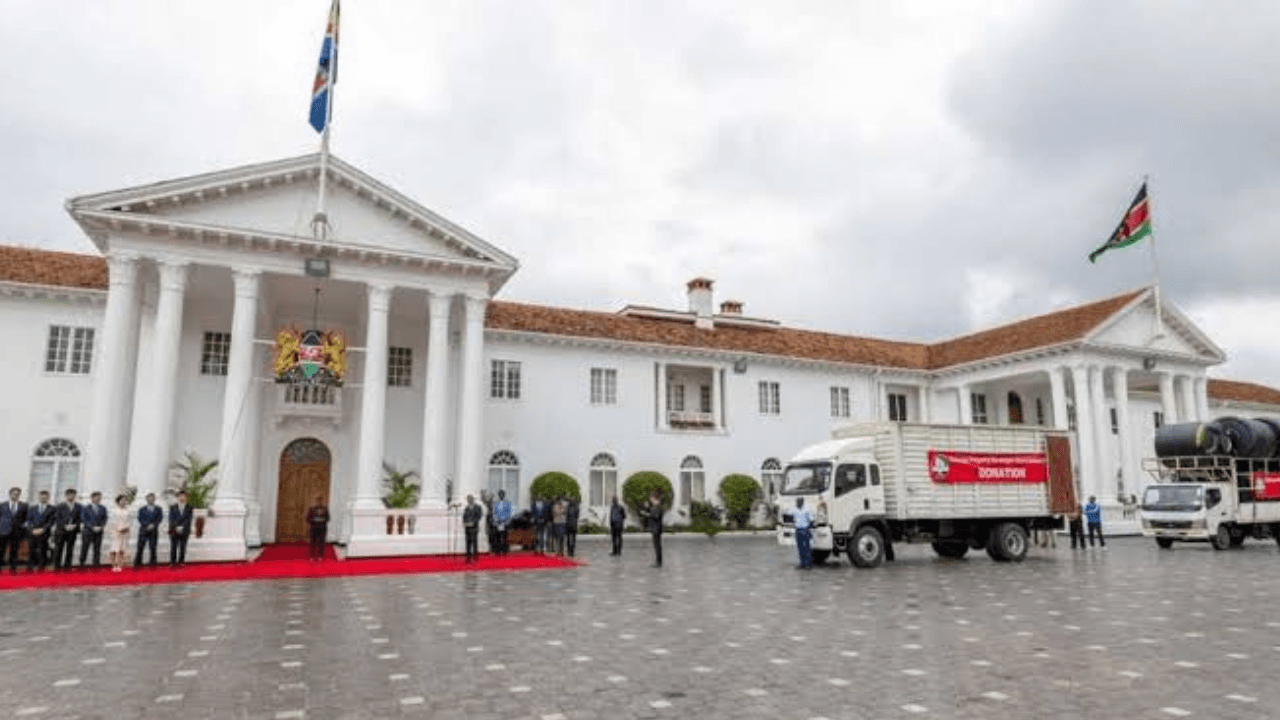
The Office of the President has announced an upcoming public auction to dispose of government property that is no longer functional. But this isn’t just a case of clearing out storage space — it’s a statement. The auction, which includes unserviceable vehicles, broken-down car washing machines, industrial cookers, and outdated household and office furniture, marks a quiet but strategic shift in how the highest office in the land manages its physical inventory.
These are not just leftovers from a long-serving administration. They are relics of inefficiency that have remained buried in warehouses and government yards, consuming maintenance budgets and administrative attention.
The fact that State House — a place often associated with prestige, power, and guarded privilege — is opening up its gates to auction off assets many may never have known existed is symbolic. It suggests a willingness to break with old patterns of hoarding government property well past its shelf life. These items, some idle for years, have been officially deemed uneconomical to repair or maintain. Their disposal is less about raising revenue and more about clearing out bureaucratic clutter and enforcing asset discipline.
The big question is not what’s being sold, but why it’s being sold now. On the surface, it looks like a routine exercise. Government departments auction unserviceable items all the time. But when State House does it, it carries weight. This auction represents a turning point in how the President’s office is choosing to project its stewardship. The administration is clearly positioning itself as leaner, cleaner, and more aligned with public expectations of fiscal prudence.
At a time when Kenyans are grappling with high taxes, rising inflation, and public frustration over excessive government spending, the decision to sell off old vehicles and broken cookers is an attempt to demonstrate responsibility — even if symbolically. It’s a public gesture designed to show that no institution, not even the most protected, is above accountability. This auction may not fix the budget, but it sends a message: the clean-up starts at the top.
Government waste has long been a sore point in Kenya. Ministries are often accused of sitting on idle assets while crying out for more funding. Vehicles worth millions rot in parking yards, and equipment ordered through bloated procurement processes ends up unused or duplicated. The optics of this auction counter that narrative — at least in part. By conducting the disposal publicly, the President’s office is making a calculated move to signal transparency.
It also hints at a culture shift within public service. If State House can auction off its outdated equipment, why not county governments? Why not state agencies? The implicit message is that reform, accountability, and rational asset management must be contagious — and that leadership by example matters. The auction becomes a benchmark, a quiet challenge to the rest of government to follow suit.
While the finer details of the inventory will be released by the auctioneers, early communication confirms that several government vehicles, including those once used for logistical duties, are part of the lot. Many are aged beyond efficient repair and carry high fuel and maintenance costs. Industrial kitchen items such as cookers and warming equipment are also on the list — likely remnants from official residence operations or hospitality units. Car washing equipment and electronic appliances round out the mix, alongside regular furniture and office tools.
Members of the public and licensed bidders will be invited to inspect and purchase these items in accordance with established procedures. While the items may no longer serve the government, they could prove useful to entrepreneurs, repairmen, or even collectors. At a personal level, it’s an opportunity to acquire assets affordably. At a national level, it’s a signal that the era of quiet rot is being addressed.
This auction isn’t just about moving old property — it’s about moving forward. The State House auction is an acknowledgment that there is dead weight in the system, both literal and administrative. While critics may dismiss it as performative, the act of decluttering, when institutionalized, is transformational. It forces record-keeping. It compels accountability. It brings closure to outdated expenditures.
And in a country where so much of governance happens behind closed doors, opening up the President’s gates to a public auction is a rare moment of bureaucratic transparency. It might not be the revolution Kenyans are waiting for, but it is a nudge — one that says change, however small, has to begin somewhere. If it starts at the top, the rest might just follow.






0 comments