
Your Read is on the Way
Every Story Matters
Every Story Matters
The Hydropower Boom in Africa: A Green Energy Revolution Africa is tapping into its immense hydropower potential, ushering in an era of renewable energy. With monumental projects like Ethiopia’s Grand Ethiopian Renaissance Dam (GERD) and the Inga Dams in the Democratic Republic of Congo, the continent is gearing up to address its energy demands sustainably while driving economic growth.
Northern Kenya is a region rich in resources, cultural diversity, and strategic trade potential, yet it remains underutilized in the national development agenda.

Can AI Help cure HIV AIDS in 2025

Why Ruiru is Almost Dominating Thika in 2025

Mathare Exposed! Discover Mathare-Nairobi through an immersive ground and aerial Tour- HD

Bullet Bras Evolution || Where did Bullet Bras go to?
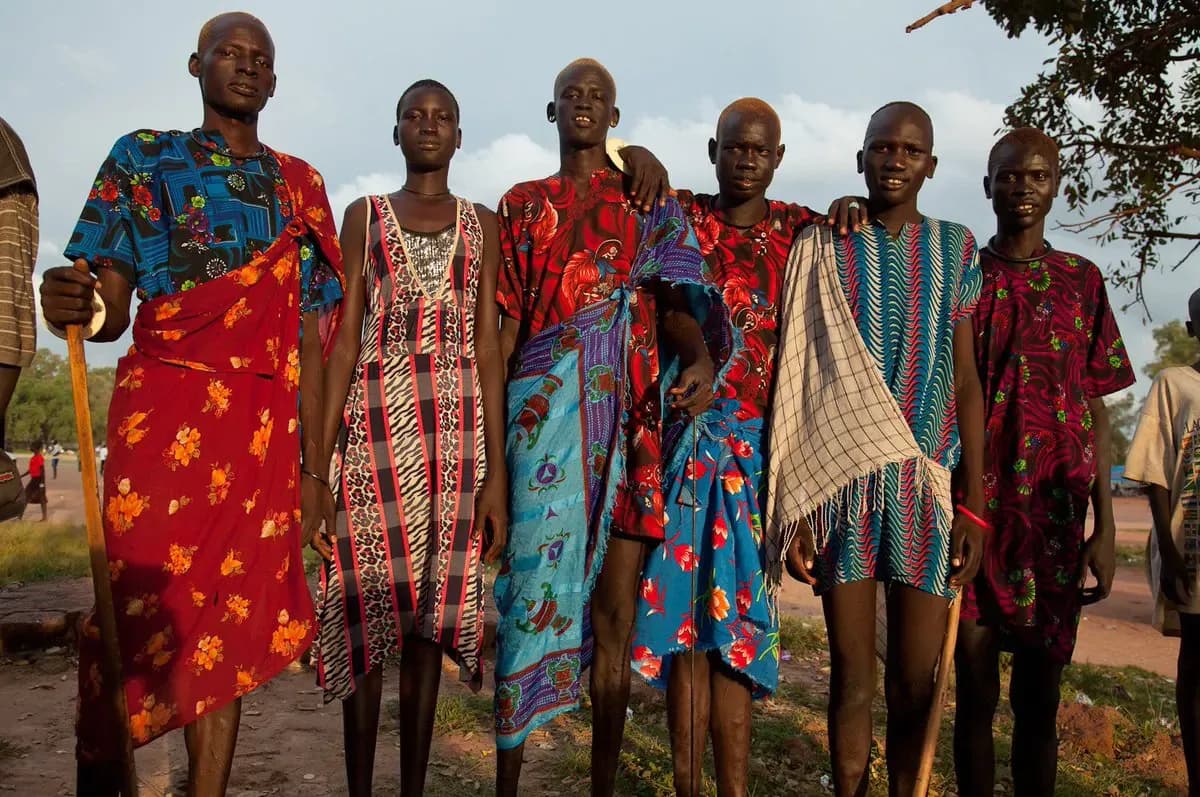
Sudanese people, particularly those from Nilotic ethnic groups such as the Dinka, Nuer, and Shilluk, are widely recognized for their exceptionally tall stature and dark skin tone. These physical traits are not coincidental but rather the result of genetic, environmental, and evolutionary factors shaped over thousands of years.
Sudan is located within the tropics, where it experiences intense sunlight and high ultraviolet (UV) radiation throughout the year. Over generations, human populations living in such climates evolved to develop high levels of melanin in their skin. Melanin is the pigment responsible for skin color and provides natural protection against the harmful effects of UV rays.
The presence of dark skin in Sudanese populations offers several evolutionary advantages:
-Prevents sunburn and skin cancer by absorbing UV radiation.
-Protects folate levels in the blood, a vital nutrient for reproduction and fetal development that can be degraded by excess UV exposure.
-Helps the body adapt to high solar exposure without damaging skin tissues.
Thus, dark skin in Sudanese populations is a biological adaptation that has enabled them to survive and thrive in a harsh, sun-drenched environment.
The tallest ethnic groups in the world—the Dinka and Nuer of South Sudan and Sudan—are part of the Nilotic peoples, an indigenous group that has inhabited the Nile Valley for centuries. Their genetic makeup naturally supports tall stature and long limbs, traits passed down through generations.
According to Allen’s Rule, a principle in evolutionary biology, people who live in hot climates tend to develop longer limbs and leaner bodies to maximize heat dissipation. This rule explains why many Sudanese, especially Nilotic individuals, have tall and slender physiques—their bodies are well-suited to regulate temperature efficiently in extremely hot conditions.
Historically, Nilotic communities are pastoralists who rely heavily on livestock farming. Their traditional diets are rich in:
-Milk
-Meat
-Animal blood (in some cultures)
This high-protein, nutrient-dense diet, particularly during childhood and adolescence, supports healthy growth and likely contributes to the observed tallness in these populations.
The physical traits of tallness and dark skin have also become defining cultural features within many Sudanese communities. These characteristics are not only genetically inherited but are also celebrated in social and cultural identity, contributing to a sense of ethnic pride and distinction.
Additionally, the historical continuity of these traits among Nilotic populations—preserved through generations of endogamous (within-group) marriage—has helped maintain these genetic features in a relatively pure form.
The dark skin and tall stature of Sudanese people—especially among Nilotic groups—are a fascinating outcome of human adaptation. These features result from a harmonious interplay of genetics, environment, and culture, shaped over centuries by life in the hot and arid regions of the Nile Valley. Far from being anomalies, they represent the resilience and biological intelligence of human populations adapting to their environment.
As science continues to explore the genetic diversity of African populations, such traits offer valuable insights into human evolution, adaptation, and cultural identity.




0 comments