
Your Read is on the Way
Every Story Matters
Every Story Matters
The Hydropower Boom in Africa: A Green Energy Revolution Africa is tapping into its immense hydropower potential, ushering in an era of renewable energy. With monumental projects like Ethiopia’s Grand Ethiopian Renaissance Dam (GERD) and the Inga Dams in the Democratic Republic of Congo, the continent is gearing up to address its energy demands sustainably while driving economic growth.
Northern Kenya is a region rich in resources, cultural diversity, and strategic trade potential, yet it remains underutilized in the national development agenda.

Can AI Help cure HIV AIDS in 2025

Why Ruiru is Almost Dominating Thika in 2025

Mathare Exposed! Discover Mathare-Nairobi through an immersive ground and aerial Tour- HD

Bullet Bras Evolution || Where did Bullet Bras go to?
Fred Matiang’i enters the 2027 presidential race not as an outsider but as a figure who has long operated within the corridors of power. Constitutionally, he is fully eligible to contest for the highest office in the land. Born and bred in Kisii County in western Kenya, Matiang’i is a natural-born citizen of the Republic, fulfilling the most fundamental requirement under Article 137 of the Kenyan Constitution. At well over the minimum age threshold of 35, his demographic and civic status aligns with every stipulation outlined for presidential aspirants.
Further strengthening his eligibility is his consistent civic identity. Matiang’i has never acquired foreign citizenship, nor has he held allegiance to any other state—conditions that would have otherwise disqualified him. He remains a Kenyan by birth, by commitment, and by record. In a political climate often marred by controversy over dual citizenship, fraudulent documentation, or residency issues, Matiang’i’s civic clarity gives him a strong and unassailable starting point.
While constitutional eligibility may open the gate, it is one’s service record that defines their fitness to lead. Matiang’i has served in some of the most critical and demanding ministries in Kenya’s government. As Cabinet Secretary for Information, Communication, and Technology, he initiated sweeping reforms in digital infrastructure and transparency in government operations. His transition to the Ministry of Education was marked by a no-nonsense campaign against exam cheating, where he revolutionized the credibility of Kenya’s national examination system through stringent oversight and structural reform.
However, it was during his time as Interior Cabinet Secretary that Matiang’i carved out a lasting reputation as a firm and resolute administrator. He commanded the security apparatus with precision, instilled a culture of discipline within the police service, and ensured swift coordination during national emergencies. In an environment where many public officials struggle to leave a lasting impact, Matiang’i’s trail is visible, measurable, and undeniably transformative. His legacy in these roles reflects an individual who not only understands the inner workings of government but who can effectively steer the machinery of state under pressure.
In Kenyan politics, where the line between power and scandal is often razor-thin, a clean record is increasingly rare and immensely valuable. Fred Matiang’i stands out as one of the few senior public officials whose reputation remains largely unmarred by personal corruption or criminal convictions. Despite being the focus of political attacks and investigations—particularly during the transition from the Kenyatta to Ruto administration—Matiang’i has never been convicted of any offense, nor has he been banned from holding public office.
His political opponents have attempted to associate him with misuse of office, particularly in the heated months leading up to the 2022 general election. However, none of these claims have resulted in legal proceedings that compromise his ability to run. As it stands, Matiang’i retains a clean ethical record, no history of abuse of public resources, and no ongoing court cases that could disqualify him from presidential contention. In a landscape where reputational damage can derail candidacies, his legal clarity is one of his most strategic assets.
Legal eligibility and administrative excellence, while necessary, are not sufficient on their own. Political capital—particularly at the grassroots level—is critical. Matiang’i’s recent rally at Gusii Stadium was more than a regional gathering; it was a calculated return to the political frontline. Backed by key figures from the Gusii region, including sitting governors and senators, the event demonstrated that he is not just respected in bureaucratic circles but also beloved in his home turf. His ability to energize his ethnic base without overt tribalism is a delicate but important political balance that few have mastered.
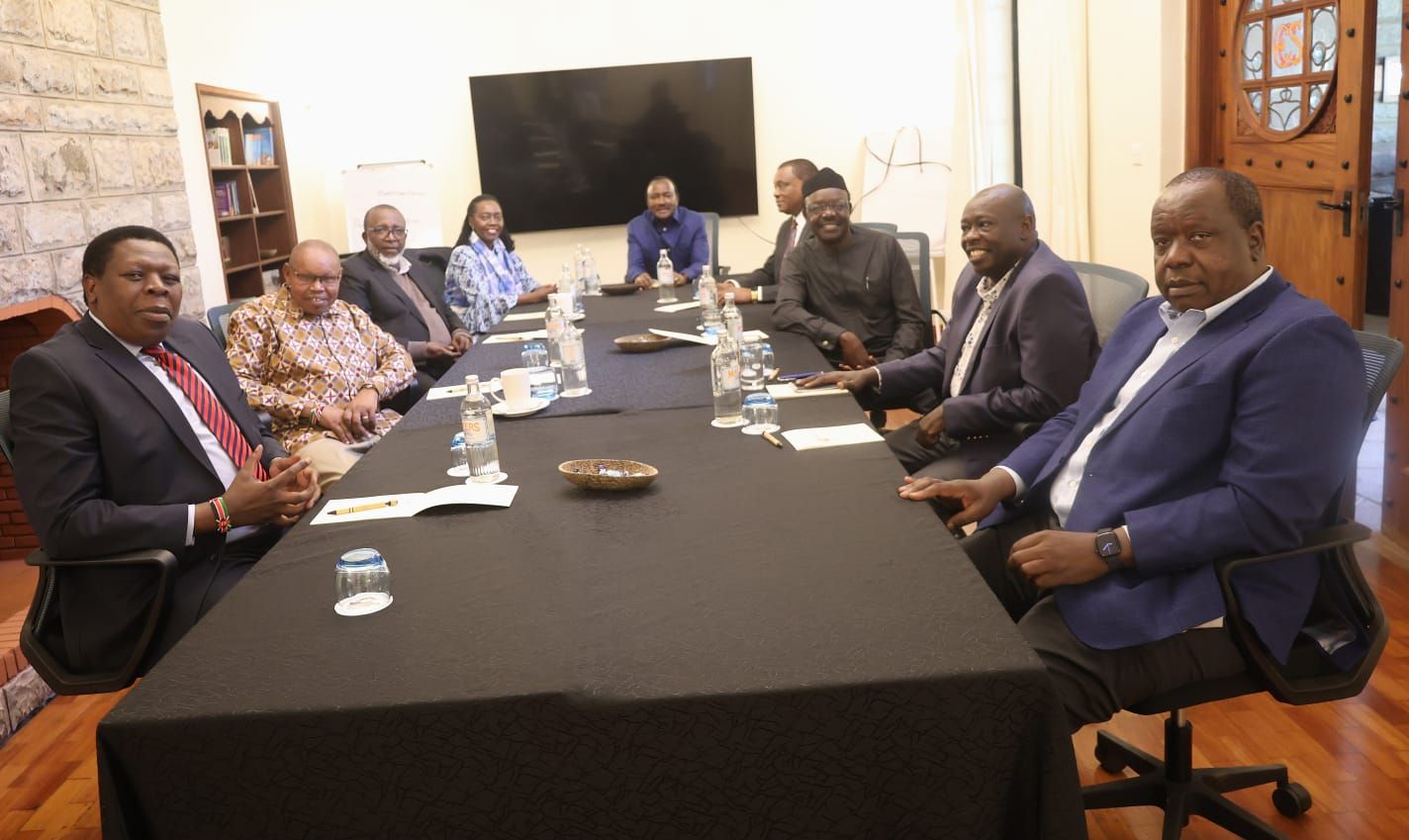
But Matiang’i is not stopping at Kisii. His plans for a wider national tour show a strategic attempt to build coalitions beyond his backyard. Early talks with opposition heavyweights such as Kalonzo Musyoka and Martha Karua suggest he is open to, if not actively pursuing, a broader political alliance. This outreach reflects an understanding that winning a presidency in Kenya requires a mosaic of support—a coalition that cuts across regions, classes, and generations. His ability to assemble such a front may determine whether he remains a regional strongman or becomes a serious national contender.

Perhaps the greatest challenge Matiang’i faces is translating his image as a technocrat into one that resonates emotionally with voters. His tenure in government proved he could make things work, often under difficult circumstances. But presidential races are not won on performance alone—they are also won on inspiration, storytelling, and the ability to relate to the common citizen’s everyday struggles. While his speeches project competence, they will need to evolve to include more of the heart—narratives that connect his background to the aspirations of ordinary Kenyans.
That said, his recent appearances suggest that Matiang’i understands this need. His language is shifting from institutional formality to populist messaging, focusing on jobs, fairness, national pride, and security. These are themes that matter deeply to the electorate. If he can sustain this momentum, and if his campaign machinery effectively communicates both his expertise and empathy, he may not only qualify for the race—he might redefine it.
Fred Matiang’i walks into the 2027 contest not as a newcomer or a nostalgic icon, but as a man whose entire career has been a rehearsal for national leadership. With the law on his side, experience in his portfolio, and a growing network of supporters, he stands poised to turn eligibility into inevitability. What remains to be seen is whether he can turn that inevitability into victory.






0 comments