
Your Read is on the Way
Every Story Matters
Every Story Matters
The Hydropower Boom in Africa: A Green Energy Revolution Africa is tapping into its immense hydropower potential, ushering in an era of renewable energy. With monumental projects like Ethiopia’s Grand Ethiopian Renaissance Dam (GERD) and the Inga Dams in the Democratic Republic of Congo, the continent is gearing up to address its energy demands sustainably while driving economic growth.
Northern Kenya is a region rich in resources, cultural diversity, and strategic trade potential, yet it remains underutilized in the national development agenda.

Can AI Help cure HIV AIDS in 2025
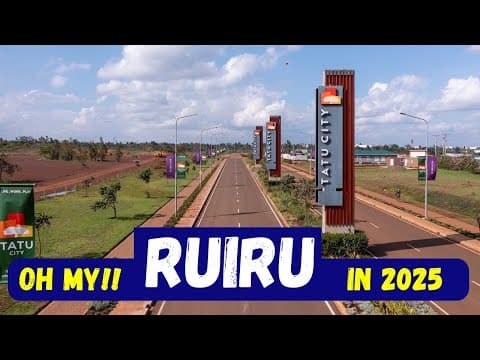
Why Ruiru is Almost Dominating Thika in 2025
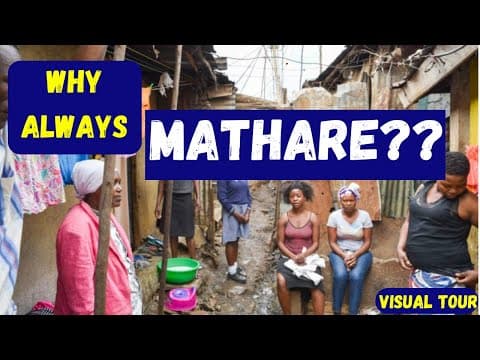
Mathare Exposed! Discover Mathare-Nairobi through an immersive ground and aerial Tour- HD

Bullet Bras Evolution || Where did Bullet Bras go to?
In today’s Kenya, the battle for public opinion is just as fierce as the one for political power. Few figures represent this tension more than Raila Odinga—a man hailed by many as a democratic icon, yet increasingly portrayed by others as outdated or overly ambitious. The recent storm over alleged media attacks shows a growing rift between how power is challenged and how legacy is remembered.
Odinga’s name carries weight. For decades, he’s stood as a powerful voice in Kenya’s opposition, often framed as the conscience of the people and a fearless reformist. But as the political climate evolves, so too does the media tone. Headlines and opinion pieces are getting sharper, questioning not just Odinga’s actions but his very place in the future of Kenyan leadership. Some of these narratives go further, poking at his family, his past alliances, and his continued presence in political spaces.
This shift has left many wondering: is this the media doing its job, or is something deeper happening beneath the surface?
There’s no denying that Odinga’s legacy is one of sacrifice. From pushing for multi-party democracy to standing firm during volatile elections, his name is tied to key turning points in Kenyan history. Yet today, that legacy seems to be under trial in the court of public opinion. While healthy debate is part of democracy, coordinated narratives that focus on tearing down rather than critiquing ideas raise questions about motive.
Supporters argue this is no coincidence—it’s a strategy. A way to frame Odinga as out of touch or too rooted in the past to lead in the present. At a time when he’s vying for continental leadership, especially through his African Union ambitions, the timing of these criticisms feels pointed, not accidental.
What’s unfolding is bigger than one man or one newspaper. It’s about how information is shaped in a hyper-political era. When media platforms are seen as either allies or enemies of political players, trust collapses. What one side sees as transparency, the other sees as attack. When that balance tips too far, media becomes a battleground—where influence is measured not in facts but in the strength of the spin.
For many citizens, it becomes harder to tell what’s genuine journalism and what’s engineered messaging. In such an environment, even valid critique risks being dismissed as political propaganda.
As Kenya looks to its future—both locally and on the continental stage—figures like Raila Odinga remain lightning rods. He represents unfinished business, both in democratic ideals and power struggles. The way he’s covered in media now may signal a broader shift: are we witnessing healthy scrutiny of leadership, or a calculated campaign to rewrite public memory?
The answer lies not just in who writes the stories, but in who they serve.





0 comments