
Your Read is on the Way
Every Story Matters
Every Story Matters
The Hydropower Boom in Africa: A Green Energy Revolution Africa is tapping into its immense hydropower potential, ushering in an era of renewable energy. With monumental projects like Ethiopia’s Grand Ethiopian Renaissance Dam (GERD) and the Inga Dams in the Democratic Republic of Congo, the continent is gearing up to address its energy demands sustainably while driving economic growth.
Northern Kenya is a region rich in resources, cultural diversity, and strategic trade potential, yet it remains underutilized in the national development agenda.

Can AI Help cure HIV AIDS in 2025

Why Ruiru is Almost Dominating Thika in 2025

Mathare Exposed! Discover Mathare-Nairobi through an immersive ground and aerial Tour- HD

Bullet Bras Evolution || Where did Bullet Bras go to?
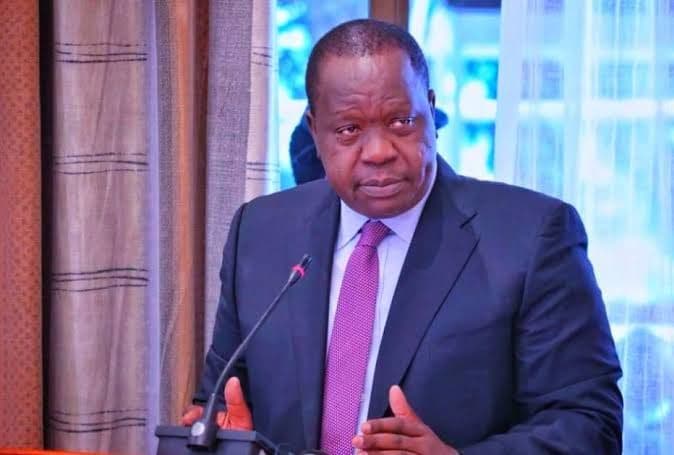
Fred Matiang’i, once one of Kenya’s most formidable Cabinet Secretaries, has officially concluded his tenure at the World Bank, where he served in a diplomatic advisory capacity. His resignation, which became effective at the end of May 2025, was not merely a professional transition—it was a calculated political maneuver aimed at paving the way for his entry into the 2027 presidential race.
Matiang’i’s exit from the global stage has sent ripples across Kenya’s political spectrum, signaling not just personal ambition, but a reawakening of a once-dormant political force.
For months, speculation had swirled around his intentions, but his decision to formally step down confirms what many had anticipated: Matiang’i is preparing for a return to national politics, this time with his sights set on the highest office in the land. His departure was low-key but intentional, a move aimed at allowing him time to realign, consult, and prepare a national strategy ahead of what promises to be a highly contested election.
Matiang’i’s return to Kenya is expected by mid-June, where he is likely to be welcomed by loyalists and political operatives who have long waited for his comeback. His absence from local politics over the past couple of years has not diminished his influence—if anything, it has allowed him to observe Kenya’s shifting landscape from a distance, preparing him to re-enter with sharper focus and renewed energy.
His anticipated re-engagement with grassroots networks and regional power brokers will be crucial. In the lead-up to 2027, building coalitions, revitalizing the Jubilee Party’s identity, and capturing the public imagination will form the backbone of his campaign. Matiang’i’s supporters argue that his administrative experience and technocratic track record make him uniquely qualified to restore order and direction in a country grappling with economic stress, corruption fatigue, and public distrust in leadership.
Behind the scenes, Matiang’i’s return aligns with a broader plan: the silent but deliberate reawakening of the Jubilee Party. Once a dominant political machine, Jubilee had all but faded into obscurity after internal divisions and electoral defeats. However, with Matiang’i stepping into an active leadership role, the party appears poised for reorganization and rebranding.

Party insiders suggest that his leadership will mark a clear break from past failures, steering Jubilee toward a more policy-driven and disciplined approach. Whether or not the party will retain its name or morph into a new political vehicle remains uncertain, but what’s clear is that the machinery is being recalibrated. Matiang’i’s role is central—not just as a candidate, but as the symbol of a political ideology aimed at stability, reform, and disciplined governance.
Fred Matiang’i’s entry into the 2027 presidential contest will not be without resistance. The political field is already beginning to take shape, with former allies now potential rivals and new alliances forming around Kenya’s increasingly fragmented electorate. His path forward requires more than public goodwill—it demands strategic alliances, cross-regional support, and a compelling vision for a country in search of new leadership.
Matiang’i’s cautious and disciplined nature suggests he will not rush into campaign theatrics. Instead, his style is expected to be structured, issue-focused, and reliant on a reputation for administrative efficiency. Whether this will resonate with an electorate fatigued by populist promises remains to be seen, but it certainly offers a stark contrast to the current political mood.
Matiang’i’s resignation from the World Bank does not just signal the end of a professional chapter—it marks the beginning of what could be one of the most consequential presidential campaigns in recent memory. It also invites reflection on the nature of political leadership, experience, and the kind of governance Kenyans will demand in the years ahead.
As he prepares to re-enter Kenya’s political arena, Fred Matiang’i faces both opportunity and scrutiny. His supporters view him as a disciplined reformer, while critics question whether his administrative credentials can translate into mass political appeal. Either way, his return is certain to shift the dynamics of power and influence in Kenya—and potentially redefine the race to State House in 2027.





0 comments