
Your Read is on the Way
Every Story Matters
Every Story Matters
The Hydropower Boom in Africa: A Green Energy Revolution Africa is tapping into its immense hydropower potential, ushering in an era of renewable energy. With monumental projects like Ethiopia’s Grand Ethiopian Renaissance Dam (GERD) and the Inga Dams in the Democratic Republic of Congo, the continent is gearing up to address its energy demands sustainably while driving economic growth.
Northern Kenya is a region rich in resources, cultural diversity, and strategic trade potential, yet it remains underutilized in the national development agenda.

Can AI Help cure HIV AIDS in 2025
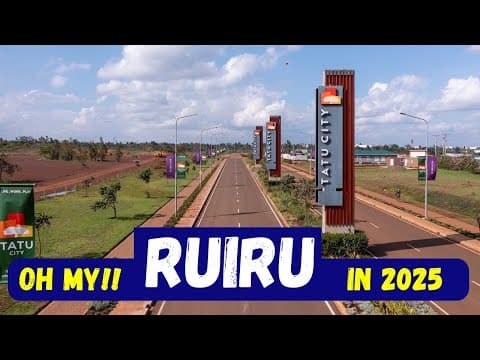
Why Ruiru is Almost Dominating Thika in 2025

Mathare Exposed! Discover Mathare-Nairobi through an immersive ground and aerial Tour- HD

Bullet Bras Evolution || Where did Bullet Bras go to?
President William Ruto has issued a strong rebuke to opposition leaders, urging them to move beyond what he termed as "empty slogans" and instead offer credible, structured solutions to the challenges facing Kenya’s youth. Ruto emphasized that young Kenyans deserve more than political theatrics—they need opportunities, jobs, and long-term plans for empowerment.
In a speech charged with political assertiveness, the President challenged former Deputy President Rigathi Gachagua and other opposition figures to present tangible alternatives. According to Ruto, governance is not about slogans shouted from podiums but about executing well-thought-out plans. “I want my plan of creating employment for our young people to be tested against that of my competitors,” Ruto declared, framing his administration's youth agenda as a benchmark for performance.
He emphasized that Kenya's youth are not cannon fodder for protest politics, but rather, the country’s most valuable resource. His administration, he said, remains committed to addressing their plight through policies rooted in job creation, sports development, entrepreneurship, and innovation.
Touching on the recent wave of demonstrations, the President reiterated his constitutional role as the protector of life and property. He condemned what he described as orchestrated violence and attempts to destroy public infrastructure, specifically referencing the vandalism at the under-construction Talanta Stadium.
“Some people are hiring goons to sabotage national projects. That is not leadership; that is criminality,” Ruto charged, vowing to hold offenders accountable while respecting the rights of peaceful assembly.
Ruto also used the platform to outline a sweeping urban transformation agenda for Nairobi. Citing its status as the headquarters of the United Nations Environmental Programme (UNEP), he emphasized the need for a cleaner, more organized, and livable city. The President confirmed that the Nairobi River rehabilitation project was on track, with completion expected in two years.
He announced an intensified partnership between the national government and Nairobi County aimed at improving waste collection, upgrading road infrastructure, and managing urban sprawl. The initiative forms part of a broader strategy to align Nairobi’s urban standards with global environmental and livability benchmarks.
In conclusion, the President’s message was clear: political leaders must shift the battlefield from the streets to the drawing board. Instead of manipulating the frustrations of the youth for short-term political mileage, he said, leaders must offer credible paths forward—plans that can be weighed, debated, and tested in the public arena.
As political tensions rise and the youth demand answers, Ruto has placed a wager—one where policy, not populism, will define the future.





0 comments