
Your Read is on the Way
Every Story Matters
Every Story Matters
The Hydropower Boom in Africa: A Green Energy Revolution Africa is tapping into its immense hydropower potential, ushering in an era of renewable energy. With monumental projects like Ethiopia’s Grand Ethiopian Renaissance Dam (GERD) and the Inga Dams in the Democratic Republic of Congo, the continent is gearing up to address its energy demands sustainably while driving economic growth.
Northern Kenya is a region rich in resources, cultural diversity, and strategic trade potential, yet it remains underutilized in the national development agenda.

Can AI Help cure HIV AIDS in 2025
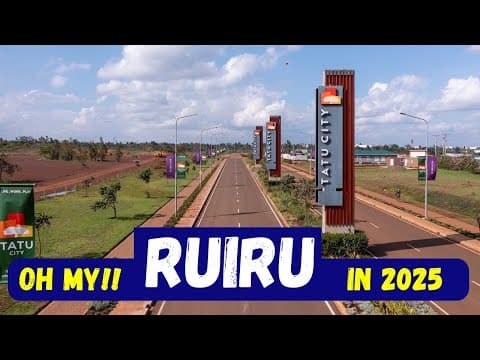
Why Ruiru is Almost Dominating Thika in 2025

Mathare Exposed! Discover Mathare-Nairobi through an immersive ground and aerial Tour- HD

Bullet Bras Evolution || Where did Bullet Bras go to?
After four decades of near-absolute control, the walls around Paul Biya’s long reign may finally be cracking. Cameroon is set to vote in a pivotal presidential election on October 12—a date confirmed in a presidential decree that has thrown the country’s political landscape into a swirl of anticipation and uncertainty.
For now, Biya remains silent on whether he’ll be a candidate. But silence doesn’t mean stillness. The political climate is shifting rapidly as former allies begin jumping ship, and the opposition, though fragmented, senses an opening.
At 92 years old and having ruled Cameroon for nearly 43 years, Paul Biya has long been a political monolith in West Africa. As the head of the Cameroon People's Democratic Movement (CPDM), his dominance has rarely been questioned within his circle.
Yet for the first time in years, murmurs from inside the fortress suggest fatigue, hesitation, and political realignment. While Biya has neither confirmed nor denied a bid for an eighth term, it’s the growing chorus of exits from his camp that speaks volumes.
The first rupture came from Issa Tchiroma Bakary, the former Employment Minister and a Biya loyalist. In June, he resigned from his cabinet position and announced his candidacy under the banner of the Front for the National Salvation of Cameroon (FSNC)—a stark pivot after years of toeing the government line.
Soon after, former Prime Minister Bello Bouba Maigari followed suit, launching his campaign under the National Union for Democracy and Progress (NUDP). Both men’s parties were formerly firm CPDM allies, making their break a significant blow to Biya’s aura of internal unity.
Their departures are not symbolic—they carry structures, voters, and networks that could tilt electoral dynamics.
Despite cracks in the ruling coalition, the opposition remains its own worst enemy. Divided and ideologically scattered, it continues to struggle in finding a unifying figure to rally around.
Maurice Kamto, the prominent critic who came second in the 2018 elections, remains a major contender under the Movement for the Renaissance of Cameroon. His rivalry with Biya is long-standing and fierce.
Cabral Libii of the Cameroonian Party for National Reconciliation (CPNR) also returns to the ring, bringing with him a growing youth following and a reformist message.
Yet, with each candidate standing alone, their collective ability to challenge the CPDM remains questionable. Without consolidation, they risk splitting the vote and handing Biya—if he runs—another victory by default.
The election calendar is now officially ticking. All candidates have until July 21 to declare their intentions. That date will likely clarify the true depth of Biya’s vulnerability—and whether his era is truly nearing its end.
For now, the story remains one of ambiguity and opportunity. Whether it ends in change or continuity depends not just on who runs, but whether Cameroonians—politicians and voters alike—are ready to rewrite the narrative.




0 comments