
Your Read is on the Way
Every Story Matters
Every Story Matters
The Hydropower Boom in Africa: A Green Energy Revolution Africa is tapping into its immense hydropower potential, ushering in an era of renewable energy. With monumental projects like Ethiopia’s Grand Ethiopian Renaissance Dam (GERD) and the Inga Dams in the Democratic Republic of Congo, the continent is gearing up to address its energy demands sustainably while driving economic growth.
Northern Kenya is a region rich in resources, cultural diversity, and strategic trade potential, yet it remains underutilized in the national development agenda.

Can AI Help cure HIV AIDS in 2025

Why Ruiru is Almost Dominating Thika in 2025

Mathare Exposed! Discover Mathare-Nairobi through an immersive ground and aerial Tour- HD

Bullet Bras Evolution || Where did Bullet Bras go to?
Former Interior Cabinet Secretary Dr. Fred Matiang’i has emerged from the political shadows to deliver a pointed warning to the current administration. In a rare and heartfelt statement, he condemned the government's aggressive response to the June 25, 2025, protests and called for an urgent shift toward dialogue and empathy.
As security forces unleashed tear gas and live ammunition in multiple towns, injuring and killing demonstrators, Matiang’i stood in solidarity with Kenya’s restless youth—those marching to honor the blood-stained memory of the 2024 Gen Z uprising.
Matiang’i, who has maintained a relatively low political profile in recent months, stated unequivocally that the use of force is both morally and strategically indefensible. He emphasized that a government that meets peaceful protest with brutality risks dragging the nation into irreversible turmoil.
The former CS acknowledged the powerful symbolism behind the June 25 commemorations. The protests—spearheaded largely by Gen Z—represent a generation unwilling to remain silent in the face of economic marginalization, institutional betrayal, and opaque governance. According to Matiang’i, these young citizens are not criminals or anarchists—they are patriots demanding accountability. “They were exercising a protected constitutional right,” he said. “Their courage should be met with humility, not hostility.”
He urged security personnel to remember their duty is to protect—not provoke—civilians. The line between enforcement and state-sponsored violence, he warned, is dangerously thin and, once crossed, stains the moral authority of a government irreparably.
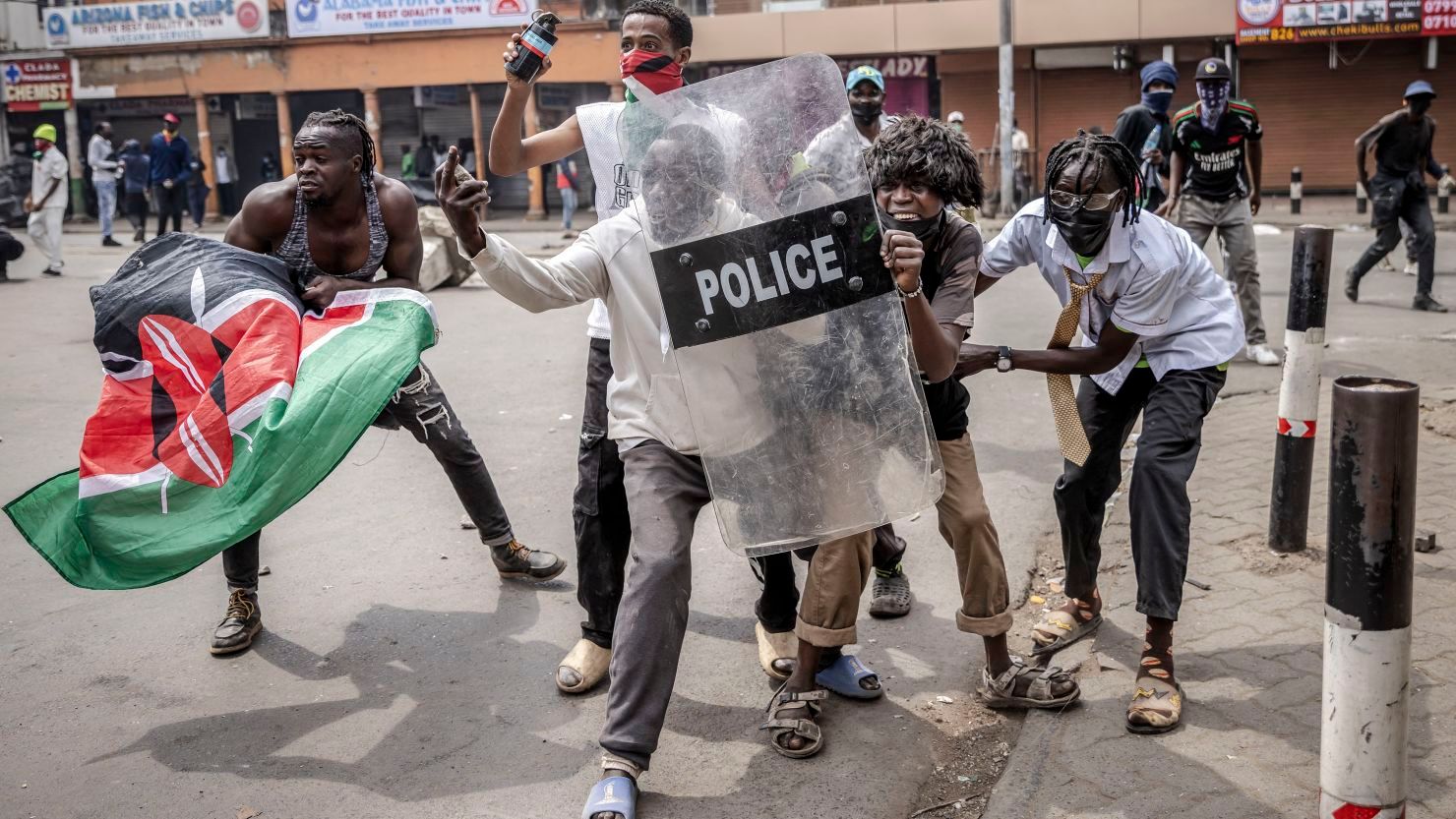
The June 25 protests are more than just symbolic—they are a cry from wounds still raw. Last year’s demonstrations against the controversial Finance Bill 2024 left dozens dead and many others injured. Protesters had rallied against punitive taxes, funding cuts to public institutions, and a perceived culture of impunity. One year later, little appears to have changed. The youth feel unheard, and their grievances remain unresolved.
Matiang’i cautioned the administration not to dismiss this moment as youthful rebellion. “We are staring at a national fracture,” he warned, “and unless we confront the root causes, we will reap the whirlwind of our indifference.”
Looking ahead to 2027, Matiang’i—widely speculated to be eyeing a presidential bid—called on all Kenyans to come together across political and generational lines. His message was clear: this is not the time for political posturing but for a national reckoning. He stressed that the country’s survival depends on dialogue, justice, and reforms—not intimidation and media censorship.
In a veiled rebuke of the state’s recent suppression of media coverage, Matiang’i also lamented the Communications Authority’s directive that suspended live broadcasts of the protests. The move, criticized as unconstitutional by press and legal advocates, further compounds fears that Kenya’s democratic institutions are under siege.
Matiang’i’s statement concluded with condolences to the families of victims who died in the protests—both in 2024 and 2025—under what he termed “tragic and unfortunate circumstances.” Yet beneath the empathy was a chilling forecast: if the state continues on its current path, it will lose not just legitimacy, but the very fabric of public trust.






0 comments