
Your Read is on the Way
Every Story Matters
Every Story Matters
The Hydropower Boom in Africa: A Green Energy Revolution Africa is tapping into its immense hydropower potential, ushering in an era of renewable energy. With monumental projects like Ethiopia’s Grand Ethiopian Renaissance Dam (GERD) and the Inga Dams in the Democratic Republic of Congo, the continent is gearing up to address its energy demands sustainably while driving economic growth.
Northern Kenya is a region rich in resources, cultural diversity, and strategic trade potential, yet it remains underutilized in the national development agenda.

Can AI Help cure HIV AIDS in 2025

Why Ruiru is Almost Dominating Thika in 2025

Mathare Exposed! Discover Mathare-Nairobi through an immersive ground and aerial Tour- HD

Bullet Bras Evolution || Where did Bullet Bras go to?
The Middle East is once again gripped by a surge in violence, and this time, it’s not confined to any single theater. Israel, under the leadership of Prime Minister Benjamin Netanyahu, is pursuing an aggressive military strategy on two simultaneous fronts. In Gaza, a dense and embattled strip of land, three more Palestinian lives were lost this week as Israeli forces renewed strikes with what officials described as “surgical precision.” Yet the reality on the ground tells a far more chaotic story—civilian casualties, destroyed homes, and a humanitarian crisis that deepens with every passing day.
But Gaza isn't the only focus of Israel's military posture. Netanyahu has issued stern warnings against Yemen’s Houthi rebels, who have claimed responsibility for recent drone and missile attacks targeting ships believed to have links to Israeli interests. These incidents, taking place along critical Red Sea trade routes, represent a growing strategic concern. In response, the Israeli leader has pledged a “powerful response,” potentially signaling the opening of a second active front in what could become a sprawling regional conflict.
The latest wave of Israeli strikes in Gaza has left both immediate destruction and long-term despair. On the surface, these operations are portrayed by Israeli officials as targeted assaults against Hamas operatives and infrastructure. However, the densely packed nature of Gaza's urban environment means that so-called precise strikes often result in widespread damage and civilian deaths. This week’s toll—three Palestinians dead—is part of a much broader pattern. Since the conflict's resurgence, thousands have been killed or displaced, and entire neighborhoods reduced to rubble.
Gaza’s already crumbling infrastructure is now on the brink of total collapse. Hospitals are overwhelmed, running out of both supplies and space. The electricity grid, hit multiple times over the past months, offers only sporadic service, leaving entire communities in darkness. Clean water is scarce, food insecurity is rampant, and international aid convoys face constant delays or blockades. For civilians, especially children, daily life has become a grim exercise in survival. Entire families sleep in the open air, surrounded by the debris of their former homes, unsure whether the next strike will be their last.
The psychological toll is equally devastating. Mental health experts and aid workers report skyrocketing levels of trauma, particularly among children who have grown up knowing nothing but war, siege, and loss. For many in Gaza, the future has shrunk to a single hope: that the bombs will stop.
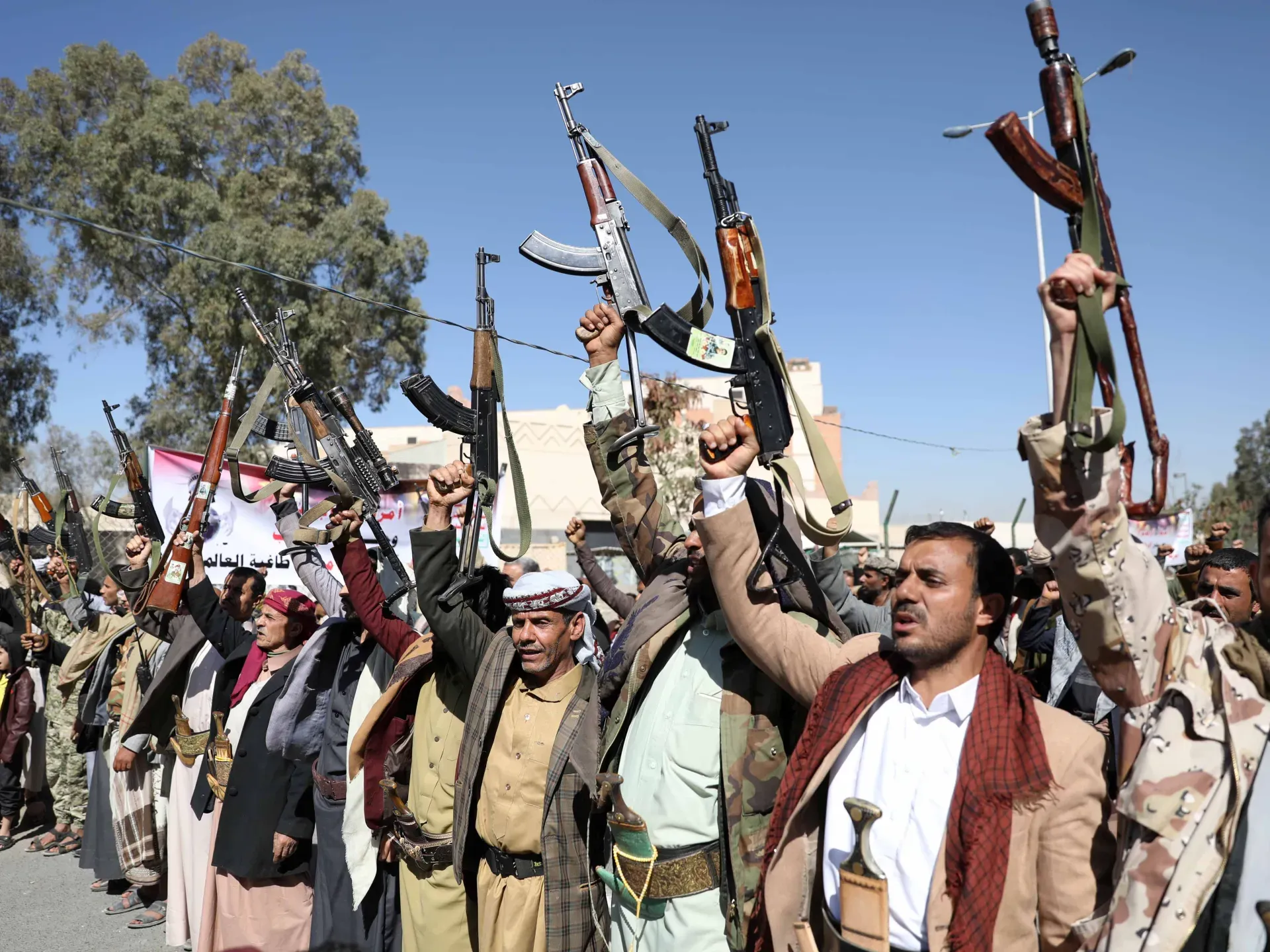
While the focus remains heavily on Gaza, a more complex geopolitical game is unfolding farther south. Yemen’s Houthi rebels, a Shiite insurgent group backed by Iran, have increasingly positioned themselves as active participants in regional power struggles. Their recent missile and drone attacks on commercial and allegedly Israeli-linked ships in the Red Sea have alarmed not just Israel, but a wide array of international stakeholders who rely on this critical maritime corridor for trade.
The Red Sea and Bab el-Mandeb Strait serve as a vital artery connecting the Mediterranean to the Indian Ocean. Disruption here ripples across global supply chains. Netanyahu’s warning of a “powerful response” isn’t merely about deterring the Houthis—it’s about protecting economic lifelines, asserting Israeli maritime strength, and sending a message to Iran, which Israel sees as the puppet master behind many of these regional flare-ups.
But engaging the Houthis is no small matter. They are battle-hardened after years of war against the Saudi-led coalition, and their growing arsenal of ballistic missiles and drones has shown unexpected range and accuracy. An Israeli move against them—whether through direct strikes, intelligence operations, or naval coordination with allies—could escalate tensions not just with the Houthis but with Tehran itself, plunging the region into broader conflict.
Netanyahu’s dual-front strategy is a high-stakes maneuver. Supporters argue that Israel must act decisively to protect its citizens from Hamas rockets and Houthi drones alike, especially in an environment where threats are no longer confined by geography. They see a strong response not as aggression, but as deterrence—a show of force meant to reestablish regional boundaries and discourage further attacks.

However, critics both within and outside Israel warn of the potential consequences. Opening a second front could stretch Israeli military resources thin, especially as the Gaza operation already demands immense manpower, logistics, and political capital. Domestically, Netanyahu faces a deeply polarized public—some calling for decisive victory, others demanding de-escalation and humanitarian relief. Internationally, he risks alienating key allies, particularly if civilian casualties in Gaza continue to mount or if a strike against the Houthis results in unintended collateral damage.
There’s also the question of duration. Neither the Gaza conflict nor a potential confrontation with the Houthis appears to have a clear endgame. Without a long-term political solution, military victories may offer only temporary reprieve. In fact, some analysts argue that continued military pressure could radicalize new generations of fighters and entrench resistance further
Beneath the immediate violence lies a shifting geopolitical map. Iran continues to exert its influence through proxies in Gaza, Lebanon, Syria, and Yemen. Israel, for its part, is recalibrating its military doctrine to deal with multi-theater threats, often with the quiet backing of Gulf Arab states who also see Iranian expansion as a danger. The United States, traditionally Israel’s most steadfast ally, faces its own balancing act—supporting Israeli security while attempting to avoid being dragged into a broader Middle Eastern war.
This evolving regional dynamic is marked by fluid alliances, emerging technologies of warfare, and a civilian population caught in the crossfire. For now, Israel’s path seems set: Gaza remains under siege, and the Red Sea could soon echo with the sound of a new warfront. Whether this strategy leads to stability or spirals into something far worse remains an open question.






0 comments