
Your Read is on the Way
Every Story Matters
Every Story Matters
The Hydropower Boom in Africa: A Green Energy Revolution Africa is tapping into its immense hydropower potential, ushering in an era of renewable energy. With monumental projects like Ethiopia’s Grand Ethiopian Renaissance Dam (GERD) and the Inga Dams in the Democratic Republic of Congo, the continent is gearing up to address its energy demands sustainably while driving economic growth.
Northern Kenya is a region rich in resources, cultural diversity, and strategic trade potential, yet it remains underutilized in the national development agenda.

Can AI Help cure HIV AIDS in 2025

Why Ruiru is Almost Dominating Thika in 2025

Mathare Exposed! Discover Mathare-Nairobi through an immersive ground and aerial Tour- HD

Bullet Bras Evolution || Where did Bullet Bras go to?
Recasting the Story: Strategy in Motion, Not Static Positions
The Horn of Africa is not a theatre of sudden gestures but of patient recalculations. Ethiopia, Somaliland, Somalia, and Israel now find themselves intertwined in a contest where ports, recognition, legitimacy, and maritime access weigh more than rhetoric. The central thread is not who “wins” recognition first, but how each actor protects or advances long-term interests without tipping the region into avoidable confrontation.
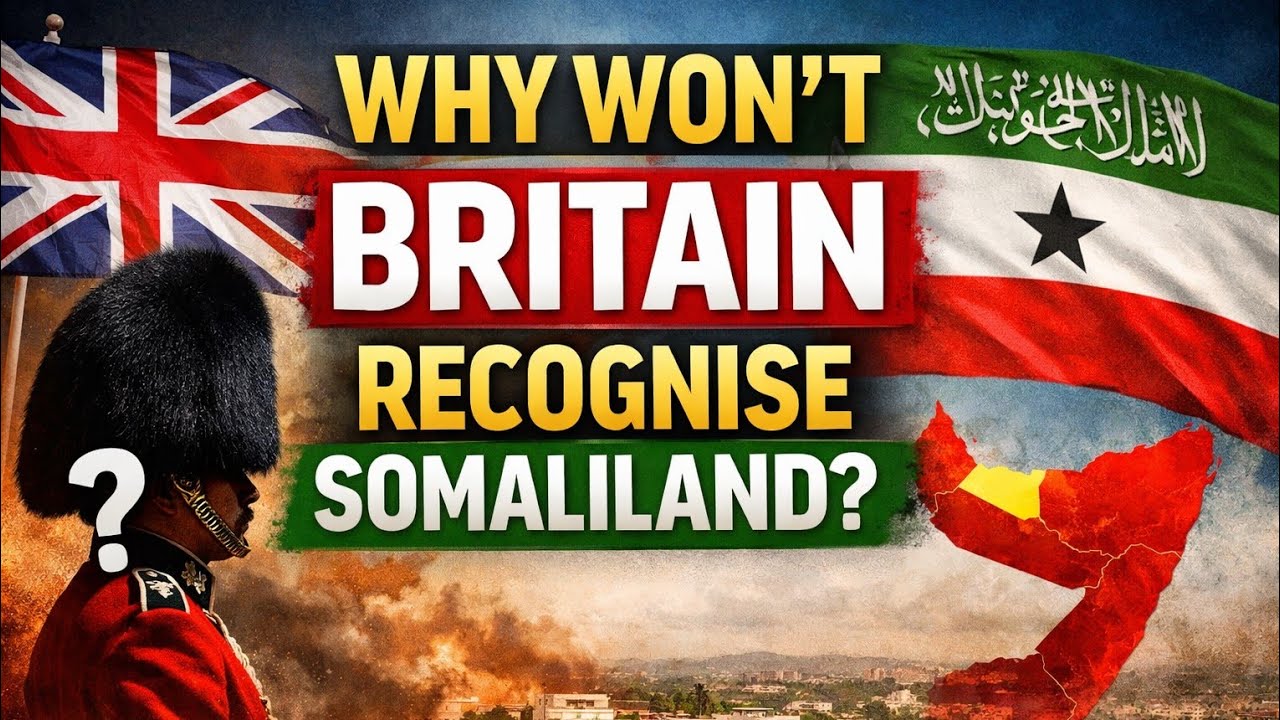
You could also view this edition on YouTube

Ethiopia’s Long Game: Ports, Predictability, and Quiet Leverage
Ethiopia’s relationship with Somaliland grew from logistical necessity rather than political bravado. A landlocked regional power must think in terms of reliable sea lanes, export routes, fuel security, and commercial continuity. Somaliland offered not only coastline but comparative stability and institutional coherence, creating space for transport agreements and security coordination.
Yet Addis Ababa has repeatedly resisted the temptation of dramatic announcements. It has preferred corridors, customs arrangements, and security dialogue to celebratory declarations. Behind that restraint lies an obvious calculation: every step toward formal recognition invites a counter-reaction across the region, and Ethiopia does not gain from instability on its doorstep.
Somaliland’s Persistence: Seeking Legibility in a Crowded Diplomatic Map
For Somaliland, the quest is not merely symbolic independence; it is access to investment, financial systems, and international legitimacy that enables growth. The pursuit of recognition has taken the form of incremental arrangements, bilateral understandings, and cultivation of partners who value maritime positioning and predictable governance.
The strategy has been patient but deliberate — to transform practical cooperation into formal acknowledgment, step by step, without triggering conflict that undermines the very stability it advertises.
Somalia’s Counteroffensive: Law, Identity, and the Defense of Borders
Somalia’s resistance has been forceful because the issue cuts to the core of state identity. Any external agreement with Somaliland that bypasses Mogadishu is framed as an erosion of sovereignty, and sovereignty is the political spine of the Somali state project. The response has therefore blended constitutional argument, diplomacy, and public mobilization.
Protests, official communiqués, and appeals to regional organizations all serve a single purpose: to reinforce that territorial integrity is not up for negotiation by outsiders. For Mogadishu, every recognition is not just a legal question; it is a political red line tied to history, unity, and statehood.
Israel’s Recognition: A Bold Step That Rewrites the Chessboard
When Israel formally recognized Somaliland, it did more than acknowledge a political claim — it altered the tempo of regional decision-making. The move tied recognition to security partnerships, maritime routes, and strategic positioning in the Red Sea arena. It offered Somaliland new diplomatic oxygen and forced other regional actors to reconsider their pacing.
Reaction was swift. Somalia rejected the step outright, citizens took to the streets, and regional organizations echoed the defense of existing borders. The recognition became less a bilateral event than a spark that illuminated dormant tensions.
Ethiopia’s Response: Measured Words, Active Watching
Ethiopia’s reaction has been neither passive nor impulsive. Officials emphasized observation, prudence, and adherence to lawful processes. This posture reflects a state juggling multiple truths at once: Somaliland is a valuable partner in corridors and security; Somalia is a critical neighbor whose stability matters; regional institutions still prioritize inherited borders.
Rather than following Israel immediately, Ethiopia has opted to keep every option open while avoiding open rupture. It is a balance between strategic appetite and regional responsibility.
Regional Institutions: The Weight of Norms Against the Pull of Change
The African diplomatic architecture — continental and sub-regional — has largely sided with the defense of current borders. These institutions view unilateral recognitions as destabilizing precedents. Their stance reinforces Somalia’s position but also pressures countries like Ethiopia to move cautiously, no matter how compelling their economic motivations may be.
This resistance does not erase realities on the ground, but it slows how those realities become internationally codified.
What Changes Now: Precedent, Pressure, and the Politics of Timing
Israel’s recognition transformed the question from theory into precedent. Somaliland now has a formal acknowledgment from a major state, and that reality will not simply evaporate. Ethiopia must calculate against a new backdrop: ignore the precedent, embrace it, or adapt around it without provoking confrontation.
No matter the path, decisions will turn on ports, security, and trade — not slogans.
Conclusion: The Horn of Africa Is Negotiating Its Future in Real Time
Ethiopia’s caution is not hesitation; it is strategy. Israel’s recognition is not a closing chapter; it is an opening gambit. Somalia’s resistance is not symbolic; it is existential. Somaliland’s persistence is not impatience; it is long-term statecraft.
The region is entering a phase where hard interests, legal claims, and diplomatic daring collide. Recognition has become a tool, protest a response, and maritime geography the invisible driver behind every communiqué. The story is not finished — it is accelerating.
You might also like this related video on YouTube:





0 comments