
Your Read is on the Way
Every Story Matters
Every Story Matters
The Hydropower Boom in Africa: A Green Energy Revolution Africa is tapping into its immense hydropower potential, ushering in an era of renewable energy. With monumental projects like Ethiopia’s Grand Ethiopian Renaissance Dam (GERD) and the Inga Dams in the Democratic Republic of Congo, the continent is gearing up to address its energy demands sustainably while driving economic growth.
Northern Kenya is a region rich in resources, cultural diversity, and strategic trade potential, yet it remains underutilized in the national development agenda.

Can AI Help cure HIV AIDS in 2025

Why Ruiru is Almost Dominating Thika in 2025

Mathare Exposed! Discover Mathare-Nairobi through an immersive ground and aerial Tour- HD

Bullet Bras Evolution || Where did Bullet Bras go to?
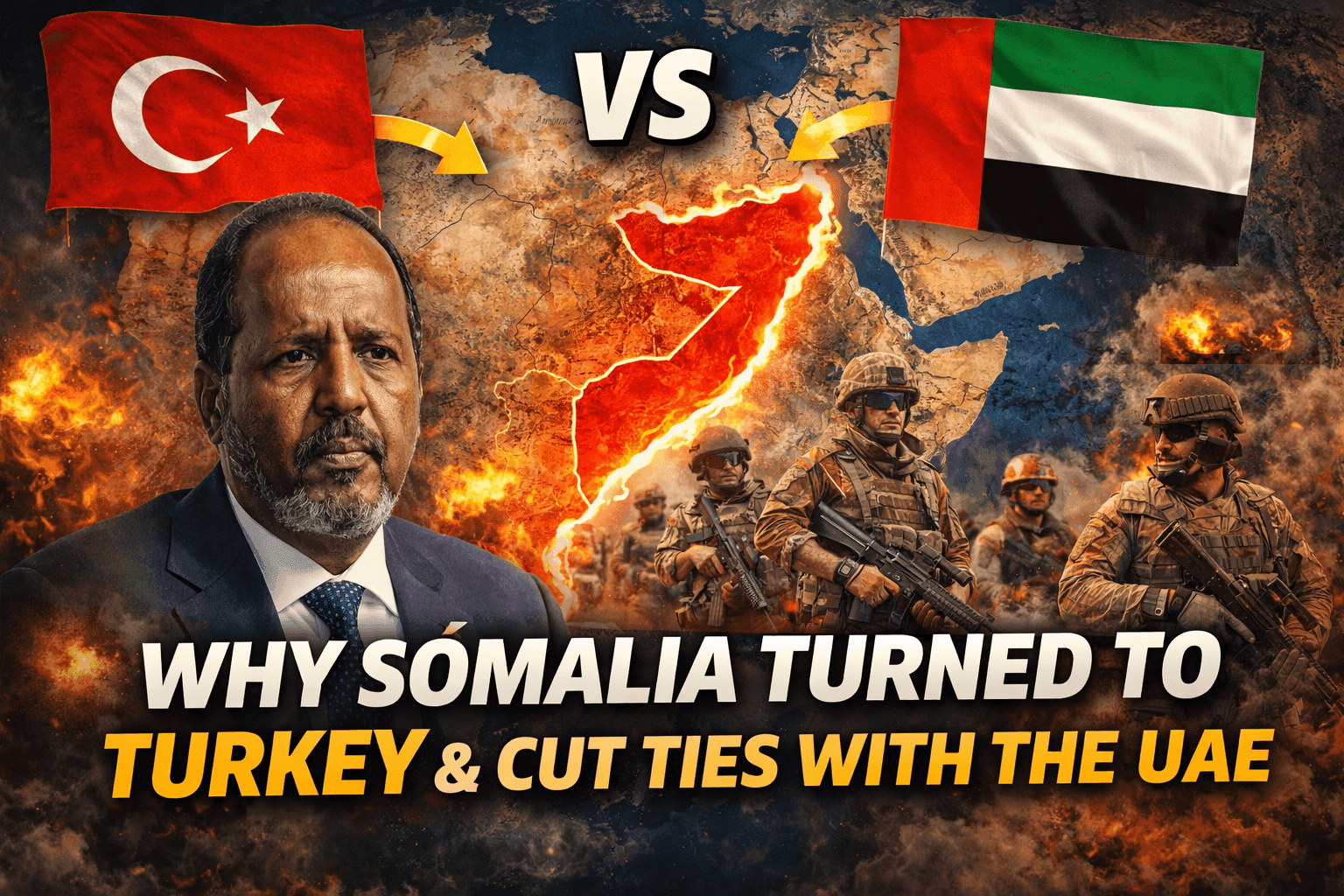
The decision by Somalia to sever ties with the United Arab Emirates earlier this year did not emerge from a sudden disagreement. It represented the culmination of years of quiet competition between regional powers seeking influence across the Horn of Africa. At the center of that competition now stands Turkey, whose presence in Somalia has steadily expanded from humanitarian assistance into deep institutional partnership.
Related Reads:
As Somalia’s Peace Mission Falters, Africa Struggles to Hold the Line Alone
What initially appeared to be a diplomatic disagreement over cooperation frameworks quickly revealed itself as a strategic pivot. Mogadishu was not simply reacting to one issue. It was redefining who it trusts to help shape its security future, its economic recovery, and its sovereignty trajectory.
In geopolitical terms, Somalia’s move signaled a decisive shift in alignment at a moment when the Horn of Africa is attracting renewed global attention.
Turkey’s Quiet Strategy of Long-Term Influence
Turkey’s rise inside Somalia did not happen overnight. For more than a decade, Ankara invested heavily in infrastructure reconstruction, humanitarian outreach, and training programs designed to strengthen state institutions rather than bypass them. That approach gradually built credibility within Somalia’s leadership and security structures.
Unlike transactional partnerships centered only on ports or logistics corridors, Turkey positioned itself as a state-building partner. Military cooperation deepened over time, particularly through training initiatives aimed at strengthening Somalia’s national armed forces. These programs helped create the perception that Turkey’s engagement was anchored in stability rather than leverage.
As tensions with other regional actors grew, this long-term strategy began to pay political dividends. Somalia increasingly viewed Turkey not as a competing stakeholder but as a stabilizing partner aligned with its federal authority.
Why the UAE Relationship Began to Fracture
Somalia’s relationship with the UAE had once appeared promising. Investments in port development, logistics infrastructure, and regional security cooperation created the impression of a strong strategic partnership. However, disagreements gradually emerged over the nature of those engagements and how they interacted with Somalia’s federal political structure.
Concerns intensified when external actors were perceived to be strengthening ties with regional administrations rather than coordinating fully with Mogadishu. For Somalia’s central government, this raised serious questions about sovereignty, territorial cohesion, and long-term control over strategic infrastructure along the Red Sea corridor.
Diplomatic trust weakened steadily as these tensions accumulated. By the time relations collapsed, the break reflected deeper anxieties about national authority rather than a single policy disagreement.
Ports, Recognition Politics, and Strategic Geography
Somalia’s coastline is one of the longest in Africa, stretching across maritime routes that connect the Indian Ocean to the Red Sea and the Suez trade corridor. Control over access points along this coastline has become a central issue in regional geopolitics.
Port agreements, naval cooperation frameworks, and maritime security partnerships are no longer purely technical matters. They are tools of influence shaping the region’s future balance of power.
Somalia’s decision to distance itself from the UAE must therefore be understood within this broader strategic landscape. It reflects concerns that infrastructure partnerships can reshape political leverage just as much as they improve economic capacity.
Turkey’s growing role fits into this wider contest for access, influence, and legitimacy across the Horn.
A Region Entering a New Phase of Competition
Somalia’s diplomatic shift is not happening in isolation. Across the Horn of Africa, external powers are deepening their engagement in ports, security training, and trade corridors that connect Africa to the Middle East and Asia.
This emerging competition resembles a modern version of strategic positioning rather than traditional rivalry. Influence now flows through logistics hubs, defense partnerships, infrastructure financing, and maritime cooperation agreements.
Somalia’s choice to move closer to Turkey therefore signals more than a bilateral adjustment. It reflects the beginning of a broader regional recalibration in which governments are selecting partners capable of supporting long-term institutional stability rather than short-term transactional gains.
What This Means for the Future of the Horn of Africa
Somalia’s alignment decision may reshape the region’s political map in subtle but lasting ways. If Turkey continues strengthening its role as a security partner while expanding economic engagement, it could emerge as one of the most influential external actors in the Horn.
At the same time, the UAE’s reduced presence inside Somalia does not signal withdrawal from the region itself. Instead, it highlights how influence is shifting geographically and politically as governments reconsider their strategic priorities.
The Horn of Africa is entering a period where infrastructure agreements, naval partnerships, and diplomatic recognition choices will increasingly define regional alliances. Somalia’s decision marks one of the clearest signals yet that this transformation is already underway.




0 comments