
Your Read is on the Way
Every Story Matters
Every Story Matters
The Hydropower Boom in Africa: A Green Energy Revolution Africa is tapping into its immense hydropower potential, ushering in an era of renewable energy. With monumental projects like Ethiopia’s Grand Ethiopian Renaissance Dam (GERD) and the Inga Dams in the Democratic Republic of Congo, the continent is gearing up to address its energy demands sustainably while driving economic growth.
Northern Kenya is a region rich in resources, cultural diversity, and strategic trade potential, yet it remains underutilized in the national development agenda.

Can AI Help cure HIV AIDS in 2025

Why Ruiru is Almost Dominating Thika in 2025

Mathare Exposed! Discover Mathare-Nairobi through an immersive ground and aerial Tour- HD

Bullet Bras Evolution || Where did Bullet Bras go to?
China’s recent experiment with a non-nuclear hydrogen bomb marks one of the most fascinating developments in explosive science to date. Utilizing just 2kg of material, researchers achieved a fireball that burned fifteen times longer than a traditional TNT detonation. This wasn’t a weaponized trial in the traditional sense. It was a controlled scientific demonstration of what hydrogen-based combustion can accomplish when divorced from nuclear components.
This achievement holds profound implications. From military deterrents to next-gen energy systems, such breakthroughs signal China’s desire to innovate outside of nuclear constraints while still commanding serious technological power. It’s a dual move: break away from legacy atomic models while sending a message to the world that its scientific ingenuity is advancing at pace. Whether this leads to advanced mining technology, aerospace propulsion, or humanitarian tools for controlled demolitions, the ripple effects will span sectors well beyond the defense industry.
Most significantly, this test underlines a shift in scientific doctrine. While the West eyes traditional nuclear physics for power and prestige, China seems to be carving out a new lane, one grounded in clean, calculated, and controllable bursts of potential. It’s a metaphor for modern statecraft: high-impact results, low collateral damage, and strategic messaging embedded in every spark.
While governments debate tariffs and supply chains, French consumers are bypassing borders in droves through e-commerce. Over the past year, platforms like Shein and Taobao have exploded in popularity across France, not through official channels, but via a grassroots logistics phenomenon powered by so-called “Agent Taobao.” These agents are intermediaries who place orders on behalf of Western buyers, translating Chinese listings, navigating domestic platforms, and managing the shipping journey from warehouse to doorstep.
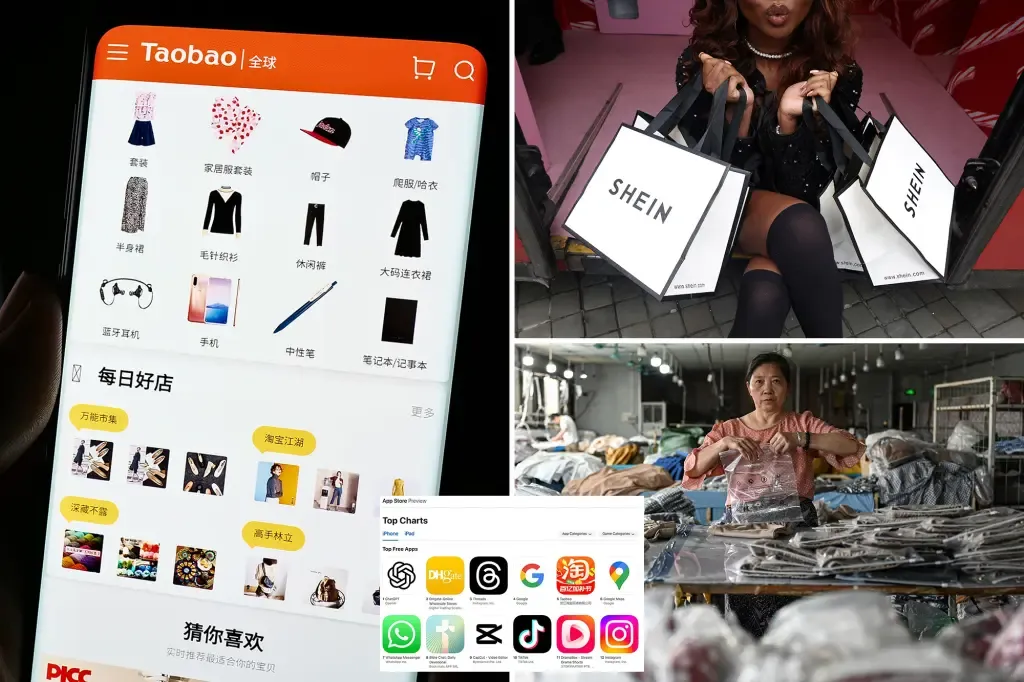
This isn’t just a trend. It’s a reordering of trust in global retail. French consumers, who once prided themselves on boutique, local shopping, are now embracing the ultra-cheap, ultra-fast model of Chinese e-commerce. From clothing and home decor to electronics and pet supplies, Chinese sellers have managed to convert one of the most traditionally brand-loyal consumer bases in Europe.
This shift isn’t without implications. First, it reveals cracks in the European retail ecosystem, where price inflation and slow supply chains are failing to compete. Second, it highlights China’s ability to dominate foreign consumer markets without even establishing physical or digital storefronts in the West. And third, it paves the way for more cultural crossover, with young consumers in France increasingly engaging with Chinese aesthetics, trends, and manufacturing styles.
China's move toward durian cultivation is as strategic as it is agricultural. Long a regional delicacy in Southeast Asia, the durian has been a lucrative import product for China until now. With the Hainan province successfully growing durians of export-quality caliber, China is signaling that it no longer intends to rely solely on foreign supply.
This isn’t just about fruit. It’s about supply chains, food security, and agricultural sovereignty. China has studied the tropical climates of Thailand and Malaysia and recreated the environmental factors in Hainan with scientific precision. Years of investment in soil science, pest control, and climate engineering are now bearing literal fruit.
The economic implications are vast. Domestically grown durians will allow China to sidestep tariffs, reduce carbon footprints associated with importing, and perhaps most importantly, export to neighboring markets from a position of surplus. It also gives Chinese farmers a high-value crop that can elevate rural economies and reduce dependency on rice and tea alone.
Culturally, the move may reframe durians as a Chinese product in the long term, a remarkable shift for a fruit so deeply tied to Southeast Asian identity. It’s part of a broader agricultural modernization effort, one that blends biotech with geoeconomics to forge a new narrative that China can feed itself, profitably and proudly.

After years of pandemic-induced tourism drought and geopolitical shifts, Russian travelers are returning to China with renewed vigor. Cities like Harbin, with its deep Russian cultural ties and snowy aesthetic, are seeing a revival in tourism numbers that echo pre-pandemic levels. But this isn’t just a seasonal phenomenon. It's part of a broader reorientation in Sino-Russian relations.
With much of the West increasingly closed to Russian passport holders due to sanctions and airspace restrictions, China presents itself as an open, friendly, and familiar destination. Flights are cheaper, visas are easier, and cultural diplomacy has greased the wheels of travel. In return, Russia offers China a reliable stream of visitors who bring spending power, a taste for Chinese goods, and a sense of geopolitical solidarity.
This tourism renaissance is symbolic of something larger. As China and Russia forge closer economic and diplomatic bonds, from energy deals to military drills, the resurgence in people-to-people exchange adds a human layer to their partnership. Tourism becomes more than leisure. It becomes a language of trust, and trust becomes currency in a world where alliances are rapidly shifting.
What ties these stories together isn’t coincidence. It’s choreography. China is showing the world that power doesn’t always arrive in the form of aircraft carriers or bold declarations. Sometimes, it’s a hydrogen test with no mushroom cloud. Sometimes, it’s a durian that tastes just right. Sometimes, it’s a Parisian teen buying a five-dollar dress shipped from Shenzhen.
In each case, the message is clear. China is shaping the narrative in quiet, calculated ways. Whether it’s through scientific surprise, agricultural ingenuity, digital dominance, or touristic embrace, these developments reveal a nation leaning into multifaceted strategy.
It’s not just about being a manufacturing hub or the world's factory anymore. It’s about creating new forms of influence, subtle, scalable, and surprisingly sticky. The weekend's stories aren’t isolated. They're chapters in a bigger book that China is quietly writing, and the rest of the world would do well to read along.





0 comments