
Your Read is on the Way
Every Story Matters
Every Story Matters
The Hydropower Boom in Africa: A Green Energy Revolution Africa is tapping into its immense hydropower potential, ushering in an era of renewable energy. With monumental projects like Ethiopia’s Grand Ethiopian Renaissance Dam (GERD) and the Inga Dams in the Democratic Republic of Congo, the continent is gearing up to address its energy demands sustainably while driving economic growth.
Northern Kenya is a region rich in resources, cultural diversity, and strategic trade potential, yet it remains underutilized in the national development agenda.

Can AI Help cure HIV AIDS in 2025

Why Ruiru is Almost Dominating Thika in 2025

Mathare Exposed! Discover Mathare-Nairobi through an immersive ground and aerial Tour- HD

Bullet Bras Evolution || Where did Bullet Bras go to?
Tanzanian authorities haven’t charged Agather Atuhaire. They haven’t acknowledged detaining her. But the evidence—scarce, chilling, and pieced together from activists—suggests one thing: she’s been forcibly disappeared. Her whereabouts remain unknown, her voice silenced, and her rights erased.
Agather was last seen in Dar es Salaam, operating as a journalist and activist with a long track record of exposing abuses. Then, she vanished. No court date. No legal defense. No acknowledgment of custody. Her name, now turned into a rallying cry—#FreeAgatherAtuhaire—is echoing across East African timelines and protest lines.
Activist Maria Sarungi Tsehai raised the alarm:
"Samia Suluhu has no mercy with women. She detains them, beats them, uses security forces against them—and never once condemns it."
This isn’t conjecture. It’s a consistent, state-sanctioned pattern. Agather’s disappearance is not an isolated mistake. It is the culmination of a playbook that has become standard under President Samia Suluhu Hassan’s administration.
President Suluhu was heralded as a symbol of progress when she took office in 2021, East Africa’s first female head of state. The expectations were high: human rights, transparency, a new dawn for Tanzanian democracy.
Instead, what followed was an administration with a growing track record of secret arrests, media intimidation, and iron-fisted suppression of activists—particularly women. The same female body once praised for breaking barriers now uses state force to crush dissent from its own gender.
Maria Sarungi put it bluntly:
“When we said Samia Suluhu is evil, it was not hyperbole.”
This is no longer about disappointment. It’s about betrayal. For many Tanzanians, especially those fighting for justice, Suluhu's presidency has morphed from hopeful to dangerous.
Agather’s case doesn’t exist in a vacuum. Around the same time, Kenyan activist Boniface Mwangi was detained in Tanzania under unclear circumstances. His arrest, like Agather’s, came without formal charges or consular access.
Wanjira Wanjiru, a Nairobi-based organizer, connected the dots:
“After visiting the Tanzanian High Commission, comrades have decided to camp outside Reinsurance Plaza until Boniface and Agather are found.”
What began as individual detentions is fast becoming a regional concern. Activists allege coordination between East African regimes to silence vocal critics—across borders, under radar, and beyond legal scrutiny.
One protester summed up the fear on the ground:
“East African presidents are now reading the same script—crush dissent, erase opposition, control the narrative.”
State operatives don't need warrants to silence critics. They need only to erase legal traceability. That’s what makes forced disappearances effective. There are no trials, no defense attorneys, no paper trails. Only whispers, denials, and a vacuum where a voice once was.
Tanzania’s government has not acknowledged Agather’s arrest. That silence is intentional. It denies activists legal grounds to mount a challenge and starves the press of factual material to pursue a story.
As Maria Sarungi put it, this is not about law. It’s about power:
“You want to abduct her too, huh? That’s your style.”
Suluhu's supporters cite the Constitution—insisting she holds the presidency until 2030. Critics are not buying it. They argue her tenure is rooted not in democratic consensus, but political maneuvering following the death of her predecessor, John Magufuli.
“The Constitution hasn’t granted her power until 2030. Let her compete in a free and fair election, even within her own party, and let’s see if she dares,” said Maria Sarungi.
It’s a sharp indictment: that even within her base, there’s a crisis of legitimacy. The “Magufuli shadow” looms large. While Magufuli ruled with open repression, Suluhu has modernized the formula—less overt violence, more covert disappearance.
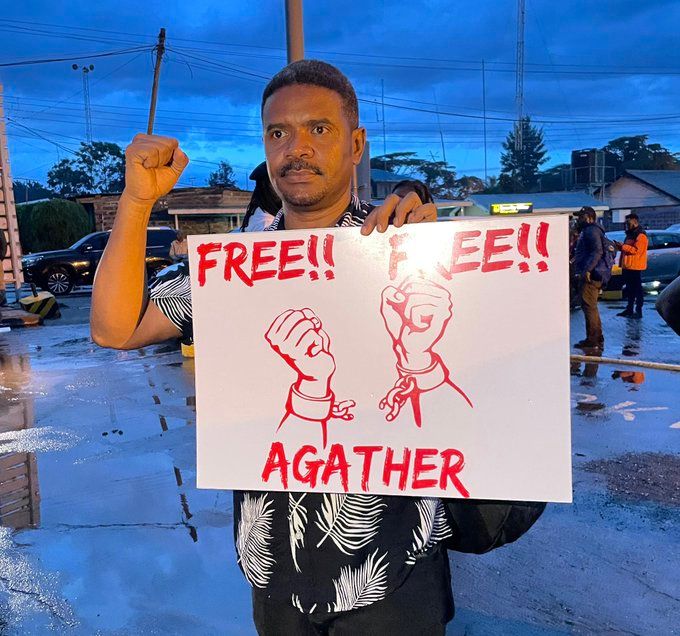
What happens to Agather Atuhaire will define the next phase of Tanzanian politics. Her case is the barometer by which the regime’s tolerance for scrutiny will be judged.
Right now, the prognosis is grim.
By refusing to confirm her arrest, the state sidesteps accountability. By denying her legal access, they mute her. And by doing nothing, they make clear that in Tanzania, being inconvenient is enough to disappear.
Agather isn’t the first. But unless pressure mounts—online, internationally, diplomatically—she won’t be the last.
Silencing women critics. Cross-border detentions. Tactical denials. It’s not just authoritarianism. It’s evolving, adaptive autocracy.
And until the question “Where is Agather Atuhaire?” is answered truthfully, the regime’s silence will remain the loudest confession.






0 comments