
Your Read is on the Way
Every Story Matters
Every Story Matters
The Hydropower Boom in Africa: A Green Energy Revolution Africa is tapping into its immense hydropower potential, ushering in an era of renewable energy. With monumental projects like Ethiopia’s Grand Ethiopian Renaissance Dam (GERD) and the Inga Dams in the Democratic Republic of Congo, the continent is gearing up to address its energy demands sustainably while driving economic growth.
Northern Kenya is a region rich in resources, cultural diversity, and strategic trade potential, yet it remains underutilized in the national development agenda.

Can AI Help cure HIV AIDS in 2025

Why Ruiru is Almost Dominating Thika in 2025

Mathare Exposed! Discover Mathare-Nairobi through an immersive ground and aerial Tour- HD

Bullet Bras Evolution || Where did Bullet Bras go to?
In a nation celebrated for its harmony between tradition and nature, Japan is now facing an unprecedented catastrophe that threatens not only its landscapes but its very sense of security. What began as a seemingly manageable fire in a remote prefecture has rapidly escalated into a monstrous inferno, consuming thousands of acres of pristine woodland, farmland, and entire communities. For days now, the relentless blaze has swept across the countryside, devouring everything in its path as emergency crews work around the clock to protect what little remains. The air is thick with smoke, and the horizon burns a permanent shade of crimson as residents watch helplessly while their homes, heritage, and history go up in flames.
Entire neighborhoods have been reduced to charred skeletons of what once were bustling, peaceful villages. Schools, temples, and centuries-old shrines have succumbed to the advancing wall of fire. Families who had little warning were forced to evacuate with only the clothes on their backs, fleeing through gridlocked roads as flames licked at the edges of their communities. Evacuation shelters, hastily set up in school gymnasiums and municipal halls, are overflowing, offering only minimal comfort to those who have lost nearly everything. For the elderly and those in need of medical care, the situation is dire, as hospitals have been forced to relocate patients and redirect resources, all while battling the choking effects of the pervasive smoke.
Officials have traced the ferocity of the wildfire to an alarming combination of factors that have become all too familiar in recent years. An unusually dry and warm winter created the perfect tinderbox conditions, and powerful winds from the north have propelled the flames with terrifying speed, carrying embers miles ahead to ignite fresh fires. This volatile mix has turned Japan’s well-rehearsed disaster response systems into a desperate game of catch-up. Firefighting crews, many of whom are volunteers from neighboring prefectures, have been pushed beyond exhaustion, facing a blaze that shifts direction without warning and defies conventional containment strategies.
But the human cost, as staggering as it is, only tells part of the story. Environmentalists are warning that the ecological consequences of this disaster could echo for decades. Rare wildlife species native to the affected regions have been displaced or perished. Ancient forests that served as vital carbon sinks are now reduced to smoldering ruins. The loss of biodiversity, the destruction of delicate habitats, and the degradation of soil and water sources threaten to unravel ecosystems that had remained stable for centuries. Japan, already vulnerable to the creeping consequences of climate change, now faces an accelerated path of environmental decline brought on by this unprecedented blaze.
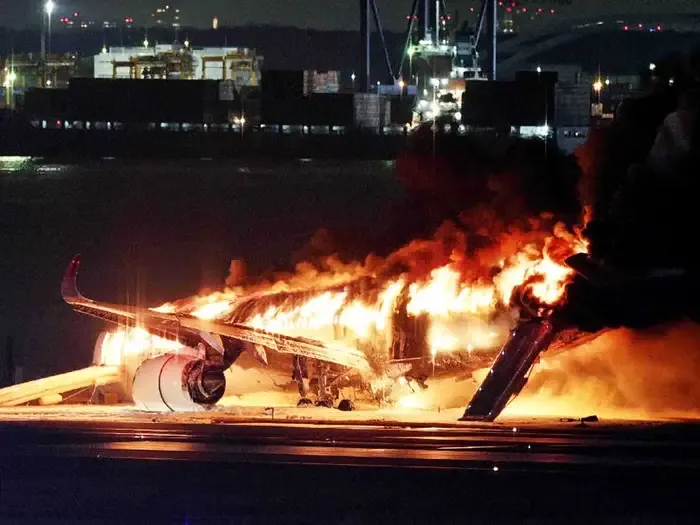
As the fires rage on, scrutiny is mounting over whether more could have been done to prevent the situation from spiraling out of control. Questions about land management, early warning systems, and the nation’s overall readiness for climate-driven disasters are flooding public discourse. Critics argue that years of ignored expert warnings and underfunded environmental programs have left the country exposed. What was once considered a remote threat has now arrived at Japan's doorstep, and it is becoming brutally clear that the nation must rethink its entire approach to disaster prevention and climate resilience if it hopes to avoid repeating this nightmare.
Yet, amid the smoke and ash, the indomitable spirit of the Japanese people is shining through. Volunteers from unaffected regions are mobilizing in droves, delivering food, medical supplies, and moral support. Community kitchens are feeding hundreds of evacuees each day. Teachers, musicians, and local leaders are organizing activities for displaced children, doing their best to bring moments of normalcy into the chaos. Strangers are opening their homes, and small businesses are donating whatever they can. In the heart of this crisis, unity has become the strongest defense, a reminder that while the fire may take their homes, it cannot extinguish their resolve.
However, the end of the blaze is not yet in sight. Meteorologists predict shifting winds and rising temperatures that could further complicate containment efforts. Towns on the fire's projected path are bracing for impact, and with emergency shelters nearing capacity, officials are scrambling to find solutions to protect the growing number of displaced residents. The fear now is not just what has already been lost but what could still fall if the fire is not brought under control.
Japan is standing at a crossroads, forced to face a future in which such wildfires may become regular intrusions into daily life. As the sun sets behind a sky of smoke and embers, the nation holds its breath, hoping that the dawn will bring rain, relief, and the chance to begin the long and painful process of rebuilding—not just the towns and forests, but the systems meant to protect them from disasters like this ever happening again.





0 comments