
Your Read is on the Way
Every Story Matters
Every Story Matters
The Hydropower Boom in Africa: A Green Energy Revolution Africa is tapping into its immense hydropower potential, ushering in an era of renewable energy. With monumental projects like Ethiopia’s Grand Ethiopian Renaissance Dam (GERD) and the Inga Dams in the Democratic Republic of Congo, the continent is gearing up to address its energy demands sustainably while driving economic growth.
Northern Kenya is a region rich in resources, cultural diversity, and strategic trade potential, yet it remains underutilized in the national development agenda.

Can AI Help cure HIV AIDS in 2025

Why Ruiru is Almost Dominating Thika in 2025

Mathare Exposed! Discover Mathare-Nairobi through an immersive ground and aerial Tour- HD

Bullet Bras Evolution || Where did Bullet Bras go to?
Tundu Lissu, Tanzania’s most vocal opposition figure and chairman of the CHADEMA party, is once again facing the full weight of the state. Known for surviving an assassination attempt and returning stronger, Lissu has built a political identity around defiance, reform, and fearless activism. But now, in 2025, he finds himself in even deeper trouble—formally charged with treason after a fiery rally demanding reforms to the country’s electoral system. Authorities allege his speech incited public rebellion and undermined national security.
This is not Lissu’s first encounter with the state’s heavy-handed tactics. However, the gravity of treason charges places him in one of the most dangerous positions a Tanzanian political leader can be. If convicted, he faces a possible death sentence. The move to arrest him has divided the nation and invited scrutiny from beyond Tanzania’s borders.
At the center of the case is a political rally held in early April 2025. There, Lissu accused the current administration of undermining the electoral process and warned of a rigged election ahead of the scheduled October polls. His rhetoric was direct and unfiltered—he called for institutional overhauls, the independence of the electoral commission, and free and fair political participation for opposition parties.
The state’s reaction was swift and unforgiving. Lissu was arrested days later and charged with treason. According to the prosecution, his words amounted to sedition, intended to stir civil unrest and delegitimize the government. To them, Lissu crossed a legal line. To his supporters, he merely exercised his constitutional right to political speech.
With treason categorized as a non-bailable offense in Tanzania, Lissu has remained behind bars since his arrest, pending further court proceedings.
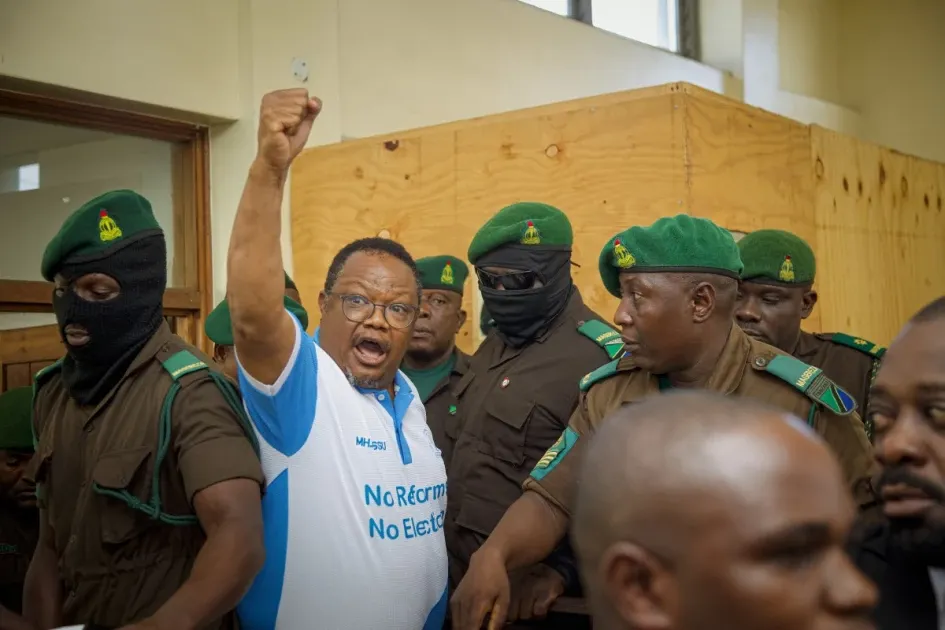
On May 19, 2025, Tundu Lissu was escorted to the Kisutu Resident Magistrate’s Court under heavy police guard. Clenching his fist high above his head, he walked into the courtroom not as a defeated man, but as a defiant symbol of resistance. His presence electrified the moment—a reminder that, in Tanzanian politics, courtrooms have become arenas of ideological war.
His legal team demanded that all court proceedings be held physically, not virtually, arguing that transparency was vital given the public interest in the case. They also objected to the continued detention, insisting that his speech posed no real threat to public order.
But the prosecution was granted more time, claiming their investigation was still ongoing. The case was adjourned to June 2, leaving Lissu in custody for at least two more weeks. The state’s refusal to grant bail sparked outrage across opposition circles, seen as an intentional move to silence one of the government’s most potent critics during a crucial election year.
The significance of Lissu’s trial isn’t limited to Tanzania. As the courtroom became the new political battleground, efforts by regional allies to stand in solidarity were shut down. Prominent Kenyan political figures, including Martha Karua and former Chief Justice Willy Mutunga, flew to Tanzania to observe the proceedings. But they never made it past immigration.
Tanzanian authorities blocked their entry and deported them within hours, claiming national interest and procedural compliance. The incident created an immediate diplomatic buzz, with many seeing it as a bold rejection of regional scrutiny and a clear signal that Tanzania would not tolerate outside interference—even from respected legal and democratic voices.
Their removal, paired with Lissu’s continued detention, raised questions about how far the Tanzanian government is willing to go to contain dissent and isolate the opposition.

Lissu’s arrest comes at a politically sensitive time. CHADEMA, his party, has been pushing for electoral reforms, arguing that the playing field is skewed in favor of the ruling CCM party. For years, CCM has dominated Tanzanian politics, and critics argue that democratic institutions have been weakened to preserve this grip.
By targeting Lissu, the government has done more than silence a single opponent—it has sent a warning to the entire opposition bloc. Already, CHADEMA’s participation in the October election is under threat due to ongoing legal and administrative hurdles. Many now fear that the upcoming elections will be neither inclusive nor credible.
Yet, Lissu’s trial may have the opposite effect the government intended. Instead of weakening his influence, it has spotlighted his struggle and generated regional and international attention. In the streets of Dar es Salaam and Arusha, conversations about democracy, freedom, and the power of the state are growing louder.
The adjournment until June 2 offers little clarity. Will the government push forward with the treason charge, despite the mounting backlash? Or will public pressure and international observation force a reevaluation?
One thing is certain: this case is more than just a legal matter. It is a referendum on the direction Tanzania is heading—a test of whether the country can sustain pluralism, tolerate dissent, and conduct truly democratic elections.
Tundu Lissu may be locked in a cell for now, but the movement he represents is far from silent.






0 comments