
Your Read is on the Way
Every Story Matters
Every Story Matters
The Hydropower Boom in Africa: A Green Energy Revolution Africa is tapping into its immense hydropower potential, ushering in an era of renewable energy. With monumental projects like Ethiopia’s Grand Ethiopian Renaissance Dam (GERD) and the Inga Dams in the Democratic Republic of Congo, the continent is gearing up to address its energy demands sustainably while driving economic growth.
Northern Kenya is a region rich in resources, cultural diversity, and strategic trade potential, yet it remains underutilized in the national development agenda.

Can AI Help cure HIV AIDS in 2025

Why Ruiru is Almost Dominating Thika in 2025

Mathare Exposed! Discover Mathare-Nairobi through an immersive ground and aerial Tour- HD

Bullet Bras Evolution || Where did Bullet Bras go to?
In a move that has left the education sector teetering on the brink of chaos, teachers in Kenya have chosen a unique form of defiance—one that doesn’t involve strikes, demonstrations, or confrontations with the government. Instead, educators are engaging in a “work-to-rule” campaign, where they limit themselves strictly to the tasks outlined in their contracts. This means no extra lessons, no extracurricular activities, and no administrative assistance beyond what is legally required.
While this form of resistance may seem subtle, its effects are already being felt across schools nationwide. Students who relied on remedial classes to catch up on their studies now find themselves left behind. Sports programs, clubs, and mentorship initiatives have ground to a halt, depriving learners of crucial extracurricular experiences. Even simple administrative tasks like compiling student reports and supervising exams have been disrupted, leaving schools in disarray.
This quiet rebellion is a direct response to the government’s failure to release Ksh39 billion in capitation and medical scheme funds. Unlike previous years, where teacher unions led high-energy protests and strikes, this time, teachers are resisting in silence. Without the usual uproar of demonstrations, their protest has become a slow but devastating force that could bring Kenya’s public education system to its knees.

At the core of this crisis is the government’s prolonged delay in disbursing crucial funds to schools and the teachers’ medical scheme. According to the Kenya Union of Post-Primary Education Teachers (KUPPET), Ksh28 billion meant for school capitation—funding that enables institutions to function effectively—has not been released. This has left many schools in financial turmoil, struggling to pay for essential supplies, utilities, and even teachers’ salaries.
Additionally, Ksh11 billion meant for the teachers' medical scheme remains unpaid, leaving thousands of educators without access to healthcare services. Many teachers are now forced to dig into their own pockets to cover medical expenses that were supposed to be handled by their insurance providers. The government had initially promised to remit these funds as part of an agreement made in August 2024, yet months later, the money remains missing, deepening the frustration among educators.
“This is not just a teachers’ issue,” a KUPPET official explained. “It’s a national crisis. Without proper funding, schools cannot function, and learning becomes impossible. Students are being turned away because there is no money to keep them in school, and teachers are working under increasingly difficult conditions.”
In response, the government has maintained that some funds have already been released. Education Cabinet Secretary Julius Ogamba assured school heads earlier this year that an additional Ksh14 billion would be disbursed soon to alleviate the financial strain. However, KUPPET has dismissed this as grossly inadequate, arguing that instead of the expected Ksh11,000 per student, the government has only disbursed Ksh4,000—an amount that barely covers the basic operational costs of schools.
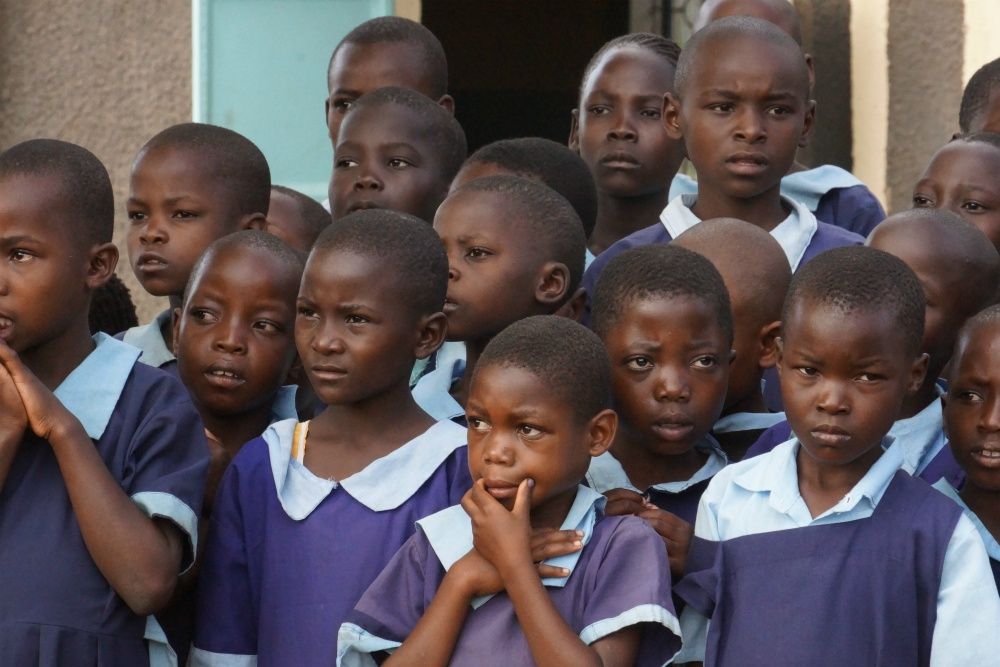
With schools struggling to stay afloat, the impact of the funding shortfall is becoming increasingly visible. Across the country, headteachers are being forced to make difficult decisions, some of which have resulted in students being sent home due to the institutions’ inability to cater to their needs. Despite the government’s directive that students should not be sent away over unpaid fees, many schools have reached a breaking point, unable to sustain themselves without the necessary funding.
For students from low-income families, the situation is even more dire. Many are missing out on their education because their schools simply do not have the resources to keep running. Without adequate funding, some schools have had to shut down their feeding programs, leaving children who relied on school meals without a source of daily nutrition. Others have cut back on essential services, such as purchasing teaching materials and maintaining school facilities, further diminishing the quality of education.
Teachers, too, are feeling the strain. Before the silent strike, many of them took on additional responsibilities—working overtime to offer remedial lessons, organizing school events, and covering for absent colleagues. Now, with the “work-to-rule” strategy in place, all these extra efforts have ceased. The result is a disjointed school system, where essential learning activities are no longer taking place, and students are left to navigate an environment of uncertainty and disruption.
Perhaps most concerning is the effect of the unpaid medical scheme funds. Without access to healthcare, many teachers are struggling to manage medical emergencies, while others are avoiding seeking medical attention altogether due to financial constraints. “I can’t afford to take my child to the hospital because our medical scheme is in shambles,” lamented one teacher from Nairobi. “It’s humiliating that we, the very people shaping the future of this country, are left to suffer like this.”
This crisis is not an isolated incident. It is part of a long and troubling history of broken promises and delayed payments that have plagued Kenya’s education sector for years. Teachers have been here before. In August 2023, KUPPET led a week-long strike that brought learning to a standstill, forcing the government to release funds for teachers’ salaries and medical schemes. That strike ended after both parties reached an agreement, with the government pledging to implement the second phase of the 2021–2025 Collective Bargaining Agreement (CBA) and restore funding for teachers’ medical schemes.

Despite these commitments, the situation today remains unchanged. Teachers are once again fighting for the same demands—timely disbursement of capitation funds, proper implementation of salary adjustments, and access to healthcare. What makes this crisis even more frustrating is that the return-to-work formula signed in August 2024 was deposited with the courts, making it legally binding. However, KUPPET argues that the government is now blatantly disregarding the agreement.
“The government is in defiance of court orders,” said a KUPPET representative. “We signed an agreement that was meant to protect teachers and students, yet here we are again, battling the same issues as before. How can we trust a government that continuously fails to honor its promises?”
The government is now at a critical juncture. Either it fulfills its financial obligations or risks a total collapse of the public education system. As frustration grows among teachers, the risk of escalation becomes increasingly likely. While the work-to-rule campaign has significantly slowed down learning, an official strike would halt it completely, causing irreparable damage to the school calendar.
For parents, students, and school administrators, the uncertainty is overwhelming. Many fear that if the government fails to act soon, the consequences will be devastating—not just for teachers but for the entire education sector. As negotiations between KUPPET and the government continue, all eyes are on the authorities to see whether they will step up and resolve this crisis or allow Kenya’s education system to crumble further.
One thing is clear. Time is running out, and the quiet rebellion of teachers is growing louder by the day.






0 comments