
Your Read is on the Way
Every Story Matters
Every Story Matters
The Hydropower Boom in Africa: A Green Energy Revolution Africa is tapping into its immense hydropower potential, ushering in an era of renewable energy. With monumental projects like Ethiopia’s Grand Ethiopian Renaissance Dam (GERD) and the Inga Dams in the Democratic Republic of Congo, the continent is gearing up to address its energy demands sustainably while driving economic growth.
Northern Kenya is a region rich in resources, cultural diversity, and strategic trade potential, yet it remains underutilized in the national development agenda.

Can AI Help cure HIV AIDS in 2025

Why Ruiru is Almost Dominating Thika in 2025

Mathare Exposed! Discover Mathare-Nairobi through an immersive ground and aerial Tour- HD

Bullet Bras Evolution || Where did Bullet Bras go to?
How the Project Began
Talanta Stadium did not start as a vanity idea. It began as a requirement.
When Kenya, Uganda and Tanzania won the right to host the 2027 Africa Cup of Nations, Kenya’s existing stadiums — including Kasarani and Nyayo — were assessed and found to fall short of modern CAF and FIFA standards. Rather than undertake costly structural redesigns on ageing facilities, the government opted to build a new stadium from scratch.
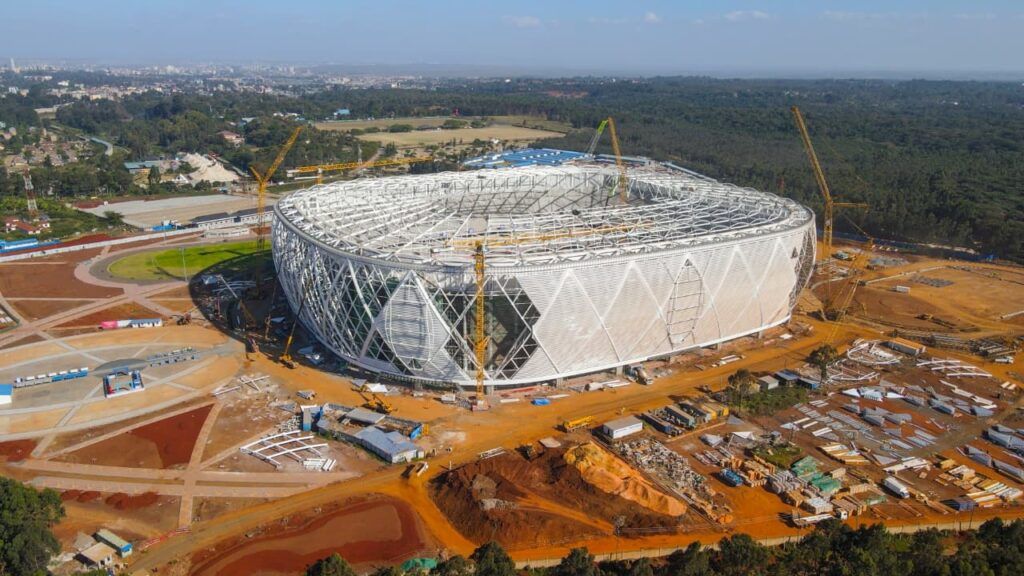
Construction began in March 2024, led by China Road and Bridge Corporation and overseen by the Kenya Defence Forces engineering unit. The plan is for a 60,000-seat football-specific stadium, the largest Kenya has ever built, with no running track and with broadcast-grade infrastructure designed for major tournaments and concerts.
Cost, Budget and Funding
Talanta Stadium’s official construction cost is about KSh 44.7 billion, making it one of the most expensive single sports projects in Kenya’s history.
Unlike previous infrastructure projects, the government did not fund it directly through the national budget or foreign loans. Instead, it raised money through an infrastructure-backed bond listed on the Nairobi Securities Exchange, allowing private investors to finance construction in return for long-term returns backed by government guarantees.
President Ruto has promoted the model as proof that Kenya can fund large projects locally without increasing external debt. Critics, however, argue that interest costs over time could significantly inflate the project’s true price.
Why Build a New Stadium When Others Exist?
Kenya already has major stadiums, particularly Moi International Sports Centre, Kasarani, and Nyayo National Stadium, both of which have undergone recent renovations. But both were originally designed as multi-purpose athletics venues, not football-specific stadiums.
Talanta is built to international tournament standards — steeper stands, closer pitch access, better broadcast facilities and modern crowd-control systems. Government officials argue that upgrading older stadiums to the same level would have required deep structural changes, costing almost as much as a new build while still leaving design compromises.
Critics disagree.
They say the same money could have renovated multiple regional stadiums, decentralising sports infrastructure instead of concentrating another mega-project in Nairobi.
Location and Why It Matters
Talanta Stadium is being built at Jamhuri, along Ngong Road, an area already connected to major transport corridors and close to existing sports and entertainment facilities.
Government planners argue the site allows for faster access, easier security coordination and better integration with Nairobi’s commercial districts. Critics counter that Kenya’s long-standing problem is not lack of stadiums in Nairobi, but lack of quality facilities in regional towns where grassroots sports development happens.
Why Ruto Gave Talanta Priority
President William Ruto placed Talanta at the centre of his sports and infrastructure agenda early in his term.
Part of this was practical: without a new stadium, Kenya risked losing its place as an AFCON 2027 host. But Talanta also fit neatly into Ruto’s broader political framing — youth empowerment, global visibility, and innovative financing.
The project offered something else politically valuable: a high-profile national landmark that could be delivered within a single presidential term, unlike railways, ports or housing programmes that take longer to mature and show results.
That visibility explains why Talanta moved faster than other stalled sports projects around the country.
What Talanta Represents
To supporters, Talanta Stadium is long-overdue infrastructure — a facility that finally puts Kenya in line with modern football nations and opens the door to hosting global events.
To critics, it is an expensive, centralised investment in a country where many counties lack even basic sports facilities.
Either way, Talanta is more than a stadium. It is a statement about how Kenya chooses to invest, what it prioritises, and what kind of image it wants to project to the world.





0 comments