
Your Read is on the Way
Every Story Matters
Every Story Matters
The Hydropower Boom in Africa: A Green Energy Revolution Africa is tapping into its immense hydropower potential, ushering in an era of renewable energy. With monumental projects like Ethiopia’s Grand Ethiopian Renaissance Dam (GERD) and the Inga Dams in the Democratic Republic of Congo, the continent is gearing up to address its energy demands sustainably while driving economic growth.
Northern Kenya is a region rich in resources, cultural diversity, and strategic trade potential, yet it remains underutilized in the national development agenda.

Can AI Help cure HIV AIDS in 2025

Why Ruiru is Almost Dominating Thika in 2025

Mathare Exposed! Discover Mathare-Nairobi through an immersive ground and aerial Tour- HD

Bullet Bras Evolution || Where did Bullet Bras go to?
In a world where athletes often fade into oblivion after long breaks, Mercy Cherono scripted a different story. She didn’t return to reclaim lost fame. She returned because unfinished business called her back—because the track was not done with her, and she was not done with the track. When she stepped onto the Tokyo track for the women’s 5000 meters, the crowd may have cheered for the front-runners, but the story belonged to her.
Born in 1991 in the lush highlands of Kipajit, a quiet village near Sotik in Kenya's Rift Valley, Mercy Cherono began running not with dreams of global fame but with a child’s instinct to chase freedom. Her early life was far from glamorous. Her first tracks were dusty roads and cornfields, where she often ran barefoot.
She showed promise early, capturing the attention of local coaches who saw in her the fire that burns long after talent runs out. By the time she entered national competitions, her name was already echoing across the junior athletic circuits. This rural girl, soft-spoken but fearless, was destined for more.
Between 2008 and 2010, Cherono became a name that stirred fear among her rivals. She dominated the World Junior Championships, bagging gold in the 3000 meters in both years. Her running style was graceful, almost deceptive. While others pushed visibly with effort, Cherono seemed to glide—conserving energy for a finish that almost always stunned the field.
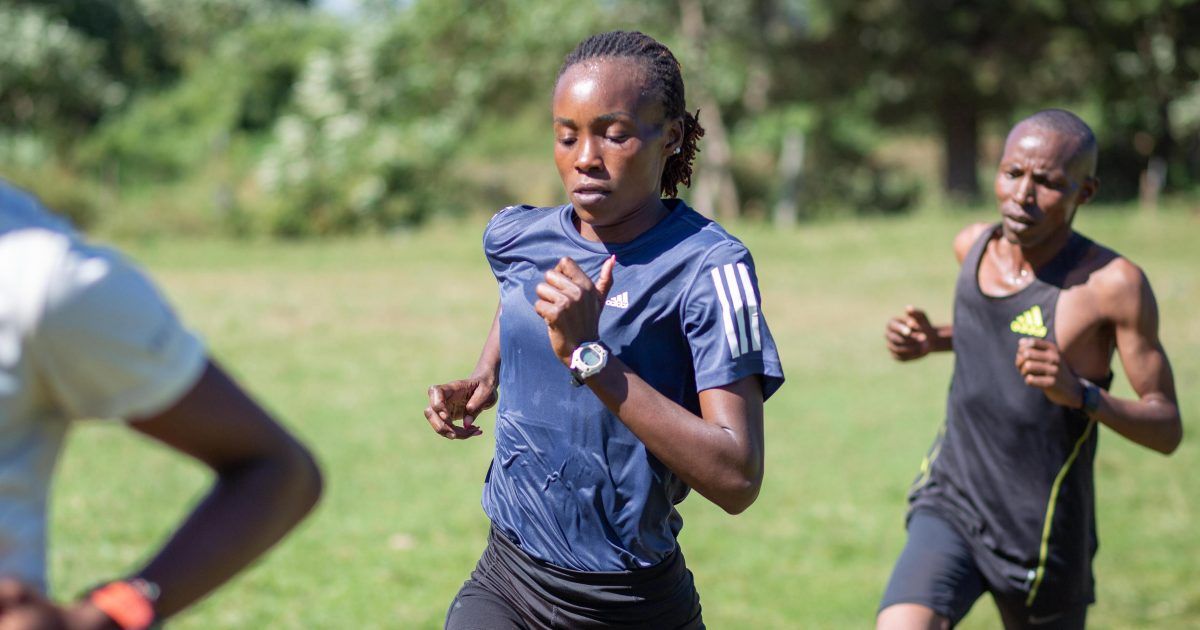
By 2010, she extended her dominance to cross-country, winning the World Cross Country junior title. Her name was already being whispered as the next long-distance queen of Kenya, a torchbearer of a legacy paved by the likes of Vivian Cheruiyot and Linet Masai.
The transition to senior competition came with its expected challenges. The field was tighter, strategies were sharper, and physical strength alone was no longer enough. Yet Cherono proved she belonged. In 2013, she secured a silver medal in the 5000 meters at the World Championships, coming second only to the reigning queen of distance racing.
She competed at the Rio Olympics in 2016, finishing fourth in the 5000 meters—a painful position for any athlete, so close to the podium yet walking away empty-handed. That race, in many ways, marked the beginning of her retreat from the limelight.
After Rio, the world heard less from Mercy Cherono. Then came 2023—a year not defined by races, but by motherhood. Cherono took maternity leave, a decision that rarely gains headlines in the sports world, but one that demanded immense emotional strength. While the world of athletics moved on, Cherono stepped into a new life chapter—one that grounded her with a deeper sense of purpose.
In 2024, just as the world wondered if she’d retired quietly, news broke that she had joined the National Police Service. She wasn’t competing—she was training as an officer. It was a curveball move, one that seemed to hint at a career pivot. But in truth, it was a period of physical and mental recalibration. The discipline of police training rekindled her inner fire. The runner in her was not dead—just dormant.
Toward the end of 2024, she began training in earnest again. Her return wasn't met with fireworks. She wasn’t a media favorite. She wasn’t trending on social platforms. She was just Mercy, quietly showing up at local races, placing mid-pack, observing, calculating, adjusting. Her eighth-place finish at the National Police Cross Country Championships in Ngong wasn’t headline-worthy—but for her, it was a green light. The machine was warming up.

Her camp was tight-lipped, but word began to spread that Mercy Cherono was eyeing Tokyo. Not just as a final lap, but as a redemption arc. She knew she’d be racing against not only younger athletes but also the weight of time, the skepticism of doubters, and the memory of her own silence.
When the gun went off at Tokyo’s Olympic Stadium, all eyes were on the heavyweights. The reigning champions. The new blood. Mercy, now 33, stood among them like an uninvited ghost of championships past.
But she was ready.
She ran the first laps with measured precision. Her strategy wasn’t to lead but to stalk—let the race tire itself out. Lap after lap, she tucked in behind the pack, conserving energy, calculating every move. With two laps to go, the tempo shifted. The front pack surged. So did Mercy.
In the final 200 meters, she kicked harder than she ever had before. Her legs were machines fueled by memory, grief, and hunger. She surged forward, overtaking some of the favorites and crossing the finish line in second place. Silver. Redemption. Silence broken.
Mercy Cherono didn’t just win silver in Tokyo—she dismantled the myth that an athlete’s best years end in their twenties. She proved that stepping away from the sport doesn’t have to be a retreat, but can be a return with greater strength. From motherhood to police training, every chapter outside of racing had sculpted her into a new version of herself—hardened, focused, and deeply self-aware.
Her Tokyo run wasn't a footnote in a fading career—it was a highlight in a story that still has more pages to turn.
Now back in form and spirit, Mercy Cherono looks toward future races with a renewed lens. She’s not chasing podiums out of desperation but out of principle. Because women like her—mothers, warriors, late bloomers—need to see that it’s possible to come back and shine brighter than ever.
Her journey is a blueprint for resilience. In a culture that often discards athletes after their “prime,” Cherono is redefining the word entirely.





0 comments