
Your Read is on the Way
Every Story Matters
Every Story Matters
The Hydropower Boom in Africa: A Green Energy Revolution Africa is tapping into its immense hydropower potential, ushering in an era of renewable energy. With monumental projects like Ethiopia’s Grand Ethiopian Renaissance Dam (GERD) and the Inga Dams in the Democratic Republic of Congo, the continent is gearing up to address its energy demands sustainably while driving economic growth.
Northern Kenya is a region rich in resources, cultural diversity, and strategic trade potential, yet it remains underutilized in the national development agenda.
Can AI Help cure HIV AIDS in 2025
Why Ruiru is Almost Dominating Thika in 2025

Mathare Exposed! Discover Mathare-Nairobi through an immersive ground and aerial Tour- HD

Bullet Bras Evolution || Where did Bullet Bras go to?
The funeral of a pope is never just a religious affair—it’s a geopolitical gathering cloaked in solemnity. When the bells of St. Peter’s Basilica tolled their final farewell, echoing the grief of over a billion Catholics, the world didn’t just pause—it showed up. Kings, presidents, chancellors, prime ministers, and even adversaries momentarily dropped their differences and stood shoulder to shoulder beneath the grand dome of Vatican City, united not by ideology but by reverence.
This funeral wasn’t merely a liturgical rite—it was a symphony of symbolism, showcasing the profound global influence the late pontiff wielded. Flags lowered, security tightened, and all eyes turned to Rome, where mourning became a diplomatic dance and tribute turned into testimony of the Vatican’s quiet yet enduring sway.
From the monarchs of Europe to the presidents of Latin America, the guest list looked more like a G20 summit than a religious ceremony. U.S. President, British Prime Minister, French President, German Chancellor—all were in attendance. Even leaders of predominantly non-Christian nations paid their respects, signaling how deeply the pope’s moral authority resonated beyond Catholic borders.
Leaders who had previously been at odds with the Vatican on doctrinal or political grounds arrived not with talking points but bowed heads. Their presence was a silent acknowledgment: the Church remains one of the last truly global institutions, and the man they came to honor was one of the last global moral arbiters.
The funeral became a space where protocol relaxed—leaders sat not in order of rank but in unity. For one day, the ego of office was eclipsed by a common acknowledgment of the spiritual. In their whispered conversations and somber glances, it was clear: this was not just the pope of Catholics; this was a figure of transcendent significance.
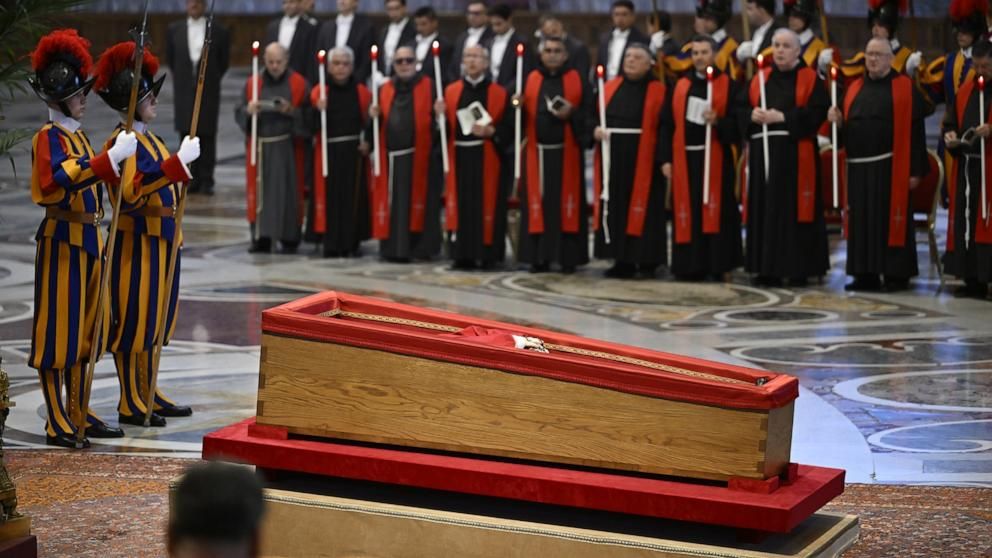
While the Vatican had no intention of turning the funeral into a summit, behind the scenes, quiet diplomacy buzzed. Side meetings, unplanned but inevitable, took place in hotel lobbies and private chambers. There’s something disarming about grief—it softens edges, opens conversations.
Old rivals exchanged nods; envoys held brief, respectful dialogues. Some saw the funeral as a chance to reset frosty relations. Others used the rare face-to-face opportunity to reaffirm alliances, all under the guise of solemn mourning. The Swiss Guards may have controlled the flow of mourners, but the real choreography happened off-script, in the margins of prayer books and funeral programs.
Security was unprecedented. Rome became a fortress wrapped in incense. Military jets flew overhead, while armored cars crept through cobbled streets that centuries earlier had borne the weight of emperors and popes alike. Pilgrims walked alongside world leaders, their candles flickering beside flashbulbs from a thousand cameras.
Hotels overflowed, and city infrastructure was stretched, but Rome handled it like it always does—with a mix of chaos and grace. For locals, the surreal juxtaposition of everyday life with historic farewell was palpable. Grandmothers blessed convoys. Children waved papal flags beside black motorcades.
As the Mass progressed, it was hard to ignore the optics. The pope’s throne stood vacant—a powerful symbol of transience. Behind it, rows of suited statesmen stood in silence, not giving speeches, not negotiating treaties, but partaking in prayer.
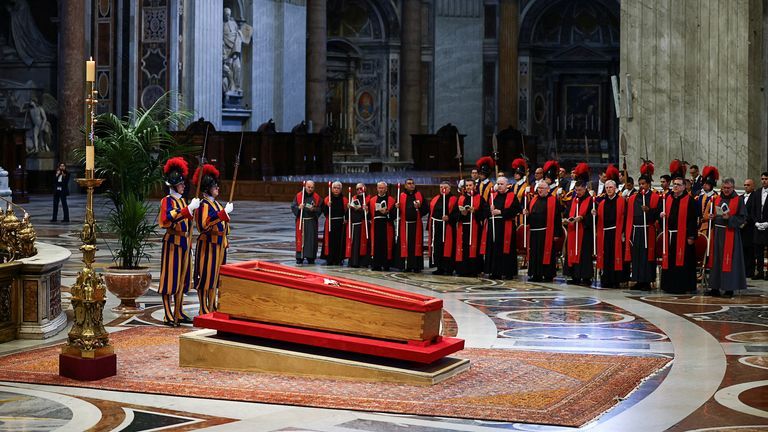
The eulogy was reserved, yet poignant. It reminded the world not just of the man who had passed, but of the ideals he championed: peace, humility, faith, and above all, the courage to stand for something beyond oneself.
This wasn't just the end of a papacy—it was the closing of a chapter that spanned wars, revolutions, and reckonings. And in the cathedral of Catholicism, the secular bowed before the sacred, if only for a moment.
In the days that followed, discussions turned to succession, legacy, and the future of the Church. But the funeral itself left an imprint. It reminded global leaders that influence doesn’t always come with armies or GDP figures. Sometimes, it wears a white cassock, carries no weapon, and preaches to the soul.
And when such a figure dies, the world remembers—not just in headlines or hashtags—but in presence.




0 comments