
Your Read is on the Way
Every Story Matters
Every Story Matters
The Hydropower Boom in Africa: A Green Energy Revolution Africa is tapping into its immense hydropower potential, ushering in an era of renewable energy. With monumental projects like Ethiopia’s Grand Ethiopian Renaissance Dam (GERD) and the Inga Dams in the Democratic Republic of Congo, the continent is gearing up to address its energy demands sustainably while driving economic growth.
Northern Kenya is a region rich in resources, cultural diversity, and strategic trade potential, yet it remains underutilized in the national development agenda.

Can AI Help cure HIV AIDS in 2025

Why Ruiru is Almost Dominating Thika in 2025

Mathare Exposed! Discover Mathare-Nairobi through an immersive ground and aerial Tour- HD

Bullet Bras Evolution || Where did Bullet Bras go to?
A powerful burst of atmospheric chaos has struck China’s capital, Beijing, bringing with it forceful winds that have thrown the city's busy transportation systems into disarray. The windstorm, which began early in the day, intensified rapidly, unleashing gusts that battered buildings, uprooted trees, and created hazardous travel conditions both in the air and on the ground. The impact was immediate and widespread, leading to hundreds of flight cancellations and effectively grounding the city’s major airports. With visibility reduced and turbulence posing severe risks, airport authorities were left with no choice but to call off operations for a large portion of the day, leaving thousands of passengers stuck in limbo, waiting for updates that remain uncertain.
Beijing Capital International Airport and Daxing International Airport—two of the busiest air travel hubs in the country—became the epicenters of disruption. As the violent winds howled through the city, departures and arrivals were halted en masse, creating a ripple effect that reached well beyond Beijing. The runways stood silent, while terminals swelled with a sea of frustrated travelers scrambling for information. Airlines struggled to keep up with the cascading cancellations and delays, with check-in counters overwhelmed and rescheduling efforts stretching thin. Some travelers, caught in the chaos, found themselves waiting for hours, uncertain if they’d be airborne that day—or even the next. International routes were no exception; long-haul flights were grounded or rerouted, throwing global connections into disarray.
What began as a localized weather anomaly quickly morphed into a nationwide logistical headache. Airlines operating across the country had to recalibrate their schedules, with domestic routes to and from Beijing either grounded or severely delayed. This led to a knock-on effect at smaller airports, where incoming flights were rerouted, causing crowding and confusion. Internationally, Beijing’s sudden paralysis disrupted the plans of global travelers. Flights bound for destinations across Asia, Europe, and the Americas were either canceled outright or diverted mid-air. Business trips, family reunions, and holiday plans were upended, turning Beijing’s skies into a complex puzzle of rerouted air traffic and frustrated passengers with nowhere to go.

Experts have pointed to a rapidly developing low-pressure system sweeping through northern China as the main driver of the storm. This system, when combined with spring’s typical atmospheric volatility, created the perfect storm—literally. Meteorologists reported that gusts exceeded safe flying thresholds, with wind speeds reportedly climbing above 100 kilometers per hour in certain districts of the capital. These speeds were not only dangerous for aircraft but posed serious risks on the ground as well, particularly for pedestrians and vehicles. While high winds are not unheard of during this season, the ferocity and suddenness of this particular event have taken both officials and citizens by surprise, underscoring the increasing unpredictability of regional weather patterns.
In response to the escalating crisis, Chinese authorities swiftly moved to activate emergency protocols. Transport ministries worked in coordination with airlines and local governments to disseminate travel advisories, manage crowds at airports, and ensure the safety of those stranded. Public transportation in the city, including buses and subways, was also affected, with some routes suspended and others operating on limited schedules. Meanwhile, emergency teams were dispatched across the city to respond to wind-related incidents, such as fallen power lines, collapsed scaffolding, and flying debris. The government urged residents to stay indoors unless absolutely necessary and warned of continued wind gusts expected to persist into the following day.
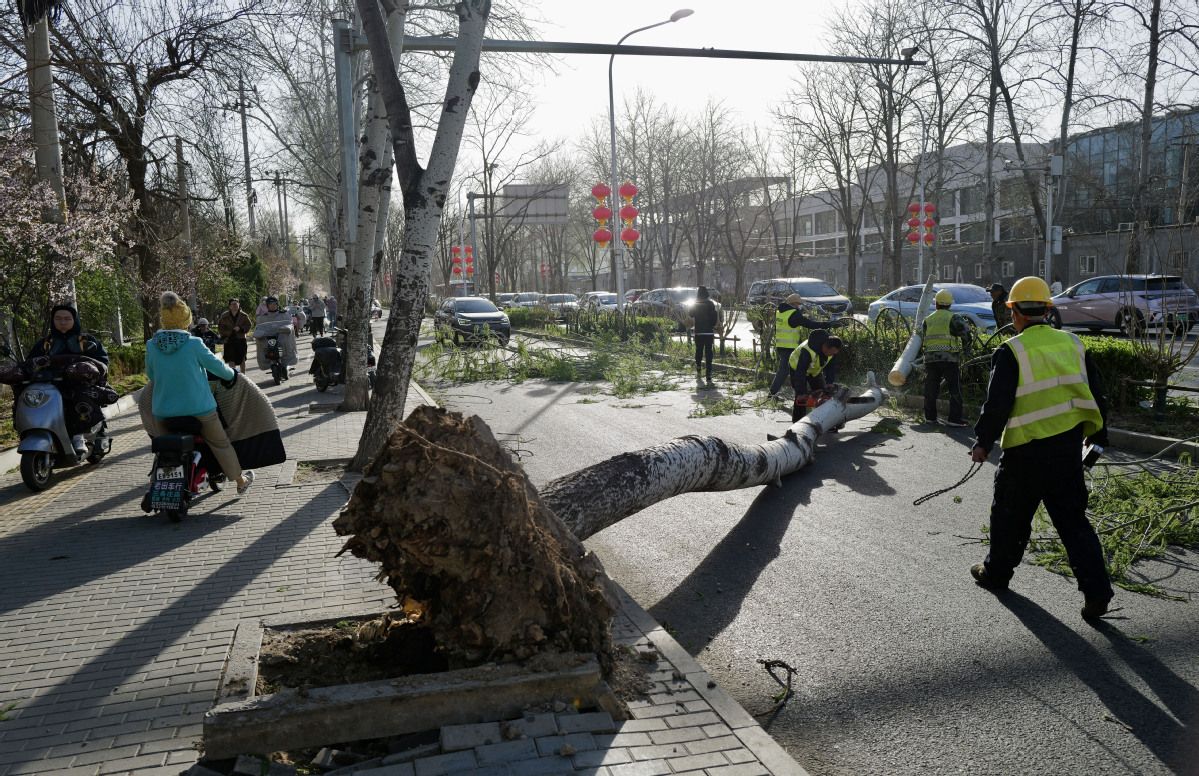
As the storm continues to make its presence felt, travelers remain caught in a waiting game. With limited information and overburdened airline staff, rebookings are taking time, and many passengers are still uncertain about when they’ll be able to reach their destinations. Some airlines have begun offering flexible rebooking options or full refunds, but the sheer scale of the disruption means that recovery will take time. In the meantime, stranded travelers are being advised to stay alert, check for updates frequently, and avoid venturing outdoors, especially in areas where wind warnings remain in effect. For those in transit, patience has become more than a virtue—it’s a necessity.
Forecasters remain cautious, noting that while the winds may begin to subside by late evening, intermittent gusts are still likely to pose hazards through the next day. The true toll of this weather event—both in terms of economic loss and travel disruption—will only become clear once normal operations resume. For now, Beijing’s airports remain a scene of subdued chaos, filled with grounded planes, weary travelers, and a city holding its breath, waiting for the winds to pass






0 comments