
Your Read is on the Way
Every Story Matters
Every Story Matters
The Hydropower Boom in Africa: A Green Energy Revolution Africa is tapping into its immense hydropower potential, ushering in an era of renewable energy. With monumental projects like Ethiopia’s Grand Ethiopian Renaissance Dam (GERD) and the Inga Dams in the Democratic Republic of Congo, the continent is gearing up to address its energy demands sustainably while driving economic growth.
Northern Kenya is a region rich in resources, cultural diversity, and strategic trade potential, yet it remains underutilized in the national development agenda.
Can AI Help cure HIV AIDS in 2025
Why Ruiru is Almost Dominating Thika in 2025
Mathare Exposed! Discover Mathare-Nairobi through an immersive ground and aerial Tour- HD

Bullet Bras Evolution || Where did Bullet Bras go to?
Under the unblinking gaze of the saints carved into St. Peter’s Square, Pope Francis’ funeral became something far greater than a ritual of mourning. It became a mirror — a brutal reflection of the promises the world has failed to keep. Before a gallery of presidents, prime ministers, and royalty, Italian Cardinal Giovanni Battista Re seized the global stage not simply to honor the departed pope, but to reignite the battles Francis championed. His sermon was not a polite farewell. It was a jolt, a call to dismantle the walls we have built between ourselves and others, a reminder that Francis' vision remains painfully unfinished.
Cardinal Re’s message was deliberately provocative. Speaking directly to the world’s most powerful men and women, he demanded action on three urgent fronts: care for migrants, an end to global wars, and an unflinching battle against climate catastrophe. His words cut deeper knowing that Donald Trump, a longtime political adversary of Francis, was among the mourners. Without naming names, Re resurrected the pope’s most scathing rebuke of nationalism: a world that erects walls instead of building bridges has lost its soul. There was no mistaking who the message was aimed at. There was no mistaking that this funeral was not a soft and sorrowful goodbye, but a fierce demand for unfinished work to be continued.
Francis’ reign had never been about preserving tradition for tradition’s sake. From the moment he stepped onto the papal balcony in 2013, he announced a new kind of leadership — one rooted in humility, advocacy for the marginalized, and uncomfortable conversations with the world’s power brokers. His death at 88 closed a remarkable 12-year chapter, but it did not resolve the battles he fought. In fact, judging by the urgency in Re’s voice, those battles are only just beginning.
The funeral, though steeped in solemn tradition, felt charged with contradiction. Latin chants echoed through the Vatican’s open square, ancient rituals played out with precision, and yet under it all pulsed the radical legacy of a pope who was never content with mere ceremony. Re reminded everyone — from the cardinals seated in disciplined rows to the political elite looking for safe PR moments — that Francis’ life was a living protest against apathy. His legacy demanded not comfort, but courage. His memory would not be honored with quiet mourning but with uncomfortable action.
The tension between Francis and Trump never fully faded, and it re-emerged in full force during the funeral proceedings. Their conflict was never about personalities. It was about visions of humanity. While Trump’s politics often painted immigrants as threats to national security, Francis insisted that these same migrants were faces of God, carrying the sacred dignity of the human soul. Their clash came to symbolize a deeper battle over the moral compass of Western society.
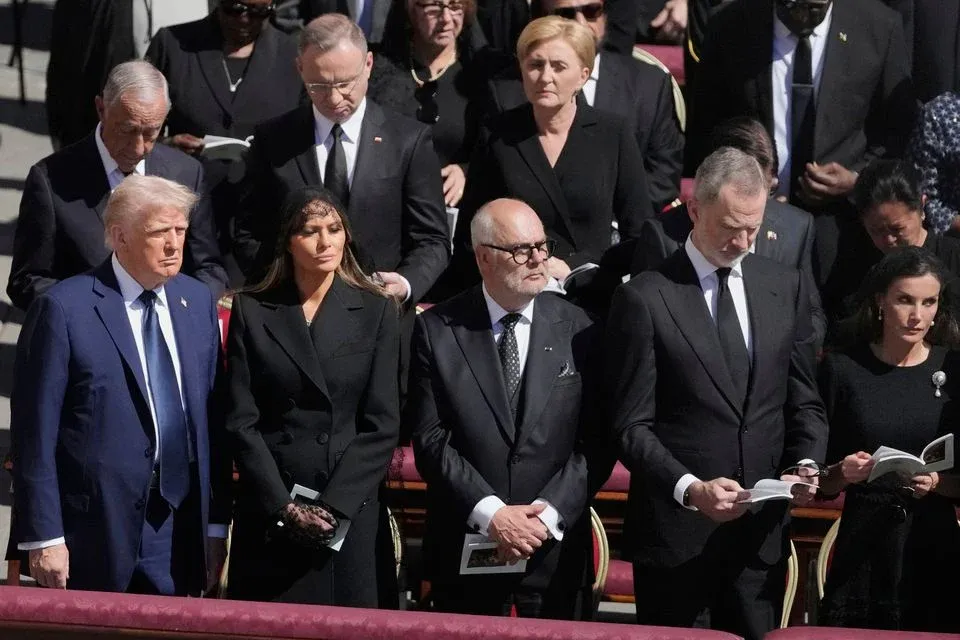
Re’s choice to echo Francis' 2016 condemnation of wall-building was no accident. It was a reminder to the powerful figures assembled — including Trump himself — that Francis had been unwavering in his belief that compassion for the stranger was the truest measure of a society’s faith. It was also a warning: Francis’ death did not erase the truth he spoke. If anything, it made the moral failures of the present even more glaring.
The old exchange between Francis and Trump still lingered in the air like unfinished business. Francis had declared that building walls, literal or metaphorical, was not Christian. Trump had fired back, accusing the pope of political bias. Years later, those wounds remained open. At Francis' funeral, those wounds were not bandaged. They were exposed, raw, and undeniable.
As the cardinals prepare for the secretive conclave that will elect the next pope, a heavy burden hangs over them. Historically, papal funerals have shaped the mood of these elections. When Cardinal Joseph Ratzinger eulogized Pope John Paul II in 2005 with a defense of Catholic orthodoxy, it all but guaranteed his election as Pope Benedict XVI. Now, Cardinal Re — too old to vote but unchained by political caution — sent a different kind of signal. The Church cannot afford a caretaker. It needs a builder of bridges, a disruptor, a pope willing to engage in the difficult work of transformation that Francis so desperately began.
There is no obvious frontrunner. That fact alone suggests the magnitude of the crossroads ahead. Re’s sermon was not just a tribute to the past but a roadmap for the future. It called on the next leader of the Catholic Church to continue confronting the crises of migration, war, and environmental collapse with boldness, not retreat. The global affection for Francis, evidenced by the 250,000 mourners who filed through St. Peter’s Basilica in the days leading up to the funeral, spoke volumes. People around the world are not looking for a nostalgic papacy. They are yearning for a Church that still has the courage to stand in the storm and refuse to look away.
In death, Francis became even more dangerous to complacency than he was in life. His funeral was not an ending, but a provocation. It dared the world — and the Church — to choose whether they would honor him with statues and ceremonies or with action and revolution.





0 comments