
Your Read is on the Way
Every Story Matters
Every Story Matters
The Hydropower Boom in Africa: A Green Energy Revolution Africa is tapping into its immense hydropower potential, ushering in an era of renewable energy. With monumental projects like Ethiopia’s Grand Ethiopian Renaissance Dam (GERD) and the Inga Dams in the Democratic Republic of Congo, the continent is gearing up to address its energy demands sustainably while driving economic growth.
Northern Kenya is a region rich in resources, cultural diversity, and strategic trade potential, yet it remains underutilized in the national development agenda.

Can AI Help cure HIV AIDS in 2025

Why Ruiru is Almost Dominating Thika in 2025

Mathare Exposed! Discover Mathare-Nairobi through an immersive ground and aerial Tour- HD

Bullet Bras Evolution || Where did Bullet Bras go to?
In the wake of a devastating missile strike that turned Kyiv’s skyline into a silhouette of smoke and sorrow, Mayor Vitali Klitschko took to the airwaves with a message that defied the usual party line. While Ukraine’s President Volodymyr Zelensky maintains an unyielding stance on territorial integrity, Klitschko floated what many in the government consider taboo: the idea that peace might require painful, perhaps even unthinkable, compromises.
It wasn’t a declaration—it was a crack in the armor.
"Temporary solutions" was the term Klitschko used, but the implications echoed across a war-fatigued nation. Kyiv’s mayor stopped short of advocating surrender but dared to acknowledge what Zelensky won’t: that a blood-soaked status quo may not be sustainable forever.
When asked about discussions with President Zelensky, Klitschko didn’t mince words: “No.” Not only has the mayor been excluded from the highest-level peace deliberations, but he made clear that Kyiv is charting its own course—even if unofficially.
This silence between the president and the capital’s top official speaks volumes. Behind the flags and official statements lies a fractured leadership, split not just by ideology, but by strategy.
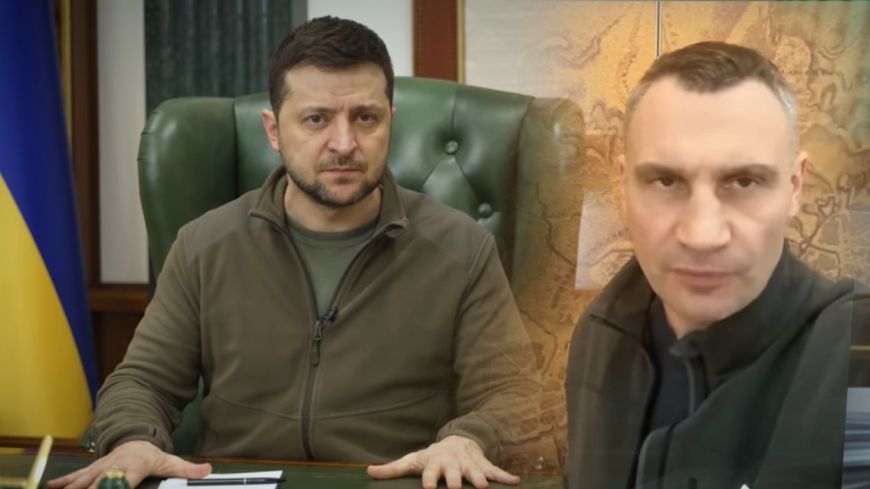
Zelensky, still riding a wave of Western support, continues to rule out negotiations over Crimea and other occupied territories. But with the U.S. political winds shifting—particularly with Trump’s return to the global stage—those diplomatic pillars may not stand as firm as before.
Former President Donald Trump’s recent comments have further inflamed tensions. By declaring Crimea “a closed case,” Trump has effectively undermined years of American foreign policy. Klitschko, perhaps sensing the winds of change, seems to be preparing Kyiv for a new political climate where the Ukrainian leadership might have fewer friends and even fewer options.
Trump’s tone may be off-putting, but it's not isolated. European capitals are watching with unease as U.S. rhetoric shifts from resistance to reconciliation. Ukraine, once the darling of democratic defense, is now caught in a geopolitical chess match with no guaranteed allies.
What emerges from Klitschko’s remarks isn’t a full-on mutiny—but something subtler. A message that Kyiv, battered yet unbroken, may be forced to lead where the national government cannot. When your city becomes the frontline, the calculus changes.
Zelensky remains the face of Ukrainian defiance, but Klitschko just staked a claim as the voice of Ukrainian survival.
Ironically, Klitschko hinted that true diplomacy doesn’t belong in the limelight. The reference to Zelensky and Trump’s infamous February clash was sharp: real leaders, Klitschko implied, don’t solve crises in front of flashing bulbs.
The question now is whether Ukraine’s future will be written on the battlefield, or in quiet, uncomfortable conversations behind closed doors.





0 comments