
Your Read is on the Way
Every Story Matters
Every Story Matters
The Hydropower Boom in Africa: A Green Energy Revolution Africa is tapping into its immense hydropower potential, ushering in an era of renewable energy. With monumental projects like Ethiopia’s Grand Ethiopian Renaissance Dam (GERD) and the Inga Dams in the Democratic Republic of Congo, the continent is gearing up to address its energy demands sustainably while driving economic growth.
Northern Kenya is a region rich in resources, cultural diversity, and strategic trade potential, yet it remains underutilized in the national development agenda.

Can AI Help cure HIV AIDS in 2025

Why Ruiru is Almost Dominating Thika in 2025

Mathare Exposed! Discover Mathare-Nairobi through an immersive ground and aerial Tour- HD

Bullet Bras Evolution || Where did Bullet Bras go to?
When the United States and Israel launched coordinated strikes targeting Iranian military infrastructure, the objective appeared clear: degrade capabilities, reassert deterrence, and redraw red lines. The calculus seemed rooted in precedent — previous confrontations had produced limited retaliation, symbolic gestures, and carefully calibrated responses from Tehran.
But this time felt different.
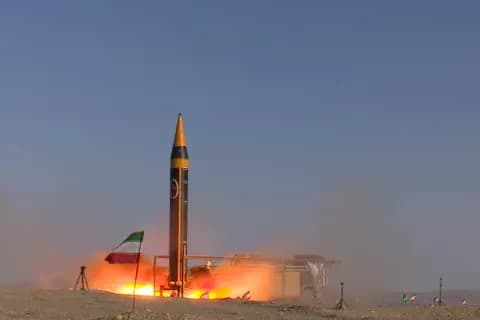
Instead of measured signaling, Iran responded with a sweeping missile and drone barrage that reached beyond predictable corridors. Targets were not confined to direct military counterparts. Regional infrastructure, airspace, ports, and energy facilities across multiple states suddenly became part of the equation. The scale and geographic breadth of the response sparked a pressing question: did Washington and Tel Aviv misread Tehran’s threshold?
The Assumption of Containment
Strategic planning often rests on historical patterns. In past confrontations, Iran leaned heavily on proxy forces and asymmetric pressure rather than overt, multi-directional strikes. That pattern may have created an expectation that any retaliation would remain fragmented and indirect.
However, Iran’s recent barrage suggested a different doctrine at play — one combining ballistic missiles, drones, and layered targeting. Instead of isolated responses, the retaliation resembled a coordinated campaign designed to demonstrate reach and endurance.
If deterrence was the objective of the original strikes, the aftermath complicated that narrative. Airspace closures across Gulf states, disrupted oil facilities, and shaken urban centers projected a message that Iran’s arsenal remains operational and scalable.
Intelligence vs. Political Will
There is a difference between knowing an adversary possesses capability and anticipating that it will use it at scale.
The U.S. and Israel have long acknowledged Iran’s missile inventory and drone programs. Both countries have publicly described those systems as significant threats. Yet the debate now centers less on technical capability and more on political will. Did planners assume Tehran would avoid risking broader escalation? Did they calculate that regional states would remain insulated?
Iran’s response suggested otherwise. By extending the battlefield beyond a bilateral frame, Tehran reframed the confrontation as regional rather than transactional. That shift forced neighboring states into defensive postures and compelled global markets to react.
A New Layer of Deterrence
One of the most striking elements of Iran’s retaliation was its layered nature. Ballistic missiles signaled power. Drones signaled persistence. The combination complicated air defense systems and strained response times.
For Israel, this meant sustained engagement of missile defense infrastructure. For Gulf states, it meant airspace suspensions and economic disruption. For Washington, it meant reassessing escalation ladders that may no longer operate as previously assumed.
Deterrence is psychological as much as military. If the original strikes were designed to demonstrate dominance, the counter-barrage was clearly designed to challenge that perception.
Regional Fallout: Beyond the Battlefield
The most tangible effects of the escalation have not been confined to military installations. Commercial aviation has faced widespread cancellations. Energy markets have wobbled. Insurance premiums for shipping lanes have climbed. Civilians across multiple countries have experienced uncertainty that extends beyond headlines.
This ripple effect may represent Tehran’s most strategic move. Rather than matching force with force in a narrow theatre, the retaliation amplified systemic vulnerability. The message was not just about retaliation — it was about leverage.
Strategic Miscalculation or Controlled Risk?
It would be simplistic to conclude that Washington and Tel Aviv were entirely blindsided. Military planners typically model multiple retaliation scenarios. However, the intensity and breadth of Iran’s response suggest that risk tolerance on all sides has shifted.
If this was a gamble, it was one taken under the assumption that escalation could be managed. The question now is whether that assumption still holds.
Did the U.S. and Israel underestimate Iran’s arsenal? Possibly not in technical terms.
Did they underestimate Iran’s willingness to deploy it in a coordinated, multi-state campaign? That is where the debate sharpens.
The Emerging Balance
What emerges from this episode is not a clear victor but a recalibrated balance. Iran demonstrated reach. The U.S. and Israel demonstrated capability. The region demonstrated fragility.
Future engagements may now unfold under altered assumptions. Escalation ladders have been tested. Red lines have blurred. Strategic patience on all sides appears thinner.
If there was underestimation, it may not have been about missiles or drones — but about resolve.





0 comments