
Your Read is on the Way
Every Story Matters
Every Story Matters
The Hydropower Boom in Africa: A Green Energy Revolution Africa is tapping into its immense hydropower potential, ushering in an era of renewable energy. With monumental projects like Ethiopia’s Grand Ethiopian Renaissance Dam (GERD) and the Inga Dams in the Democratic Republic of Congo, the continent is gearing up to address its energy demands sustainably while driving economic growth.
Northern Kenya is a region rich in resources, cultural diversity, and strategic trade potential, yet it remains underutilized in the national development agenda.

Can AI Help cure HIV AIDS in 2025
Why Ruiru is Almost Dominating Thika in 2025

Mathare Exposed! Discover Mathare-Nairobi through an immersive ground and aerial Tour- HD

Bullet Bras Evolution || Where did Bullet Bras go to?
A Quiet Start, A Global Vision
Born on January 1, 1942, in Dimbokro, then a French colony known as Ivory Coast, Alassane Dramane Ouattara emerged from a modest background to become one of West Africa’s most influential leaders. Raised in a region dominated by agricultural traditions, Ouattara’s early life was steeped in values of discipline, education, and ambition—qualities that would define his decades-long career in both economics and politics.
His initial educational pursuits took him far from home, eventually landing him in the United States where he earned a Ph.D. in economics from the University of Pennsylvania. These years abroad shaped not only his academic mindset but also his belief in institutional reform and global economic integration.
The Economist in Washington
Ouattara’s career skyrocketed when he joined the International Monetary Fund (IMF) in 1968, beginning a long association with global financial systems. His intelligence and diplomatic finesse earned him progressive roles, culminating in his appointment as Deputy Managing Director of the IMF in 1994. He had already served a critical role as the IMF's point man in Africa, particularly during the challenging years of structural adjustment programs that swept across the continent in the 1980s and 1990s.
Before that, he had a brief but impactful stint as the Governor of the Central Bank of West African States (BCEAO), demonstrating his capacity to steer regional monetary policy during turbulent times. These roles solidified his reputation as a capable technocrat who could straddle the line between Western economic orthodoxy and African development priorities.
From Banker to Statesman
In 1990, amidst economic unrest in Côte d’Ivoire, President Félix Houphouët-Boigny invited Ouattara back home to serve as Prime Minister. Though not a career politician, his reputation as a fixer of economies gave him immediate credibility. For three years, Ouattara ran the Ivorian government as a de facto head, implementing reforms and attempting to stabilize a country facing a collapsing cocoa industry and rising social tensions.
However, his ascendancy into Ivorian politics came with a set of challenges. Ethnic and national identity became central to political discourse, and Ouattara’s northern Dioula roots were used against him. A constitutional clause was even introduced to bar anyone with foreign parentage from running for president—an indirect attempt to keep him sidelined.
The Struggle for Power and Civil War
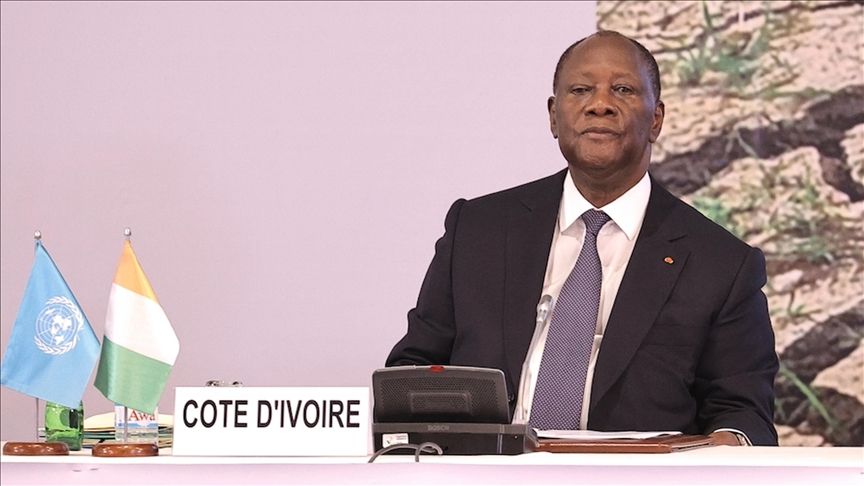
Throughout the 2000s, Ouattara remained a central figure in Ivorian opposition politics. He founded the Rally of the Republicans (RDR), which gained traction as a party representing both economic pragmatism and the marginalized northern population. Despite several setbacks, including being barred from presidential contests due to the controversial "Ivoirité" laws, Ouattara persisted.
In 2010, after nearly two decades of political turbulence and a civil war that split the country into north and south, Ouattara finally won the presidency in a hotly contested election. The incumbent, Laurent Gbagbo, refused to concede, plunging the nation into a second civil war that claimed thousands of lives. With international backing and a coalition of rebel forces, Ouattara eventually took office in 2011.
Presidency: A Decade of Transformation and Controversy
Ouattara’s time in office has been a tale of two cities—booming economic growth on one hand, and simmering political discontent on the other. Under his leadership, Côte d’Ivoire has become one of Africa’s fastest-growing economies, thanks to reforms in infrastructure, energy, and agriculture. Abidjan, the commercial capital, has been rejuvenated with new highways, bridges, and business investments.
But his political legacy is more complex. Accusations of authoritarianism, the use of force against opponents, and a controversial third-term bid in 2020—despite constitutional limits—have raised concerns. While he argued that a new constitution reset the clock on term limits, critics saw it as a power grab. Nonetheless, he won that election in a landslide, as opposition parties boycotted the vote.
Legacy and the Future
Now in his 80s, Ouattara’s influence is undiminished. He has positioned himself as a regional statesman, mediating crises in neighboring countries and shaping West African economic and security policies. At home, his government has focused on education, health reforms, and digital infrastructure, though critics argue that political reconciliation has lagged behind.
The question now is succession. Will Ouattara step aside for a younger generation of leaders? Or will he continue to wield influence behind the scenes, as a political godfather?
One thing is clear: Alassane Ouattara is no longer just the economist in a suit. He’s the architect of modern Côte d’Ivoire—respected, feared, and always a few moves ahead of his rivals.




0 comments