
Your Read is on the Way
Every Story Matters
Every Story Matters
The Hydropower Boom in Africa: A Green Energy Revolution Africa is tapping into its immense hydropower potential, ushering in an era of renewable energy. With monumental projects like Ethiopia’s Grand Ethiopian Renaissance Dam (GERD) and the Inga Dams in the Democratic Republic of Congo, the continent is gearing up to address its energy demands sustainably while driving economic growth.
Northern Kenya is a region rich in resources, cultural diversity, and strategic trade potential, yet it remains underutilized in the national development agenda.

Can AI Help cure HIV AIDS in 2025

Why Ruiru is Almost Dominating Thika in 2025

Mathare Exposed! Discover Mathare-Nairobi through an immersive ground and aerial Tour- HD

Bullet Bras Evolution || Where did Bullet Bras go to?
The fragile truce in Gaza, which once held the promise of a temporary pause in hostilities, now faces imminent collapse. Delays in prisoner exchanges, continued military actions, and deep-seated distrust between Israel and Hamas have escalated tensions, threatening to plunge the region back into bloodshed. As both sides accuse each other of violations, the world watches anxiously, aware that even the slightest misstep could reignite the war.
But this crisis is not merely about a broken ceasefire—it is the latest chapter in a conflict that has shaped the history of Gaza for decades. Understanding the current situation requires looking at not only the immediate triggers of the violence but also the long-standing political and territorial struggles that define the region.
The latest ceasefire, brokered to halt hostilities after over 15 months of intense warfare, has now lasted five weeks. It was established as a temporary measure, allowing for humanitarian aid, hostage releases, and prisoner exchanges between Israel and Hamas. While there were hopes that the truce could serve as a foundation for extended peace negotiations, recent developments suggest otherwise.
Israel’s decision to delay the release of Palestinian prisoners has been met with outrage from Hamas, which sees the move as a breach of the agreement. Hamas has warned that if the promised exchanges do not proceed as planned, the fragile ceasefire will collapse, leading to renewed fighting. Meanwhile, Israel justifies its actions by accusing Hamas of using hostages for propaganda purposes, further deepening mistrust between the two sides.
The latest round of Israeli military action against Gaza stems from its goal of dismantling Hamas, which it holds responsible for the October 7, 2023, attack that left over 1,200 people dead. In response, Israel launched a full-scale military operation, targeting Hamas strongholds, infrastructure, and weapons stockpiles.
However, beyond its immediate retaliation for the attack, Israel’s military campaigns in Gaza are part of a broader security strategy aimed at neutralizing Hamas as a long-term threat. Israeli officials argue that Hamas continues to launch rockets into Israeli territory, use underground tunnels for smuggling weapons, and engage in militant operations that endanger Israeli civilians.
From Hamas’s perspective, however, Israel’s attacks are part of a larger effort to tighten its control over Gaza and weaken Palestinian resistance. The militant group views itself as a defender of Palestinian sovereignty and accuses Israel of seeking to impose military rule over the region. This fundamental divide in perspectives continues to fuel the cycle of violence, making lasting peace difficult to achieve.
Despite the heavy bombardment and significant losses suffered during the ongoing war, Hamas remains in control of Gaza. Since seizing power in 2007 after a violent conflict with its rival faction, Fatah, Hamas has governed the strip, overseeing everything from security to local administration.
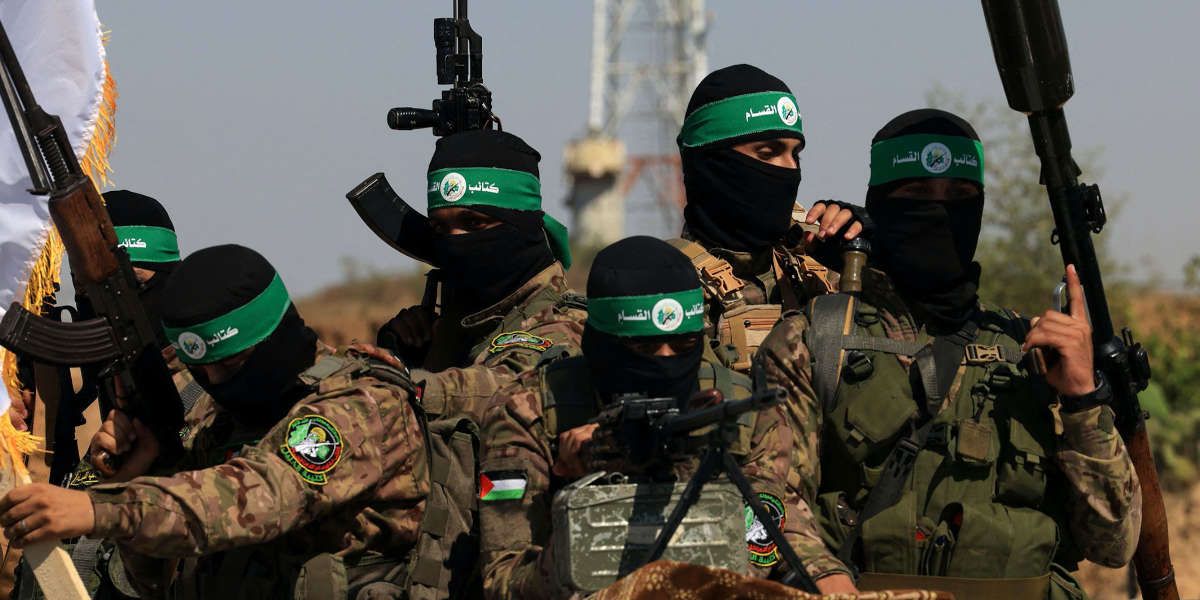
However, its grip on power has been significantly weakened by the war. Israeli airstrikes have destroyed much of Gaza’s infrastructure, including Hamas’s military and political headquarters. Many of its senior commanders have been killed, and its ability to launch coordinated attacks has been severely hampered.
Yet, Hamas still maintains influence over the population, particularly as the humanitarian crisis worsens. With food shortages, collapsed healthcare services, and widespread destruction, many Palestinians continue to look to Hamas as a political force that opposes Israeli control. For now, despite the devastation, Hamas remains the de facto authority in Gaza.
The territorial history of Gaza is complex, shaped by shifting regional powers and geopolitical struggles. Before Israel occupied Gaza in 1967 during the Six-Day War, the strip was under Egyptian control. Between 1948 and 1967, Egypt administered the territory but did not formally annex it, instead maintaining military rule over the area.
Prior to Egyptian rule, Gaza was part of the British Mandate of Palestine, which lasted from 1917 to 1948. The British took control of the region after the fall of the Ottoman Empire in World War I and managed it under an agreement with the League of Nations. However, British rule was marked by increasing tensions between Jewish and Arab communities, culminating in the 1948 Arab-Israeli War, after which Gaza came under Egyptian administration.
Going further back, Gaza was under Ottoman rule for centuries, serving as a strategic coastal territory in the empire. Its long history of changing hands underscores its importance as a focal point of political and military struggles in the Middle East.
While Gaza has been the epicenter of conflict, violence has also escalated in the West Bank. In recent weeks, Israeli forces have expanded their military operations in the region, deploying a tank division to Jenin for the first time in two decades. The situation has been further inflamed by rising tensions between Israeli settlers and Palestinian communities.
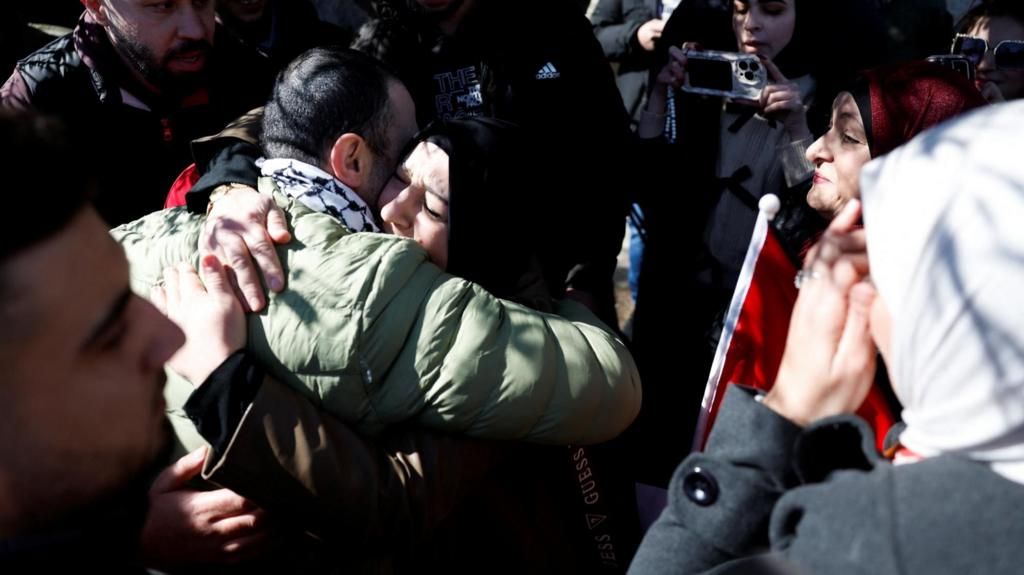
The United Nations has warned of the forced displacement of at least 40,000 Palestinians from refugee camps in the West Bank, further exacerbating the humanitarian crisis. Meanwhile, Israeli officials claim that their military presence is necessary to dismantle militant networks operating in the region. With violence spreading beyond Gaza, the prospects for a broader peace agreement seem increasingly bleak.
As political leaders debate military strategies and ceasefire terms, civilians in Gaza continue to bear the brunt of the war. Over 48,000 Palestinians have been killed since Israel launched its military campaign, with tens of thousands more injured. The majority of Gaza’s population has been displaced, forced to seek shelter in overcrowded refugee camps or makeshift housing amid widespread destruction.
Hospitals are struggling to cope with the overwhelming number of casualties, and basic supplies such as food, water, and medicine are running dangerously low. International aid organizations have called for an immediate end to hostilities, warning that Gaza’s humanitarian crisis could worsen beyond control.
With both Israel and Hamas accusing each other of violating the truce, the ceasefire appears increasingly fragile. Israel insists that it cannot release Palestinian prisoners unless Hamas ceases its use of hostages for political leverage. Meanwhile, Hamas demands that Israel fulfill its part of the agreement, warning that failure to do so will lead to renewed attacks.
As negotiations stall, international mediators—including the United Nations, Egypt, and Qatar—are working to salvage the ceasefire. However, with neither side willing to make concessions, the likelihood of sustaining peace grows slimmer by the day.
The crisis in Gaza is not an isolated event but part of a long history of conflict that has defined the region for decades. Each war, ceasefire, and political agreement is shaped by the territorial disputes, power struggles, and deep-seated animosities that date back generations.
As the world watches, the critical question remains: Will the region find a path toward lasting peace, or is another devastating war inevitable? The coming weeks will determine whether the ceasefire holds or whether Gaza and Israel will once again be engulfed in the flames of war.






0 comments