
Your Read is on the Way
Every Story Matters
Every Story Matters
The Hydropower Boom in Africa: A Green Energy Revolution Africa is tapping into its immense hydropower potential, ushering in an era of renewable energy. With monumental projects like Ethiopia’s Grand Ethiopian Renaissance Dam (GERD) and the Inga Dams in the Democratic Republic of Congo, the continent is gearing up to address its energy demands sustainably while driving economic growth.
Northern Kenya is a region rich in resources, cultural diversity, and strategic trade potential, yet it remains underutilized in the national development agenda.

Can AI Help cure HIV AIDS in 2025

Why Ruiru is Almost Dominating Thika in 2025

Mathare Exposed! Discover Mathare-Nairobi through an immersive ground and aerial Tour- HD

Bullet Bras Evolution || Where did Bullet Bras go to?
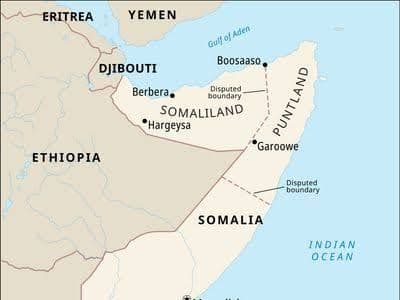
Somaliland Is No Longer a Footnote
For the first time in decades, Somaliland is being discussed explicitly, publicly, and procedurally by a sitting Israeli prime minister within the language of the Abraham Accords. This is not symbolic recognition, but it is not casual either. Naming Somaliland, acknowledging its president’s request, and committing to a Jerusalem meeting is a deliberate act.
It moves Somaliland from diplomatic limbo into active consideration by a state that has already proven willing to break recognition taboos and absorb the backlash.
That shift matters more than any communiqué.
What the Abraham Accords Now Represent
The Abraham Accords are no longer just agreements between Israel and Arab states. They have matured into a recognition doctrine—one that prioritizes stability, utility, and bilateral interest over inherited rules and multilateral consensus.
Under this doctrine:
Recognition is negotiated state-to-state
Regional bodies do not have veto power
Unresolved disputes are not automatic disqualifiers
Functioning governance counts more than formal admission
This doctrine worked in the Gulf. Israel is now testing whether it can work in Africa. Somaliland is the test case.
Why Somaliland Fits the Accords’ Logic
Somaliland’s appeal within this framework is not ideological. It is practical.
Somaliland controls territory. It governs itself. It conducts elections. It secures its borders. It sits astride one of the most sensitive maritime corridors in the world. It has maintained internal stability in a region where collapse is common.
What Somaliland lacks is recognition—not capability.
From an Abraham Accords perspective, that gap is procedural, not substantive.
The African Union’s Structural Problem
The African Union’s position on Somaliland is clear, but its power is limited. The AU can reaffirm Somalia’s territorial integrity, but it cannot prevent non-African states from recognizing Somaliland. It has no enforcement mechanisms, no sanctions authority over external actors, and no unified appetite for escalation.
The uncomfortable truth is this:
The AU’s Somaliland policy has survived because major powers chose not to challenge it.
If Israel proceeds—even incrementally—that deference ends. The AU will respond with statements, not consequences. Its authority will be tested not by rebellion, but by irrelevance.
The East African Community’s Quiet Exposure
The EAC faces a more practical dilemma. Somaliland already interacts economically and socially with the region. If it gains formal bilateral recognition from Israel, the contradiction deepens: treating Somaliland as invisible becomes harder to justify while engaging it in practice.
The EAC will likely avoid formal recognition, but it will adapt through silence—allowing engagement without political acknowledgment. This is not neutrality. It is accommodation under pressure.
South Africa’s Objections Have Limits
South Africa will object. Loudly. Its opposition to Israel over Gaza is principled and consistent. Pretoria will frame any Israeli move toward Somaliland as destabilizing and ideologically driven.
But South Africa does not command continental consensus, nor does it control recognition decisions. Its influence is persuasive, not binding. Beyond statements and diplomatic pressure, its tools are limited.
This is a constraint South Africa understands, even if it does not advertise it.
The West’s Dilemma: Process vs Reality
Western governments have long acknowledged Somaliland’s functionality while hiding behind procedural caution. Israel’s move forces that contradiction into the open.
If Somaliland is good enough to engage, secure, and invest in—but not good enough to recognize—the West must explain why process outweighs performance indefinitely.
The Abraham Accords exposed this tension in the Middle East. Somaliland brings it to Africa.
Is Somaliland Benefiting — Or Being Positioned?
Somaliland benefits from visibility, access, and diplomatic leverage. That is real. But alignment through the Abraham Accords framework also narrows neutrality. Recognition driven by strategic interest always comes with expectations, even if they are unstated.
This does not automatically make Somaliland a proxy. But it does place it on a more exposed chessboard—one where choices carry consequences faster than before.
The key variable is diversification. If Somaliland expands engagement beyond a single axis, leverage becomes strength. If not, dependence becomes risk.
The Hard Truth No One Wants to Say
Somaliland has waited three decades for African consensus. It has received patience, praise, and postponement—but not recognition.
The Abraham Accords offer a different route: act first, normalize later.
That route unsettles institutions built on delay. But it rewards actors built on function.
Where This Is Heading
If the Jerusalem meeting happens in early 2026, Somaliland will have crossed a threshold no African institution can reverse. Recognition may still take time. But invisibility will be over.
At that point, the question will no longer be whether Somaliland deserves recognition.
It will be who can afford to pretend it does not exist.
You can also view a related video on YouTube:





0 comments