
Your Read is on the Way
Every Story Matters
Every Story Matters
The Hydropower Boom in Africa: A Green Energy Revolution Africa is tapping into its immense hydropower potential, ushering in an era of renewable energy. With monumental projects like Ethiopia’s Grand Ethiopian Renaissance Dam (GERD) and the Inga Dams in the Democratic Republic of Congo, the continent is gearing up to address its energy demands sustainably while driving economic growth.
Northern Kenya is a region rich in resources, cultural diversity, and strategic trade potential, yet it remains underutilized in the national development agenda.

Can AI Help cure HIV AIDS in 2025

Why Ruiru is Almost Dominating Thika in 2025

Mathare Exposed! Discover Mathare-Nairobi through an immersive ground and aerial Tour- HD

Bullet Bras Evolution || Where did Bullet Bras go to?
A Former Protectorate Still Waiting for a Clear Answer
Somaliland’s history and Britain’s fingerprints are intertwined. The territory lived under British protection until 1960, experienced brief recognised independence, then entered union with Italian Somalia to form the Somali Republic. When Somalia collapsed in 1991, Somaliland rebuilt itself from scratch, forming democratic institutions, running elections, and maintaining relative security in one of the world’s most unstable regions.
You could also view this edition on YouTube:
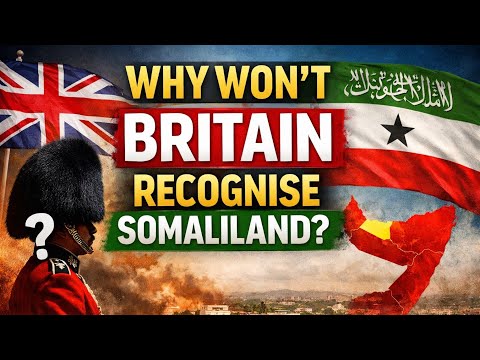
Yet London keeps its distance at the decisive moment. It praises Somaliland’s governance, cooperates on development and security, and allows political representation in the UK — but carefully stops short of recognition. The result is a diplomatic standstill in which history is acknowledged but sovereignty is not.
London’s Core Argument: Unity First, Recognition Later
Britain’s position rests on one recurring phrase: change must come through agreement between Hargeisa and Mogadishu. It anchors itself on respect for Somalia’s territorial integrity, insisting that international borders cannot be redrawn through unilateral decisions.
Behind this position is a fear that recognition could trigger wider fragmentation across Africa, encouraging other regions to pursue separation. Britain therefore frames caution as stability, arguing that statehood must emerge from negotiated settlement rather than external endorsement.
The African Union as Gatekeeper
Another layer of restraint lies in continental diplomacy. The African Union guards post-colonial borders fiercely, wary of igniting copy-cat secession movements. Britain aligns itself with this principle not only out of respect but also out of political convenience.
Moving ahead of the AU would strain relations with African partners, appear interventionist, and undermine the collective decision-making Britain prefers to stand behind. As long as the AU holds its line, the UK finds justification to hold its own.
Pragmatic Power: Why Ambiguity Serves Britain
There is also strategy beneath the legal language. By avoiding a final decision, Britain keeps influence on both sides of the Somali question.
This ambiguity allows the UK to:
Keep security partnerships with Somalia’s federal government
Maintain channels with Somaliland’s authorities
Protect economic prospects linked to ports, trade routes, and maritime security
Recognition would force Britain to take a side in a sensitive geopolitical theatre. Non-recognition allows flexibility.
Internal Pressure — But Policy Remains Frozen
Across the British parliament and diaspora communities, voices continue urging recognition. Military veterans, long-time diplomats, and MPs with Somaliland links argue that stability, democracy, and functional sovereignty deserve acknowledgement.
However, those pressures have not forced a shift. The official line remains unchanged: recognition requires agreement with Somalia and alignment with African counterparts. Political sympathy does not override strategic caution.
The Charge of Double Standards
Critics point to recognitions elsewhere — Kosovo most frequently — and ask why Somaliland’s case is treated differently. The territory meets classical criteria of statehood: functioning government, independent administration, territory control, and popular legitimacy.
The answer lies in politics rather than theory. Recognition is rarely just a legal checklist; it is a calculation of consequences. The Horn of Africa’s maritime routes, regional rivalries, and counter-terrorism stakes make Somaliland’s case heavier than most.
Changing Winds and the Question Britain Cannot Avoid Forever
Geopolitical attention around Somaliland is growing. New partnerships, shifting alliances, and renewed interest in the Red Sea corridor are turning an ignored topic into a central strategic question.
Britain will eventually confront a choice: defend old diplomatic orthodoxy or adapt to emerging realities. The longer it delays, the louder the accusation becomes — that policy is driven less by principle than by risk avoidance.

Wrapping up: History Meets Hesitation
Britain understands Somaliland’s story intimately; it helped shape it. But recognition remains withheld not out of confusion, but by design. Law, regional politics, strategic leverage, and global positioning combine into a deliberate refusal to cross the final threshold.
A related view:
Somaliland continues to function like a state. Britain continues to act like a partner. What is missing is the single word that ties the two realities together — recognition — and London is not ready to say it yet.





0 comments