
Your Read is on the Way
Every Story Matters
Every Story Matters
The Hydropower Boom in Africa: A Green Energy Revolution Africa is tapping into its immense hydropower potential, ushering in an era of renewable energy. With monumental projects like Ethiopia’s Grand Ethiopian Renaissance Dam (GERD) and the Inga Dams in the Democratic Republic of Congo, the continent is gearing up to address its energy demands sustainably while driving economic growth.
Northern Kenya is a region rich in resources, cultural diversity, and strategic trade potential, yet it remains underutilized in the national development agenda.

Can AI Help cure HIV AIDS in 2025
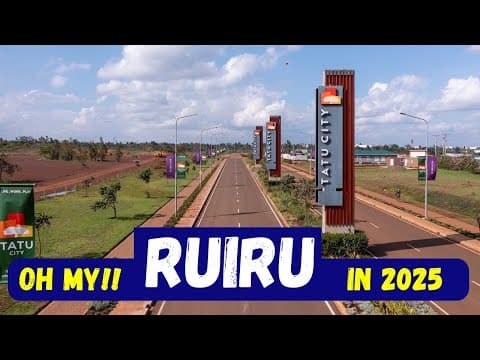
Why Ruiru is Almost Dominating Thika in 2025

Mathare Exposed! Discover Mathare-Nairobi through an immersive ground and aerial Tour- HD

Bullet Bras Evolution || Where did Bullet Bras go to?
Tehran, a bustling metropolis home to over eight million people, has been thrown into an unprecedented state of disarray. President Trump’s stark warning to Iranian civilians to evacuate Tehran sparked an overnight mass movement of people. Highways leading out of the city were jammed with vehicles, many carrying entire families, pets, and hastily packed bags.
The mood was unmistakably somber—fear had taken over the streets. Public transport stations were overcrowded, ticket offices overwhelmed, and the air was thick with anxiety as Iranians grappled with the possibility of escalation and aerial bombardment. Children sobbed in the back seats of vehicles; the elderly clutched prayer beads, murmuring quiet supplications. Many residents didn’t wait for confirmation or clarity—they simply left, driven by raw instinct and survival.
As the warning took hold, everyday life in Tehran came to a halt. Fuel stations saw mile-long queues, with some motorists waiting up to six hours to fill their tanks before fuel supplies dwindled. Supermarkets were raided within hours—shelves once stocked with bread, rice, oil, and infant formula were emptied in a frenzy of desperate purchasing. Pharmacies reported shortages of basic medications, including insulin and antibiotics, as people scrambled to secure supplies for what they feared could become a prolonged emergency.
Internet access became unstable, and mobile networks experienced overload, cutting many families off from loved ones and official updates. Hospitals and clinics, already strained by years of economic sanctions, were pushed to the brink as panic-induced health crises surged—panic attacks, dehydration, and accidents during hasty evacuations were all reported.
Beneath the surface chaos lies a deeper wound—one etched into the hearts of Tehran’s residents. It is a wound born of trauma, confusion, and the bitter reality that their safety can no longer be guaranteed. Families were forced to make unthinkable decisions: to leave behind sick relatives who couldn’t travel, to abandon pets, to shut family-owned businesses with no assurance of return.
In underground metro stations now doubling as shelters, volunteers distribute food while children sleep on cardboard beds. Parents try to explain to their kids why they had to leave home in the middle of the night. Every face reflects a mixture of disbelief and sorrow. The city’s familiar pulse—laughter in cafes, music from apartment balconies, vibrant bazaars—is now replaced by silence and the distant hum of vehicles heading toward uncertain safety.
The Iranian government's response has been sharply criticized by many. Officials initially attempted to downplay the situation, describing Trump’s remarks as psychological warfare and urging calm. Yet their tone shifted rapidly as the exodus unfolded. Public statements contradicted one another, with some urging residents to stay while others promised “appropriate measures” to ensure civilian safety.
The rollout of internet restrictions further angered citizens, many of whom perceived it as a means to conceal the true scope of the crisis. Rumors of restricted movement and roadblocks at certain city exits have only heightened public suspicion. Trust in the government—already strained by years of internal repression and economic hardship—has eroded further, leaving many to rely solely on community-led networks for guidance and support.
The wave of displacement has not stopped at the city’s borders. As residents flee, towns in northern and western Iran are being overwhelmed. Temporary shelters have sprung up in school buildings, mosques, and public parks. Supplies are already running low, and aid workers warn of deteriorating sanitation conditions that could lead to a secondary crisis.
Some citizens have tried to cross borders into neighboring countries, only to be turned away due to security concerns. Inside Iran, there’s growing fear that even these relatively safer regions may not remain untouched if the military conflict escalates further. The sense of dread is national. Parents search for milk and medicine, communities ration clean water, and medical staff operate in impossible conditions. It is not just Tehran that is trembling—it is the entire country.
What began as a televised political warning has turned into a moment of reckoning for millions of Iranians. The panic that engulfed Tehran is a reflection not only of physical fear but of the emotional and spiritual weight carried by a nation that has lived for decades on the edge of conflict. Many are asking how they ended up here—again—trapped between geopolitics and survival. But amid the darkness, there are stories of remarkable solidarity.
Neighbors sharing food with strangers. Volunteers risking their own safety to evacuate the disabled and elderly. Communities that had once been divided along ideological lines now united by shared urgency and compassion. For all its grief, Iran’s capital has revealed its greatest strength: a people who, even in the face of fear, still choose to stand together.





0 comments