
Your Read is on the Way
Every Story Matters
Every Story Matters
The Hydropower Boom in Africa: A Green Energy Revolution Africa is tapping into its immense hydropower potential, ushering in an era of renewable energy. With monumental projects like Ethiopia’s Grand Ethiopian Renaissance Dam (GERD) and the Inga Dams in the Democratic Republic of Congo, the continent is gearing up to address its energy demands sustainably while driving economic growth.
Northern Kenya is a region rich in resources, cultural diversity, and strategic trade potential, yet it remains underutilized in the national development agenda.

Can AI Help cure HIV AIDS in 2025

Why Ruiru is Almost Dominating Thika in 2025

Mathare Exposed! Discover Mathare-Nairobi through an immersive ground and aerial Tour- HD

Bullet Bras Evolution || Where did Bullet Bras go to?
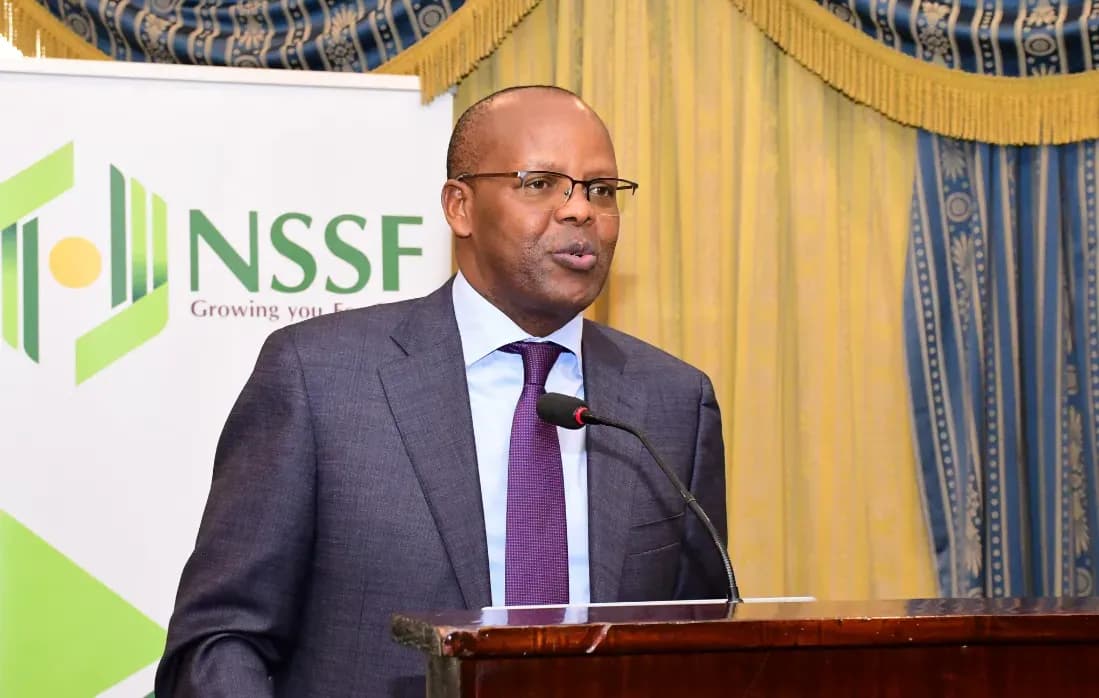
Kenya’s National Social Security Fund (NSSF), a body entrusted with managing the retirement savings of millions, has come under intense scrutiny following revelations of deep-rooted financial mismanagement. A recent audit of the fund’s operations unearthed questionable expenditures, loss-making investments, and a trail of administrative negligence that could compromise the financial security of future retirees.
The report, based on the latest fiscal year ending June 30, 2024, paints a grim picture of how billions in public money were handled. Rather than delivering growth and protection of workers’ contributions, the fund appears to have morphed into a financial black hole where accountability was replaced by excess.
Among the most jarring discoveries is the KSh 904 million that NSSF paid out in taxes—mistakenly—to the Kenya Revenue Authority. Despite this glaring overpayment, there has been no recorded effort to claim the refund or recover interest accrued. This points to either incompetence or a deliberate failure to follow due process. In either case, contributors’ money continues to hang in limbo with no clear path for retrieval.
Another striking case involved the fund purchasing prime land worth KSh 115 million in Upper Hill, Nairobi—only to later discover that the title deed had been revoked due to the land being designated as public property. This raises the question: who vetted the transaction, and why was there no due diligence?
If misdirected payments weren't damaging enough, NSSF is also sitting on dead assets. Properties in Nairobi's Central Business District worth over KSh 4 billion remain unutilized. These buildings, instead of generating rental income or being used for public benefit, continue to deteriorate while demanding costly maintenance from an already strained fund.
The audit revealed that the fund had also taken heavy losses in its investment portfolio. A KSh 27 billion dip was recorded due to falling share values in two underperforming firms, and KSh 38 million was thrown into a struggling bank. Such investment decisions not only reflect poor judgment but highlight the absence of a clear risk management framework.
The audit did not just focus on investments—it delved into the day-to-day operations of the fund, unearthing egregious examples of lavish spending. The fund reportedly splurged KSh 317 million on travel, meetings, and conferences in a single year. Among these, KSh 11 million went into conference-related expenses alone.

The budget for renovations raised eyebrows too. KSh 411 million was set aside, and some projects were marred by questionable procurement practices. One especially shocking instance involved the purchase of a single reception desk priced at an outrageous KSh 2.1 million—almost the annual salary of a mid-level civil servant.
Even the transport budget was far from modest. KSh 51 million was spent on vehicle operations, including KSh 3.2 million for fuel. While these might seem routine costs, in the context of mounting losses, they paint a picture of an institution bloated with excess.
On the governance front, the situation is no better. Trustees were compensated handsomely with KSh 69 million paid out in emoluments, all while the fund’s administrative costs ballooned to a staggering KSh 6.9 billion. Such figures are difficult to justify in a fund that is bleeding cash from every corner.
Despite these challenges, there was no firm indication that the National Executive or Board took concrete action to stem the tide. The lack of corrective measures, disciplinary action, or even public explanation has further eroded public trust in the NSSF leadership.
These revelations have set off alarm bells not just within financial oversight circles but across the general public. Retirement security, a cornerstone of long-term financial planning, is under direct threat if institutions like NSSF continue to operate without rigorous checks.
The Auditor General’s findings are not merely a critique—they are a call to action. There must be a concerted effort to hold individuals accountable, recover lost funds, and rebuild public trust through transparent reform. Millions of Kenyans depend on this fund to sustain them after retirement. It cannot be left in the hands of individuals or systems that treat it as a personal treasury.





0 comments