
Your Read is on the Way
Every Story Matters
Every Story Matters
The Hydropower Boom in Africa: A Green Energy Revolution Africa is tapping into its immense hydropower potential, ushering in an era of renewable energy. With monumental projects like Ethiopia’s Grand Ethiopian Renaissance Dam (GERD) and the Inga Dams in the Democratic Republic of Congo, the continent is gearing up to address its energy demands sustainably while driving economic growth.
Northern Kenya is a region rich in resources, cultural diversity, and strategic trade potential, yet it remains underutilized in the national development agenda.

Can AI Help cure HIV AIDS in 2025

Why Ruiru is Almost Dominating Thika in 2025

Mathare Exposed! Discover Mathare-Nairobi through an immersive ground and aerial Tour- HD

Bullet Bras Evolution || Where did Bullet Bras go to?
A bizarre stunt that unfolded in Migori County has turned heads across Kenya. In a scene that could have come straight from an action movie, Stephen Odhiambo decided to make a dramatic exit from a wedding ceremony. But instead of leaving like any ordinary guest, he clung to the side of a helicopter—an act that quickly spiraled into a dangerous game with fate. This reckless move, which occurred on April 13, 2025, involved a helicopter carrying the popular YouTuber Oga Obinna, who had just wrapped up a wedding celebration in Rapogi village.
As the helicopter ascended into the sky, Odhiambo—despite warnings from security officers—refused to let go. His defiant move put not only his life but the lives of five passengers in serious jeopardy. What followed was a public spectacle of reckless audacity, one that led to his eventual arrest by local police officers.
The ordeal, though dramatic, didn’t just make headlines—it sparked serious questions about public safety protocols, especially in high-risk situations involving helicopters. While security had clearly instructed people to maintain a safe distance, Odhiambo’s unrelenting desire to get close to the flying chopper showed the lack of seriousness with which some individuals approach safety rules. The pilot recounted how difficult it was to stabilize the helicopter while trying to avoid any possible mishap, underscoring the gravity of the situation. Despite Odhiambo’s claims of seeking adventure or a moment of fame, this was a reckless act that endangered everyone onboard.
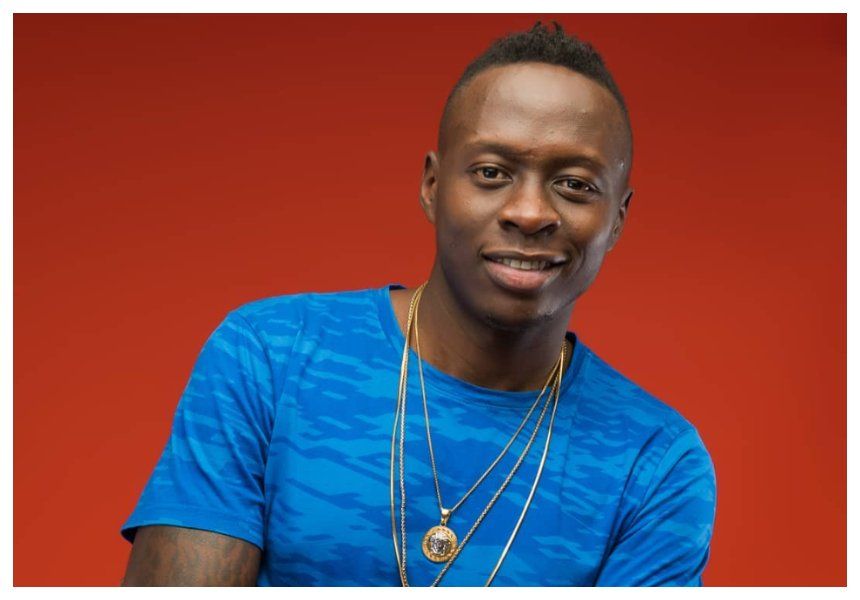

The court's decision to imprison Odhiambo for 18 months or impose a fine of Ksh500,000 was met with mixed reactions. On one hand, it was a stern message against public irresponsibility, but on the other, some have viewed it as a cautionary tale about the human craving for attention. While some labeled Odhiambo a "Migori James Bond" for his daredevil stunt, others condemned his actions as selfish and foolish. His behavior quickly became the topic of intense debate, with many questioning the psychological drivers behind such risky actions. Was it the thrill, the desire for social media fame, or simply a deep-seated need for validation? This question remains at the heart of the conversation.
The event didn’t just stay within the boundaries of the courtroom or the local media. The incident went viral on social media, with posts and memes circulating that both praised and ridiculed the man’s actions. The ‘Migori James Bond’ tag quickly took off, reflecting a culture that often glamorizes danger. This incident highlights the complicated relationship between social media and reckless behavior. What was once a private moment of defiance became public entertainment, fueling an obsession with extreme actions for fleeting moments of fame.
While social media can amplify positive messages, it also has the power to escalate dangerous trends. The "Migori James Bond" meme serves as both a cautionary tale and a symbol of how social media can perpetuate a dangerous cycle of imitation. Should there be more regulation or self-awareness about how such stunts are perceived by the public?
The psychological question that arises from this incident is why anyone would take such extreme measures. Is it just for the thrill, the adrenaline rush, or is it a deeper need for attention? Behavioral experts point out that some individuals might engage in such reckless acts as a way to escape from their everyday lives, seeking something to fill a void or gain recognition. But what seems like a fun stunt can easily spiral into disaster when others are involved or when public safety is compromised.

From a legal standpoint, Odhiambo’s case is a stark reminder of the law’s role in regulating public behavior and ensuring that individuals understand the gravity of their actions. The police and the judicial system acted swiftly to send a message: such behavior will not be tolerated. The 18-month sentence could be seen as a deterrent for others who may be considering following in his footsteps. But is it enough? Or does it simply highlight a systemic issue where public awareness of safety measures needs to be dramatically improved?
The long-term impact of Odhiambo’s helicopter stunt is yet to be seen. However, what is clear is that this incident forces us to confront broader societal issues surrounding safety, personal responsibility, and the influence of social media. It’s a wake-up call for not only individuals but also for communities, authorities, and the media at large.
This bizarre incident has the potential to spark a shift in how we approach risk-taking in the public sphere. It also underscores the role community leaders can play in promoting a culture of responsibility and respect for safety protocols.
As we move forward, the hope is that we can collectively learn from this episode—recognizing that while seeking thrills is part of human nature, it’s equally important to ensure that such pursuits do not come at the cost of life or public security.





0 comments