
Your Read is on the Way
Every Story Matters
Every Story Matters
The Hydropower Boom in Africa: A Green Energy Revolution Africa is tapping into its immense hydropower potential, ushering in an era of renewable energy. With monumental projects like Ethiopia’s Grand Ethiopian Renaissance Dam (GERD) and the Inga Dams in the Democratic Republic of Congo, the continent is gearing up to address its energy demands sustainably while driving economic growth.
Northern Kenya is a region rich in resources, cultural diversity, and strategic trade potential, yet it remains underutilized in the national development agenda.

Can AI Help cure HIV AIDS in 2025

Why Ruiru is Almost Dominating Thika in 2025

Mathare Exposed! Discover Mathare-Nairobi through an immersive ground and aerial Tour- HD

Bullet Bras Evolution || Where did Bullet Bras go to?
Social protection in Kenya aims to provide financial security and support for vulnerable groups, such as the elderly, people with disabilities, children, and those living in poverty. These protections are enshrined in several laws and policies, ensuring that basic social services are available to all citizens, particularly those in need.
1.Constitution of Kenya (2010)
-Article 43: Recognizes the right to social security, mandating the state to provide social protection services.
-Article 53: Ensures that children have access to free and compulsory education and essential services, with a focus on marginalized groups.
-Article 56: Guarantees the rights of marginalized communities, including ethnic minorities and persons with disabilities.
2.National Social Protection Policy (2011)
This policy outlines Kenya's strategy for comprehensive social protection, aiming to:
-Provide cash transfers to households in poverty, the elderly, and orphans.
-Ensure social insurance for workers and promote food security for vulnerable populations.
3.Social Assistance Act (2013)
Governs Kenya’s social assistance programs, particularly those aimed at:
-Elderly persons over the age of 70.
-Persons with disabilities.
-Orphans and vulnerable children (OVC).
4.The Persons with Disabilities Act (2003)
Provides comprehensive support for persons with disabilities, ensuring:
-Access to financial assistance.
-Inclusive education and employment opportunities.
-Establishes the National Council for Persons with Disabilities.
5.National Hospital Insurance Fund (NHIF) Act
-Establishes the NHIF to provide health insurance to all Kenyans.
-Includes subsidies for low-income groups and informal sector workers.
6.National Social Security Fund (NSSF) Act
Ensures that formal sector workers contribute to a pension fund, offering social security benefits like retirement pensions and disability benefits.
1.Older Persons Cash Transfer (OPCT)
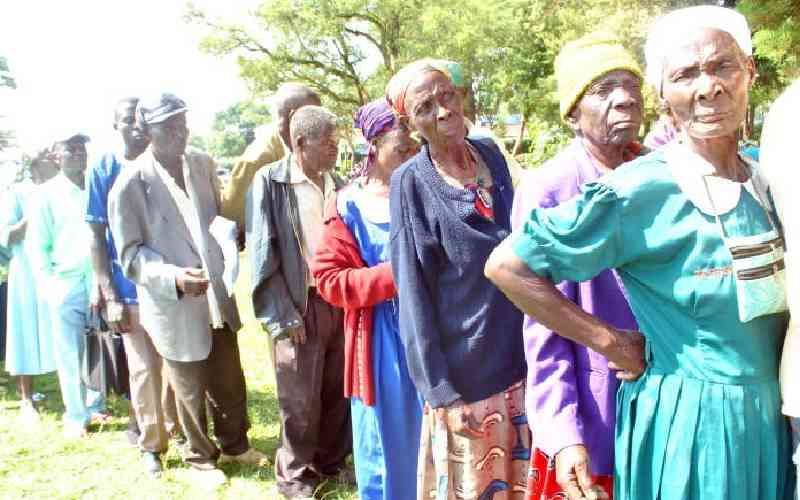
-Provides monthly stipends to elderly citizens aged 70 years and above.
-Aims to reduce poverty and promote financial inclusion for older citizens.
.
2.Orphans and Vulnerable Children Cash Transfer (OVC-CT)
-Provides financial support to households caring for orphans and vulnerable children, reducing the economic impact of child care.
3.Disability Cash Transfer (DCT)
-Provides direct financial assistance to persons with disabilities, particularly those living in extreme poverty.
4.Inua Jamii Program
-Provides cash transfers to elderly persons and vulnerable groups to enhance social inclusion and reduce poverty.
5.National Health Insurance Fund (NHIF)
-Offers health insurance coverage for all Kenyans, with subsidies for marginalized groups.
-Helps improve access to healthcare, including surgical services, maternity care, and medications.
1.Limited Coverage
Despite extensive social protection programs, large segments of the population, especially those in the informal sector, remain excluded.
2.Resource Constraints
The implementation of social protection programs is often hindered by budgetary constraints, limiting the scope and reach of assistance.
3.Corruption and Mismanagement
Misallocation and corruption in the administration of social protection funds remain significant barriers to equitable distribution.
4.Awareness and Accessibility
Many vulnerable groups are unaware of their eligibility for government assistance, leading to low uptake of available services.
5.Inconsistent Funding
Dependence on external donors and inconsistent government funding impacts the sustainability of key programs, such as cash transfers.
Kenya’s social protection legal framework is well-established and includes various laws and programs aimed at improving the welfare of vulnerable populations. However, challenges such as limited coverage, resource constraints, and corruption continue to impede its effectiveness. Strengthening these systems and ensuring wider awareness and inclusion will help address the gaps and ensure that social protection reaches all those in need.




0 comments